
Looking to limit birthright citizenship, Trump turns to an 1884 Supreme Court ruling against a Native American man


 S E E D E D C O N T E N T
WASHINGTON — In a moment that could take on new significance almost 150 years later, Omaha election official Charles Wilkins on April 5, 1880, refused to register John Elk to vote on the grounds that he was Native American, and therefore not an American citizen.
Elk — believed to have been a member of what is now known as the Winnebago Tribe of Nebraska — objected, saying he had severed all ties with his tribe and had willingly subjected himself to the authority of the United States.
He launched a legal challenge, arguing among other things that he was a citizen at birth because he was born within United States territory.
But the Supreme Court, in an 1884 case called Elk v. Wilkins, ruled against him, saying that Native Americans born within the territory of the United States did not have birthright citizenship. They had the same status as "the children of subjects of any foreign government born within the domain of that government," the court said.
President Donald Trump's administration is now citing that case as it defends his plan to end automatic birthright citizenship, putting a new spin on the long-standing interpretation of the Constitution's 14th Amendment. The Supreme Court hears oral arguments in the case on Wednesday.
Trump's executive order, issued on the first day of his second term, seeks to limit birthright citizenship only to people with at least one parent who is a U.S. citizen or a legal permanent resident.
Solicitor General D. John Sauer, representing the government, referenced Elk in court papers, saying the Supreme Court has "squarely rejected the premise that anyone born in U.S. territory, no matter the circumstances, is automatically a citizen so long as the federal government can regulate them."
White House spokeswoman Abigail Jackson said in a statement that the case gives the Supreme Court the chance to "restore the meaning of citizenship in the United States to its original public meaning."
The Trump administration's arguments about the relevance of the Elk ruling are strongly contested by the American Civil Liberties Union, which is leading the challenge to Trump's executive order.
"At a fundamental level, this case is about an attempt to strip citizenship from the children of immigrants who have always been citizens of the U.S. The Native American questions the government raises are really beside the point," ACLU lawyer Cody Wofsy said in an interview.
Tribal status is 'unique'
Notably absent from any of the dozens of briefs filed in the case is anything from Native American tribes or organizations. Two scholars of Native American law, Bethany Berger at the University of Iowa College of Law and Gregory Ablavsky at Stanford Law School, did file a brief backing the ACLU's challenge.
Experts on Native American law told NBC News the administration's reliance on Elk was problematic, both rhetorically and legally.
"We believe the reliance on Elk to deny birthright citizenship to children of undocumented immigrants is misplaced. It's a misreading and a misunderstanding," said Leonard Fineday, general counsel of the National Congress of American Indians, which represents tribes.
The Elk decision rests solely on the specific nature of "quasi-sovereign tribal government" and is limited to that context, he added.
Monte Mills, director of the Native American Law Center at the University of Washington School of Law, agreed, saying it was ironic that the government would rely on such a ruling.
"It does betray a lack of understanding and awareness or willingness to acknowledge the nuance of Native American law," he added.
Another lawyer who works on Native American issues, who declined to be named because he did not want to be seen to be speaking on behalf of tribes with diverse views, said Indian law, a technical term still in use, is complex and not applicable to other areas of law. That's in part because there was never a blanket rule that applied to all tribes when it came to their legal relationship with the United States.
"I would say Native American history is anomalous. The status of tribes is unique. I'd at least be very cautious before trying to import any supposed lessons or principles from that context into other areas," the lawyer said.
The legal status of Native Americans within the U.S. has been addressed at length throughout history as the nation expanded westward, making — and breaking — treaties with tribes along the way and often mistreating them. The U.S. government simultaneously considered tribes to be somewhat independent nations while also exerting authority over them.
Tribes and Native American organizations likely did not file briefs in the birthright citizenship case for at least two reasons, Indian law experts said. First, they do not have a stake in the case because, since 1924, Native Americans have been guaranteed birthright citizenship via statute. Second, the more than 500 tribes likely differ politically on whether Trump's executive order is good policy.
"I do suspect some tribes would be supportive of the policy because some tribes are pretty politically conservative," the lawyer who works on Native American issues said.
'Subject to the jurisdiction thereof'
The unusual case focuses on the meaning of the "citizenship clause" of the 14th Amendment, ratified in 1868 after the Civil War and the end of slavery. It states: "All persons born or naturalized in the United States, and subject to the jurisdiction thereof, are citizens of the United States."
It's long been understood to confer citizenship on almost anyone born in the United States, regardless of their legal status. Exceptions include children born to diplomats and foreign invaders.
The Trump administration has zeroed in on "subject to the jurisdiction thereof," arguing it excludes both the children of people who entered the country illegally and those born to people with temporary legal status, such as work visas.
The Elk case is mentioned multiple times in the Trump administration's brief, with Sauer arguing that it shows birthright citizenship only applies to people who are subject to the "political jurisdiction" of the United States.
He quoted a line from the Elk ruling that says the "main object" of the citizenship clause was to address the issue of freed slaves after the Civil War.
The challengers, Sauer wrote, "cannot explain the long-established exceptions to birthright citizenship, including for children of tribal Indians."
Those backing the traditional understanding of birthright citizenship point to another 19th-century ruling, this one from 1898. In United States v. Wong Kim Ark, the court ruled that a man born in San Francisco to parents originally from China but living in the United States was an American citizen at birth.
The majority opinions in Elk and Ark were both authored by Justice Horace Gray. In the latter ruling, Gray distinguished his earlier opinion in the Elk case, saying it concerned "only members of Indian tribes within the United States and had no tendency to deny citizenship to children born in the United States" who were not Native American.
In his brief, Sauer downplayed the Ark ruling, saying it recognized birthright citizenship only for children of citizens and those born to immigrants who were permanent residents.
Ilan Wurman, a professor at the University of Minnesota Law School who filed a brief backing Trump, said it is unclear how much weight the Supreme Court will give the Elk case.
"The bottom line is that the case is helpful to the government, but it's ambiguous," he added.
Berger, the Native American legal expert who filed a brief in support of the challengers, said in an interview that Sauer's argument echoes what his predecessor argued in Wong Kim Ark's case more than a century ago.
"What the government is doing now is a retread of what it tried to and failed to do before," she added.

Tags
Who is online
123 visitors
The decision is expected Wednesday, and it is not a slam dunk case
funny how maga conveniently forgets that trump's son in law's family members got caught up selling citizenship to the chinese, and the number of connected russians that made the trip to have their kids born in the US during trump's first term ...
Another thing you need to prove.
surprisingly enough, you probably won't find those stories in any media outlets that maga finds credible ...
Could be because there aren't that many outlets that are credible.
fortunately, I always watch where I step ...
Conspiracy theorists trust the exact opposite of credible sites, they trust the out'liars' that give these dumb fuck junkies the drug they're looking for, confirmation bias. They want to be told there's some deep state that is controlling things against them behind the scenes that's basically run by, in their deluded minds, 'Satan', and that's why there are so many gays and atheists and people that don't believe like they were raised to believe. To them it's a sign of the end of times which means they can't believe anything the Satan run 'mainstream media' says, so they only believe the sites that tell them they're right, their God is right, the end of times is upon us and white conservative Christians are the new 'Chosen people' and America is the new 'Promised land' and whatever they have to do to make that a reality, lie, cheat, steal, they'll do it because to them, the ends justify any means no matter how despicable.
It's also interesting to note that many aren't even really Americans in my mind, because they wouldn't pass a simple loyalty test. 68% of white evangelicals put the will of the bible over the will of the people. That means their bibles take precedence over the constitution so if they believed their God told them to go kill Americans, they would follow the directions of their God over defending the constitution. Seems like that means they're not really Americans at all but just Christo-fascist wolves in American-sheep clothing.
And yet they're questioning the loyalty of children of other immigrants that were born here. Just more rightwing conservative hypocrisy on display.
we're in the final days of when spiritual proximity to their alleged creator carries much weight to IQ's over 80 points, but it is pretty hilarious to watch the holier than thou self-righteous that blindly support a non-pious POS/POTUS step all over their own dicks in elevating him to demigod status as a way to obscure their own shortcomings as americans, or even humans for that matter ...
Aaaaaand two days later,,,still no proof
Looked and looked and looked and after 3 days I don't see a damn thing where you backed up this claim.
Surprisingly enough, you can't find those stories in any of the medial outlets that the libs find "credible" either.
‘Surprisingly enough, you can't find those stories in any of the medial outlets that the libs find "credible" either’
What?????
You mean even Salon couldn’t find a reason to lie about it?
Shocking!!!
I know right.
What a bizarre framing,…
The trump admin argument relies on primarily on the text of the constitution.
Looks like very few will be happy with any ruling on this case. The case is actually not about citizenship -- it's about jurisdiction. Does a tourist visa or student visa or H-1B visa grant the United States government jurisdiction over non-resident non-citizens?
There are significant numbers of non-citizens in the US. So, the question of jurisdiction hinges upon the formal status of 'lawful permanent resident' to determine jurisdictional limits. Children born in the United States to parents who are 'lawful permanent residents' are birthright citizens. Children born to parents who are not 'lawful permanent residents' are not citizens. That seems clear enough.
But making that distinction means the United States has very limited jurisdiction over non-resident non-citizens. Detaining non-resident non-citizens exceeds the jurisdictional authority of the Federal government. The Federal government can deport but cannot jail non-resident non-citizens. That would clearly make facilities like Alligator Alcatraz in Florida illegal. There is a good chance SCOTUS will conflate a 'non-resident' status with various an sundry rules concerning diplomatic immunity from US jurisdiction.
It is quite possible that the sword of justice will cut both ways.
The sword of Damocles falls in one direction.
Sending Indians back to India. Yaay! Maga!!
that's about the size of it with the current maga brain trust ...
Native American = the biggest oxymoron ever!
I thought military intelligence was ...
I thought it was a well done steak.
no...that's a sacrilege
I probably lost hundreds of dollars in tips as a waiter for asking people that ordered steaks well done if they wanted me to bring out a shoelace or a bottle of ketchup with that ...
As to the highlighted issue in this case, there is a pretty substantial legal consensus in favor of birthright citizenship. In spite of this, the issue has long been a matter of controversy in the most conservative and xenophobic corners of politics. For that reason, it could have - perhaps should have - been clarified decades ago by Congress via an amendment. Instead, we are once again at the mercy of the Court.
Regardless, I do not believe the Court should even address the issue. It puts the cart before the horse. There is nothing in the Constitution that permits the president to restrict citizenship for anyone on any grounds via executive order. Whether the president’s opinion on citizenship is right or wrong is immaterial. Here, he is trying to exercise authority he doesn’t have, that was explicitly given to Congress.
meh, just another attempt by POS/POTUS to end run the constitution with an EO ...
The first sentence in the clause was put there for a reason. It was evidently a restriction. Let us get it straightened out at long last.
Agreed, but that should be a matter for Congress, not the President or the Court.
All the President did was bring the issue to light, it would take 2/3rds of Congress to amend the Constitution which means it will never happen. Should have done it 20 years ago when Democrats hated illegals. It is addressed in the Constitution, so it is for SCOTUS to decide.
That is not true, Trump did not merely "bring the issue to light", he tried to prevent Jus Soli through an EO:
Operative section in the EO:
It is the SCOTUS that has to interpret meaning and this is something that they need to interpret.
Jus Soli is a stupid idea and the question is was it really the intention of those who wrote the "Citizenship clause" of the 14th Amendment. You don't know wehat was in President Trump's mind, but whatever his intention, he has brought the issue to the SCOTUS.
Trump has no authority to remove Jus Soli.
Yeah well your opinion is not the question here. The question is Trump's authority.
Who cares what he was thinking (or if he just signed this because Stephen Miller put it in from of him)? Irrelevant. He has no authority.
Supreme Court casts doubt on Trump bid to limit birthright citizenship | AP News
Of course Thomas will vote in line with Trump.
Without a doubt. Bag licker "Uncle Thomas".
No surprise...
No, that is not what the Court is deciding. It is deciding original intent, and it looks like they may not be up to the task.
None.
What is surprising is the word "Uncle" was not the first word used
Faux obtuseness. I have not claimed that the court is deciding his authority. My comments are clearly about his authority, not what the court is deciding:
This is simply a fact. A PotUS cannot change the CotUS via EO.
Considering that almost the entire Western Hemisphere adopted the same practice as those countries were expanding, settling, and being populated from all over the world, I'd say it probably was their intention.
Is it the best option for the 21st century now that borders, national identities, and populations have stabilized? Maybe not, but if you want to change it, you'll need a Constitutional Amendment.
The context was not expansion. It was Dread Scott and newly freed slaves.
Is it the best option for the 21st century now that borders, national identities, and populations have stabilized? Maybe not, but if you want to change it, you'll need a Constitutional Amendment.
Yes Tacos. You touched on it. Trump may have lost in Court, but he very likely set the agenda for a Republican dominated congress.
The context of any case includes the setting. In this case, we are talking about a constitutional amendment written and ratified in the United States, a growing country, in the Western Hemisphere, during the middle of the 18th century.
What a full crock of shit this country has turned into.
In Conclusion:
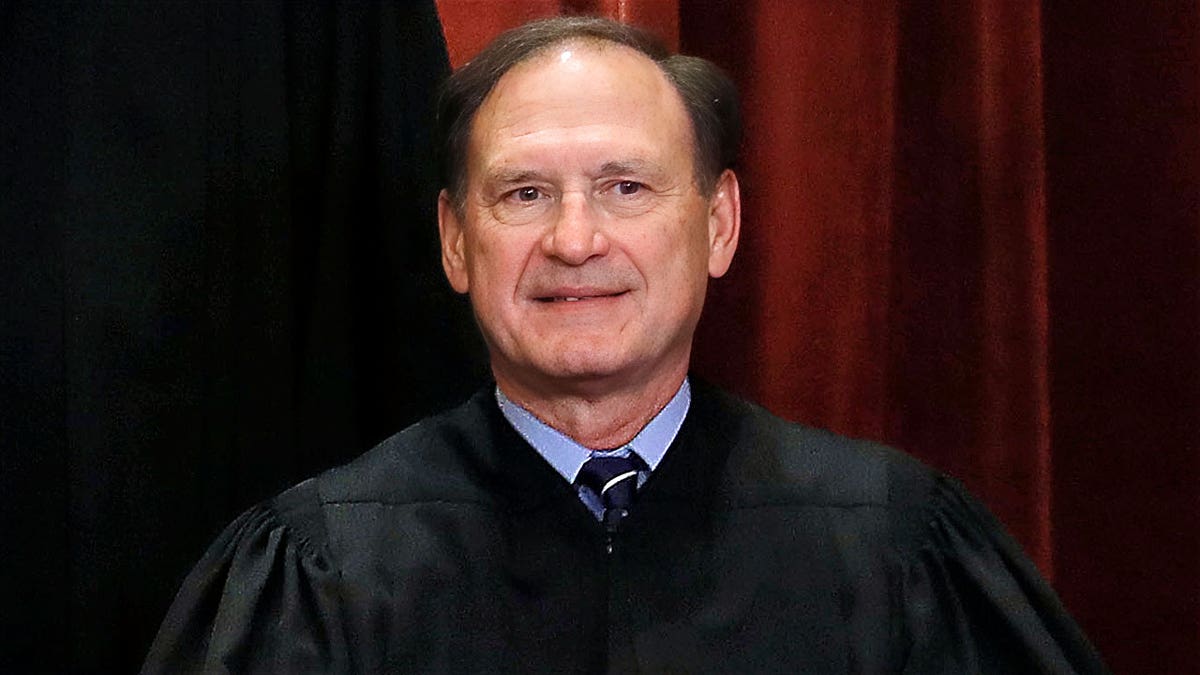
Justice Alito raised the question that the Solicitor General should have:
"Justice Samuel Alito invoked an analogy from late Justice Antonin Scalia Wednesday as the Supreme Court weighed whether birthright citizenship extended to children of illegal immigrants.
Alito said Scalia had illustrated how to apply textualism to modern circumstances, a point he raised during high-stakes oral arguments over President Donald Trump’s effort to limit birthright citizenship under the 14th Amendment, which grants most people born in the United States automatic citizenship. Textualism is a legal view that courts should read laws and the Constitution according to their plain text and original meaning.
Alito said illegal immigration, similar to modern technology such as microwaves, was relatively unknown when the 14th Amendment was ratified in 1868. Alito acknowledged historical exceptions to the amendment, including children born to foreign diplomats and certain Native Americans, and he questioned whether illegal immigrants' children could be considered a comparable modern-day exception.
"Justice Scalia had an example that dealt with this situation," Alito said. "He imagined an old theft statute that was enacted well before anybody conceived of a microwave oven. And then, afterwards, someone is charged with the crime of stealing a microwave oven. And this fellow says, 'Well, I can't be convicted under this because the microwave oven didn't exist at that time.' And he dismissed that. There's a general rule there, and you apply it to future applications."
Alito said illegal immigration "was basically unknown at the time when the 14th amendment was adopted."
"So, how did we deal with that situation when we have a general rule?" Alito asked, questioning if the rule was intended to "apply to later applications that might come up."
Solicitor General John Sauer argued to the Supreme Court in support of Trump's birthright citizenship executive order, which would end automatic citizenship for babies born in the United States to mothers who are illegal immigrants or legal temporary visitors.
" I strongly agree with the way that you framed it, that there is a general principle," Sauer told Alito of the microwave analogy.
Justice Elena Kagan said Sauer could not argue in the way Alito suggested because the bulk of Sauer's arguments had centered on people temporarily visiting the country, not illegal immigrants.
"Your whole theory of the case is built on that group … so you can’t really be going with Justice Alito’s theory," Kagan said. "You must be saying that there is a principle that was there at the time of the 14th Amendment."
Alito invokes Scalia in birthright citizenship clash over illegal immigration | Fox News
True, but not because it was rare. It didn't exist. It couldn't. That's because legal immigration was unknown. Going back to the 1790s, we have had laws regulating naturalization, but before about the 1870s or 1880s, not for immigration. The United States - like virtually every other country in this hemisphere - was wide open to immigration because it was necessary for growing, expanding countries.
While the idea of applying a perceived "general rule" to new circumstances can be useful, it is not always the case. The Scalia example above discusses rules about theft. That's fine because theft existed in the old days, and it still does today. But you can't apply old general rules about immigration to the modern day because we didn't have immigration rules when the 14th Amendment was ratified.
So, Wilson was wrong about the living Constitution and all those liberal courts were wrong.
What's wrong is trying to apply terms like "living constitution" or "originalism" or "Textualism" and similar terms in a strict way for all circumstances for all time. The law is a little more sophisticated than that.
For one thing, the tools and methods of constitutional interpretation are many and varied. "Living constitution" or "not living constitution" are not the only choices. It's not just one thing or another. Second, a lot of times people think they are following the plain meaning of specific words, but they really aren't. It's just a conceit they tell themselves.
No, it really isn't . It's just applying language when done correctly. Progressives and others who believe in a "living constitution" have simply made up rationales that allow them to implement their own preferences in place of what is written. It's just bells and whistles that boils designed to rationalize that it comes down to nothing more than Justice Jackson's personal sense of what is the "correct" outcome.
IF you ask yourself "What would a communist's preferred outcome be" before every politically charged case, you can figure out how Jackson will vote pretty much every time. It's not sophisticated, no matter how much slop get thrown around to arrive there.
This raises another interesting question, because huge numbers of people who are technically "illegal immigrants" don't actually intend to stay permanently. They're here to make enough money to go back to their home country and set up a better life there.
A legitimate concern.
Maybe we will get a congress someday that will give serious, objective consideration to our jus soli laws and provide modern protections such as jus soli citizenship being a function of primary residence.
In the meantime, a PotUS should not try to override the CotUS via an EO.
Those would be the kind of "illegals" that Pat Buchanon might call the best kind.
I don't know. I was never a fan of Pat Buchanan.
I do know that on Sept 10, 2011, GWB and Vincente Fox had very nearly struck a deal for a new type to temporary worker visa that would have enabled Mexicans work in the USA and move more freely between countries, addressing exactly that issue.
It was obviously put on the back burner the following morning.
Just reaffirms the need for some forward thinking on immigration. We're turning away skilled labor that we desperately need.
He did have some valid points. The problem for him was William Buckley making him persona non grata for the Conservative movement. If he was right, then we should be delighted to see the younger generation turning to the Church, specifically the Catholic Church.
I do know that on Sept 10, 2011, GWB and Vincente Fox had very nearly struck a deal for a new type to temporary worker visa that would have enabled Mexicans work in the USA and move more freely between countries, addressing exactly that issue.
It was obviously put on the back burner the following morning.
That doesn't work for certain people's politics, nor does it matter the way it once did.
1) The dems obviously see these people as their key constituency and they want them voting. If they are only going to work here temporarily and leave, they may never get on the voter rolls. If a non-citizen claims to be a citizen and registers to vote at the DMV, does that make him or her a legally registered voter?
2) The jobs that most of those temporary workers used to take was in agriculture, which has changed dramatically and is highly mechanized these days. Most people coming aren't necessarily looking for work anymore. Use California as the example.
Just reaffirms the need for some forward thinking on immigration. We're turning away skilled labor that we desperately need.
How many did we just let in under Biden? I think we have more than enough for the next decade.
Rightfully so.
If we've learned anything recently, it's that the Democratic Party leadership are pretty stupid and that the core Democrat constituency (affluent white women) live in a fantasy world where they are they Great White Saviours of people they've never met, don't understand, and don't want to be around.
Democrats only want them voting because Democrats have never actually had a bunch of them over for beers and fajitas.
Most people who come here from south of the border are more thoroughly Republican stereotype than Greg Abbott.
Don't confuse walk-ons with 4 star recruits. The skilled labor shortage in this country is already a threat to national security, and that's just going to get worse as the Chinese leave us behind.
If that were true, “these people” would have been voting - and voting for Democrats - for the last 3 or 4 decades. That clearly has not been happening. Isn’t it long past time to stop recycling that conspiracy theory?
Democrats would not be relevant nationally without immigrant votes. That they rely on them has been obvious for decades. Don’t you live in California? Pretty obvious what happened there.