
Thousands of UK fridges secured from hackers in secret operation

By: Joe Tidy, Cyber correspondent (BBC World Service)
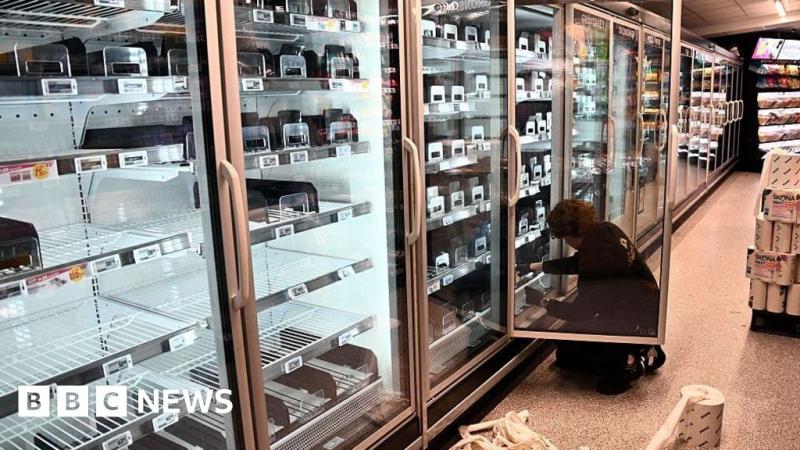


The recent spate of outages in the US was preceded by cyber attacks on water treatment facilities in July and on commercial refrigeration controllers across France in August.
 S E E D E D C O N T E N T
A behind the scenes cyber-security operation has taken place to secure tens of thousands of fridges and freezers at major UK supermarkets, warehouses, restaurants, petrol stations and stadiums from hackers, the BBC has learned.
Recent waves of cyber-attacks in Europe have seen tonnes of food spoiled at hundreds of stores, causing millions of pounds of damage.
France has blamed Iran for one of the waves of attacks that impacted its supermarkets, a claim Tehran denies.
It was thought the UK had largely escaped such hacks as the British refrigeration industry relies on different devices but there was in fact a potential vulnerability the sector has been rushing to fix.
In late October, security researchers discovered a major flaw that, if found by hackers, could have led to even worse damage to the UK.
Since then, researchers, IT teams and the National Cyber Security Centre have been working around the clock to warn dozens of companies.
The BBC has not reported on the large-scale, secretive operation until now to reduce the chances of hackers causing harm if they found the vulnerability.
Thousands of fridges taken off-line
The security threat was discovered by staff at refrigeration consultants Omega Solutions - it was then verified and expanded upon by experts at Pen Test Partners who helped raise the alarm.
The National Cyber Security Centre (NCSC), the Department for Environment, Food & Rural Affairs (Defra) and Food Standards Agency (FSA) were then involved in the campaign to plug the security holes.
They held industry conference calls and tasked teams to contact firms at risk.
Thousands of devices controlling tens of thousands of refrigeration devices were taken off the open internet either remotely or, in some cases, physically - with staff ordered to remove internet cables and monitor temperatures manually.
BBC news has learnt most major supermarkets have been forced to divert IT teams to address the risks, with a worker at one large chain saying they took hundreds of devices offline every day over the course of a week.
"It did feel like a race against time as we were expecting another wave of these fridge hacks to come," said the person, who did not want to be publicly named.
"From a business perspective it could have been potentially devastating with business interruption and supply chain problems. Our warehouses have millions of pounds worth of food that could have been spoiled if any hackers found out about this method of attack," they added.
There have been three waves of hacks on refrigeration temperature controllers so far this year:
- In August, fridges at a small number of US military bases were impacted
- On 11 and 12 October hundreds of supermarkets and food processing sites in France were hit when Danfoss temperature control systems were targeted
- On 1 and 2 November dozens of supermarkets across seven European countries were hit, with Belgium and Luxembourg the worst affected. A small number of blood bank sites in France were also impacted
The waves of attacks prompted an expert at Omega Solutions to examine the security of the most popular refrigeration controllers in the UK, made by British firm Resource Data Management (RDM).
RDM disputes the critical nature of the vulnerabilities exposed but has been praised for its professional response to address the concerns, the BBC understands.
As well as supermarkets, multiple other areas of UK food and beverage industry were also warned to take action about the risks.
These include convenience stores, petrol stations, restaurants and fast food chains, sports arenas, hotels, food processing plants and cold storage sites.

Each RDM controller can be used to remotely control the temperature of dozens of fridges and freezers
"These popular controllers had a similar weak password problem to the Danfoss and other controllers that were attacked so successfully in previous hacks so we had to get the message out as soon as possible and keep it secret," said Ken Munro of Pen Test Partners.
"There is so much extra attention on these ubiquitous bits of kit now that it was likely a matter of days until criminals or nation state hackers figured it out," he added.
RDM, though, says comparisons with the units attacked in mainland Europe are not fair because hacking their fridges and freezers would have involved getting hold of a piece of hardware.
The ethical hackers say this would have been achievable as the hardware in question can be purchased cheaply online on sites like eBay.
"This was a vulnerability identified in a test environment," said Ged Evans, CEO of RDM.
He said the test "went beyond" what such exercises usually involved, as it "included dismantling our hardware".
"In any event we have acted at pace to address this issue and have already deployed first patch releases and have been in proactive contact with our customers to flag any issues and recommend mitigatory steps," he added.
RDM confirmed that there was no sign of any malicious activity on the controllers and that it continued to work with the NCSC and other authorities to monitor the situation.
Be a good human. Grossly derogatory comments, blatantly inflammatory comments, excessive trolling, mean-spirited taunting and insults, scamming, spamming, and off topic comments may be removed in compliance with the site's Terms of Service and the Code of Conduct. The moderators have the final word.

Tags
Who is online

76 visitors
On top of heightened security risks, many corporate management teams are rushing deployment of AI before year-end reporting to justify money sunk into unproven technology. The combination of nefarious actors and incompetent investors has made our technology infrastructure more vulnerable to disruptions.