
Papal conclave live updates: White smoke pours from Sistine Chapel, signaling new pope has been elected

By: Dominique Mamberti (NBC News)


 S E E D E D C O N T E N T
Updated By NBC News
What to know
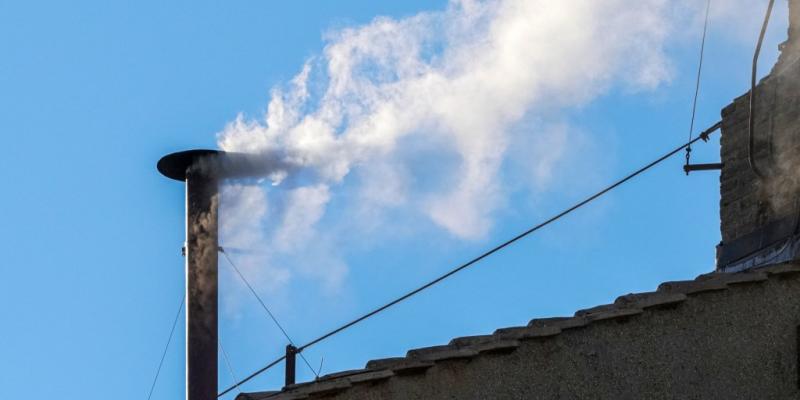
- Cardinals have chosen a new pope, indicated by white smoke rising from the Sistine Chapel's chimney. The identity of the next pontiff is expected to be revealed shortly when he appears on the balcony of St. Peter's Basilica.
- 133 red-robed cardinals from around the world cast their ballots to elect the new pope.
- During the papal conclave, the cardinals were barred from leaving or having any contact with the outside world as they selected the next leader of the world's 1.4 billion Catholics.
What's next for the new pope
Henry Austin
Inside the Vatican's cloistered halls, the new pope will be preparing to adopt his papal name which can indicate what type of pontiff he intends to be.
Then he will don a new white papal cassock and the ceremonial fisherman's ring before being led through the Hall of Benedictions and out onto the balcony, known as the Loggia of the Blessings.
There, his identity will be revealed to the thousands gathered below and the millions more around the world who have closely watched the conclave.
Crowds await annoucement of the new pope
Alexander Smith
Reporting from Vatican City
The crowd's attention has now turned from the chimney to the loggia, the balcony where the new pope will be announced.
Rapturous applause greets announcement of new pope
Alexander Smith
Reporting from Vatican City
"They did it, they did it!"
Rapturous applause, yelling and plenty of tears in St. Peter's Square at the sign of white smoke.
"I'm so happy, it's so incredible to be here at this moment," said Roseleia Cordeiro, 42, from Brazil, weeping while embracing a group of friends. "I don't know how to express myself but I am grateful to God for this moment."
The smoke came and came — and kept coming — each renewed billow prompting a fresh wave of emotion from the assembled masses.
White smoke and a new pope
Alexander Smith
Reporting from Vatican City
Habemus Papam! White smoke billowed from the Sistine Chapel's chimney this afternoon, announcing the election of a new leader for the world's 1.4 billion Catholics.
Crowds in St. Peter's Square erupted in cheers as bells pealed from the towering basilica, confirming that the 133 cardinal electors who have been sequestered inside since Wednesday had reached a two-thirds majority decision on who will succeed Pope Francis.
The new pope's identity will be revealed shortly by Dominique Mamberti, the senior cardinal deacon, who convention says will appear on the St. Peter's balcony that overlooks the square and announce, "Habemus Papam" — "We have a pope."
Inside the Vatican's cloistered halls, the new pontiff will be preparing to adopt his papal name — which can indicate what kind of pope he intends to be — before donning a freshly tailored white papal cassock and the ceremonial fisherman's ring.
He will then be led through the Hall of Benedictions and out onto the balcony, known as the Loggia of the Blessings, where his identity will be revealed to the thousands gathered below and the millions more around the world who have closely watched the conclave.
Two votes, one smoke expected for this afternoon
Minyvonne Burke
According to general guidance issued by the Vatican, the third vote should currently be underway, beginning at around 5:30 p.m. local time (11:30 a.m. ET). A fourth is scheduled for 7 p.m. local time (1 p.m. ET). In the past, it has taken at least an hour and possibly more for each vote to conclude, and the Vatican's guidance is subject to change.
Clergy on a rooftop terrace in Vatican City waiting to see the smoke from the Sistine Chapel chimney.Luca Bruno / AP
Typically, there is no smoke for each of the four votes. Black smoke billows after a pair of inconclusive votes, while white smoke will immediately billow if a new pontiff is chosen.
Hoping for a pope who understands the lives of Catholics outside Europe
Alexander Smith
Reporting from Vatican City
A challenge for the next pope — wherever he is from — will be how to address the needs of a church whose flock is growing fastest in the Global South.
"We need a pope who understands the issues facing the Third World," said Piere Domerson, 39, a priest from Haiti currently studying in Rome. "We always remember how Pope Francis understood this universality of the church," he said, as he waited for the smoke in the warm afternoon sun. "And because he appointed more cardinals from outside Europe, we have seen that become more universal, too."
Piere Domerson.Alexander Smith / NBC News
World flags are flying as global Catholics converge on St. Peter's Square
Alexander Smith
Reporting from Vatican City
Almost like a music festival, some people have brought flags on long poles that flutter high above the crowd.
Among them are the Bulgarian, Spanish, Czech and Brazilian emblems. And Jerry Grogan, from Indianapolis, is waving the Star Spangled Banner.
Jerry GroganAlexander Smith / NBC News
"I think there's a strong possibility they may reach a decision this evening and elect the next pope," said Grogan, 65, who works as a construction manager.
Another American, Brendan Prestage, 24, from Boston agrees.
"The probability based on previous conclaves is that it could be this evening," said Prestage, who works in tech and said prayer helped him when he was recently fired from one of the industry giants. "I hope it's this evening because I have to fly home tomorrow for a friend's wedding."
The conclave is an election like no other
Astha Rajvanshi
Jean-Nicholas Fievet
Astha Rajvanshi and Jean-Nicholas Fievet
The conclave is unlike any other election, and not just because of its sacred or spiritual dimension.
Officially, there is no open campaigning or polling, and in this election, hardly any indication about whether there are any leading contenders for the next pope. The candidates do not declare themselves publicly, nor do the cardinal-electors speak on the record about who they might vote for.
The voting results are not made public, either. A conclave has often been referred to as one of the few occasions where it is hard to predict the internal dynamics, especially given the diverse and larger-than-ever nature of this group of cardinals.
Cardinals in the Sistine Chapel before the start of the conclave yesterday.Simone Risoluti / Vatican Media via AFP - Getty Images
Air of anticipation as people line up for smoke watch at St. Peter's Square
Alexander Smith
Reporting from Vatican City
The security line outside the square is far busier than it was yesterday.
There is an air of anticipation, a chance this could be the one, with the cardinals inside taking their fourth and fifth votes since this process began.
Alexander Smith / NBC News
Begrudged restaurant worker says phone signal outage more 'a matter of principle'
Martina Ucci
Reporting from Vatican City
Anna Rita Cherubini, 52, was born and raised in Rome, and for the past 10 years has worked at Angelo alla Cupola, a restaurant just a street away from the Vatican. "Work-wise, this internet shutdown hasn't hit us too hard — sure, the POS system is a bit slower, but it still works," Cherubini said.
But, she added, "It's more a matter of principle."
"Do regular people who are just working or living their lives really have to pay the price because some cardinals aren't responsible enough to stay off their phones when it's forbidden?" she said.
Smoke watch begins again
Astha Rajvanshi
Jean-Nicholas Fievet
Astha Rajvanshi and Jean-Nicholas Fievet
The cardinal electors are believed to have returned to the Sistine Chapel to vote in the fourth ballot, after two votes this morning lasted around three hours.
Smoke could come sooner, or as we saw yesterday, later, after the second vote takes place this evening at about 7 p.m. local time (1 p.m. ET).
Politically savvy cardinals will want to quickly wrap up this conclave, historian says
Astha Rajvanshi
Peter Guo
Astha Rajvanshi and Peter Guo
This year's conclave is the largest ever, with 108 of 133 cardinal electors having never before taken part in the election of a new pontiff. It's also the first time that cardinals from outside Europe — more than 20 are from Asia and 18 are from Africa — outnumber their European counterparts.
While many of those voting for the first time were chosen by the late Pope Francis and may look to continue his progressive legacy, conclaves are ultimately "hard to predict because they're completely secretive," said Miles Pattenden, a Catholic Church historian from Oxford University.
Cardinals before the start of the conclave in the Sistine Chapel yesterday.Vatican Media via AFP - Getty Images
This conclave's 133 cardinal-electors are "sophisticated electorates of very experienced men, most of whom got to be cardinals because they're good at politics." But these men also know better than to openly vie for the role: "The first rule if you want to be pope is never to campaign to be pope," he said.
Still, the historian, who is watching the events unfold in Rome, said he wouldn't be surprised if a new pope was elected this afternoon, given that the last two papal elections, in 2005 and 2013, also ended on the second afternoon.
Show more
"That's the best narrative for them," Pattenden said, adding that failing to reach a decision by Friday would most likely result in a "more intensive" phase of voting on Sunday, with a rest day on Saturday. He warns that the delays could also signal to those watching that the divisions in the Church "are actually bigger than they've been letting on."
But he said the cardinals may have already narrowed their choice down to three or four in the first three rounds of voting, "so they'll have a good idea of who's viable and has momentum," he said.
Still, he hedged his bets by adding, "obviously, we have no access whatsoever to any of that information."
What do cardinal electors eat during the conclave?
Peter Guo
Matteo Moschella
Peter Guo and Matteo Moschella
You may think the red-robed voters will be enjoying a conclave feast. But they're not.
Pope Francis having lunch at the Paul VI audience hall in the Vatican in 2018.Vincenzo Pinto / AFP via Getty Images
The conclave menu is simple, offering only basic food, including pasta, white meat or fish, vegetables, as well as bread and fruit, according to the National Catholic reporter. Desserts are served only on rare occasions.
No voter can dine out since the conclave is secluded from the outside world.
Food is delivered through a revolving door after a careful inspection to prevent secret messages, with pies and chicken forbidden as it would be too easy to stick a note inside, according to an account by a papal personal chef in the 16th century.
Tight control over food in the conclave started in 1274 when Pope Gregory X decreed that cardinal electors would get only one meal a day if the papal voting took longer than three days. The restrictions were imposed to ensure a more efficient voting process, although they have since been relaxed.
A traditional conclave calls for a traditional lunch for smoke-watchers
Alexander Smith
Reporting from Vatican City
A lunch break for the conclave-watchers. After midday when the black smoke wafted, thousands spilled out of the square and across the River Tiber like pilgrims following Constantine the Great.
The five-hour break was a perfect chance for worshippers and tourists alike to sample Rome's legendary gastronomic scene.
People sipped chianti in sun-dappled trattorias on Via dei Banchi Vecchi, and swooned over burrata alongside the Venetian-red stucco walls of the city's historic buildings.
Alessandro Masseroni, 25, a deacon from the north of Italy studying to be a priest in Rome, almost scoffed when NBC News asked what he ate.
"Carbonara, of course!" he said.
Americans may think they have eaten this classic dish, but their inclusion of ingredients such as ham and cream appalls people in the Old Country, where eggs, pecorino romano and pork jowl are the only accepted ingredients.
"It was fantastic," Masseroni says by way of review, before making his way back to the square.
Lines of onlookers at St. Peter's Square
Katie Primm
Reporting from Vatican City
The electors are all on their lunch break right now, so there's no chance of new smoke until they get back to voting at the Sistine Chapel. But that's not stopping people from trying to get into the square. At the north gates, crowds are lining up to have their bags checked before they enter.
Katie Primm / NBC News
For cafe owners, the Vatican's signal blackout is causing a lot of problems
Martina Ucci
Reporting from Vatican City
Cardinals may be facing a lock-in and a telecommunications blackout as they vote for Pope Francis' successor, but the patrons of the Gran Caffe Rossetti hadn't bargained for the same.
It's the only cafe that faces Piazza Papa Pio XII, so you'd expect it to be full of customers. But not even half the tables are occupied. "The area isn't freely accessible, and a lot of people are struggling to get here," says Flor Venegas, 46, originally from Venezuela and now the cafe's manager.
Flor VenegasMartina Ucci
During the late pope's funeral and now the conclave, Venegas said the cafe has lost a lot of its customers because the area has been secured.
Plus, a partial outage affecting some network repeaters is causing more problems: the card reader only works intermittently, and that leads to endless lines of frustrated customers. "No one told us anything about these possible issues with the phone network — it's honestly absurd," Venegas said, visibly frustrated.
She adds, "We just hope this conclave ends soon, because it's simply impossible to work under these conditions."
People turned to this Oscar-winning film to find out how a papal conclave works
Angela Yang
As the Vatican prepared for the election of a new pope, many around the world were doing their own preparations — by watching a movie about it.
Ralph Fiennes in "Conclave."Focus Features
After news of Pope Francis' death broke, the film "Conclave" had a viewership boost across streaming platforms it was available to watch on, according to Luminate, an entertainment data analytics company.
Edward Berger's drama, which won the Oscar this year for best adapted screenplay, goes behind the scenes of the Vatican for the secretive process of electing a pope. The process is complicated further by power-hungry cardinals, played by Ralph Fiennes, Stanley Tucci and John Lithgow. (The film's distributor is Focus Features, a unit of NBC News' parent corporation, Comcast.)
Since its release in October, the movie has spawned a fervent fan base online, with many social media users circulating a slew of viral memes and passionate fan edits comparing it to pop culture staples like "The Real Housewives" and "Mean Girls."
Read the full story here.
How much longer will it take to elect a new pope?
Peter Guo
If you're just joining us, it's day two of the conclave and if history is any guide, it may not be too much longer before we have a new pope. Here's a look at the last few conclaves and how long they took to come to a decision:
- In 2013, Pope Francis was elected after five ballots over two days.
- In 2005, Pope Benedict XVI was elected after four votes in two days.
- In 1978, Pope John Paul II was elected after eight ballots and three days.
In fact, there hasn't been a conclave that lasted for more than four days since Pope Pius XI was elected in 1922 after five days.
Let's see how today's second set of votes pans out.
St Peter's Square crowds react to black smoke
Roisin Savage
A few minutes ago, black smoke billowed from the Sistine Chapel chimney signaling that a decision had not yet been made on who will be elected the new pope.
Here are some of the scenes from the crowds in St. Peter's Square as news broke:
Christopher Furlong / Getty ImagesDimitar Dilkoff / AFP via Getty ImagesStefano Rellandini / AFP via Getty ImagesDimitar Dilkoff / AFP via Getty Images
Everything you always wanted to know about conclave voting but were too afraid to ask
Astha Rajvanshi
Katie Primm
Astha Rajvanshi and Katie Primm
Voting in the conclave is a highly choreographed and highly scrutinized process that involves non-electing cardinals — usually churchmen over the age of 80 who are barred from voting — taking on different roles.
Nine ballot-officials chosen by the junior cardinal-deacon help keep the ballot process fair and running smoothly. They include three scrutineers, who announce and count the votes; the revisers, who check the work of the scrutineers; and 3 infirmarii, who collect ballots from any cardinal too unwell to make it from their lodgings to the Sistine Chapel for the vote.
When it's time to vote, the masters of ceremonies and the secretary of the College of Cardinals must leave the cardinal-electors alone in the Sistine Chapel. The cardinals then proceed to the altar and hold their ballots aloft beneath Michelangelo's "Last Judgment" so that they can be seen by all present.
Each cardinal kneels for a moment of prayer, before rising and saying, "I call as my witness Christ the Lord, who will be my judge, that my vote is given to the one who before God I think should be elected." He then puts his ballot onto the paten, or small plate, from which it is tipped into a receptacle shaped like a large chalice. The cardinal then returns to his seat.
Show more
With all votes cast, the scrutineers make sure that the right number of ballots is present, before giving the urn a shake and transferring the ballots one by one to another urn. If the number of ballots is off, all votes are immediately invalidated and burned, followed by another vote. If the count tallies, the ballots are then opened and counted.
Seated at a table before the altar, scrutineer 1 opens a ballot, notes the name, and passes it on to scrutineer 2. He also notes the name, before passing the ballot to scrutineer 3, who reads out the name and marks his own "scorecard." Cardinals are allowed to keep their own tally, too, but they have to be burned with the ballots at the end of each voting session.
After reading out each ballot, the scrutineers thread the ballots together, knotting the tally at the end of counting. After the final ballots are opened, the scrutineers tally the votes and write them on a separate sheet of paper.
10,000 spectators watched the black smoke this morning
Giulia Presutti
Reporting from Vatican City
Christopher Furlong / Getty Images
Rome police tell NBC News that around 10,000 spectators were gathered in St. Peter's Square to watch the black smoke coming out of the Sistine Chapel chimney.
Black smoke billows as Catholic cardinals remain undecided on new pope
NBC News
Reporting from Vatican City
The cardinals will now break for lunch
Astha Rajvanshi
With second round of voting this morning now complete, the cardinals will soon break for lunch, leaving the Sistine Chapel to return to their lodgings at Casa Santa Marta.
Then they will return to the chapel for another two rounds of voting later this afternoon, scheduled to begin around 4 p.m. local time (10 a.m. ET).
Smoke-watchers will just have to come back later
Alexander Smith
Reporting from Vatican City
For a few seconds it wasn't entirely clear what color the smoke was. When it billowed into the blue cloud-dappled sky, it certainly looked a little gray.
"For a moment, I thought — it's white, it's white!" said Miguel Alfonso, 35, a priest from Honduras.
Before long the result was unequivocal, however.
"Ah, negra!" his friend, David Barrios, 41, a priest from Valencia, Spain, shouted.
Shortly before that, confusion and excitement abounded as the smoke turned white for just a second before it went out. It's safe to assume this was just the chemical element of the stove being turned off.
Black starts to emanate from the Sistine Chapel chimney
Astha Rajvanshi
Plumes of black smoke were seen billowing from the Sistine Chapel chimney, signaling that the 133 cardinal-electors have not yet reached a decision to elect a new pope.
Alberto Pizzoli / AFP via Getty Images
The cardinals must come to a two-thirds majority to reach a decision. It's the second black smoke signal of the conclave after three rounds of voting.
At age 45, Ukrainian-born cardinal is youngest papal elector
Peter Guo
The average age of cardinal voters is 70 years and three months. But the conclave's youngest member is only 45.
Born in Ukraine in 1980, Mykola Bychok is a Melbourne-based bishop. Bychok became the most senior Catholic official in Australia when he as "elevated to the dignity of Cardinal" last year by late Pope Francis.
Cardinal Mykola Bychok, second from left, arrives at St. Peter's Basilica on Friday.Andrew Medichini / AP
He is the first Australia-based cardinal since George Pell, who died in 2023. Bychok spent most of his priesthood in Ukraine and served as a vicar in New Jersey from 2015 to 2020.
Bychok has been based in Melbourne since January 2020 and will be eligible to apply for Australian citizenship this year, according to the Australian Broadcasting Corporation. He was enthroned in 2021 as the third bishop of the Melbourne Eparchy.
No smoke so far means no decision just yet
Astha Rajvanshi
There has so far been no smoke from the Sistine Chapel's chimney, which means that the cardinal-electors have not yet reached a conclusion on who should be the next pope.
Nuns in St Peter's Square cast their eyes on the Sistine Chapel today, awaiting the white smoke signal.Dimitar Dilkoff / AFP via Getty Images
It could also mean that the first morning vote has gone over time. If we don't see smoke soon, we may next expect it at around noon local time (6:00 a.m. ET). As a reminder: there are four chances for white smoke on a regular conclave day — after each of the four votes — but only two chances for black smoke after each pair of votes.
Last night, crowds waited much longer than expected for a smoke after after Wednesday's first ballot.
There was speculation around why it took so long: it could be that the meditation ahead of the vote ran much longer than anticipated, or that the voting was delayed because of a procedural mistake. It may also have something to do with the fact that there are more cardinals than ever before, most of whom are new to conclaves, and therefore took more time than estimated to vote.
Argentinian family talks of worship — and soccer — outside the Apostolic Palace
Alexander Smith
Reporting from Vatican City
In the throng outside the Apostolic Palace you will find conversations about religion, politics, local gastronomy — and soccer.
From left, Frederico, Ricardo, Juliette and Silvena of the Borggiano family.Alexander Smith / NBC News
The Borggiano family are from Buenos Aires, near the neighborhood where the late Pope Francis grew up. They flew here to see the conclave — but right now they are debating which Argentinian legend is better: Lionel Messi or Maradona.
"You're British?" Ricardo Borggiano, 62, correctly says of this NBC News reporter. "What do you think about Maradona?" he asks cheekily, gesturing with his outstretched arm in a reference to the "hand of god" goal that saw Argentina eliminate England from the 1986 World Cup.
After NBC News attempted to get the conversation back to the matter in hand, his son, Frederico, 33, who now lives in Madrid and met the rest of the family here, said, "We've just had an Argentinian pope, so I don't think we'll get another one. I just hope we see white smoke today."
Holy smokes! Everyone's watching for black or white smoke, but how is it made?
Katie Primm
All eyes are on the Sistine Chapel chimney to see if the cardinals have elected a new pope, signified by whether it will billow a white smoke and the church bells ring.
With two morning votes and two afternoon votes on each full day of the conclave, the temporary chimney installed last week by the Vatican's fire department will emit black smoke if the vote is inconclusive.
It may seem as old as the papacy itself, but the frescoed chapel's cast-iron stove was first used in 1939 to burn ballots and personal notes. Since 2005, the use of that stove triggers an electronic, smoke-producing device outfitted on a second, more modern one. Both stoves are about 3.2 feet high and have two openings — one for lighting them and one for ballots.
According to the Vatican press office, the black smoke is made by a cartridge holding a mixture of potassium perchlorate, anthracene and sulphur. The white smoke is created by a mixture of potassium chlorate, lactose and a pine resin also known as Greek pitch. The smoke travels up almost 100 feet of steel and copper tubes to the chimney and the world beyond.
Panini, water and a telescopic folding stool: how to survive the conclave
Alexander Smith
Reporting from Vatican City
For the avid smokewatcher, preparation is key.
Joaquin Lopez using his telescopic stool at St. Peter's Square on the second day of the conclave.
In this sense, it's clearly not Joaquin Lopez's first rodeo. The Spanish telecoms engineer is used to lengthy religious gatherings, having waited for six hours at Semana Santa — Spain's Holy Week — last month.
Down at the very front of St. Peter's Square, he proudly shows off his top conclave hack: a folding, telescopic stool. These are common in his native Spain because of municipal laws banning portable backed chairs at such events.
"We knew we would have to wait a long time and so this is perfect," said Lopez, 55, from Andalusia, proudly shrinking down his seat to little larger than a dinner plate. "We were here for five hours yesterday but it was fine because we were able to sit down, eat some paninis and drink water. We had some beers but we weren't allowed to bring them in, so we had to drink them at the security scanners outside."
Crowds in St. Peter's Square eagerly await the results from the second vote
Alexander Smith
Reporting from Vatican City
There are already thousands of people in St. Peter's Square eagerly awaiting the results from the second round of voting. If the cardinals have elected a new pope, white smoke should soon appear from the Sistine Chapel chimney around 10:30 a.m. local time (4:30 a.m. ET).
People gather near St. Peter's Basilica, on the second day of the conclave.Murad Sezer / REUTERS
The weather is a weird mix of warm sun that keeps hiding behind a big gray cloud sprinkling the cobbles with intermittent drizzle. Groups of firefighters, police and civil guard have ducked into a cafe just off the square to stock up on coffee and cream-filled maritozzi buns.
"It's been very, very busy," says one of the a baristas clearing away small plates from the counter, apologizing that they don't have time to give their name. "It looks like today will be the same."
Even the ballot cards used by the cardinals were designed carefully
Astha Rajvanshi
Katie Primm
Astha Rajvanshi and Katie Primm
The cardinals are casting their ballots using an elaborate, highly scrutinized system which begins with the ballot cards themselves. Said to have been designed by the late Pope Paul VI, who died in 1978, the ballot cards on which each cardinal will write in the name of his preferred candidate are rectangular in shape so that they can be folded in half and read, "Eligo in summum pontificem..." or, "I elect as supreme pontiff...".
Each cardinal will receive multiple ballots from the masters of ceremonies. After writing his preferred name, he will fold his ballot card over twice. Cardinals may only write the name of one candidate; more than one name would deem their ballot invalid.
Who will be the next pope?
Henry Austin
Dust off the history books and there are papal conclaves with international intrigue, royal rigging and even riots, a checkered past that belies the air of sanctity and solemnity surrounding modern papal elections.
Pope Francis with Cardinal Pietro Parolin, his chief diplomat, who is among those tipped to be the next pope.Alessandra Tarantino / AP
"The great joy of the conclave is that nobody really knows and it's such a unique electorate," James Somerville-Meikle, the former deputy director of the Catholic Union of Great Britain, told NBC News before Francis' death. "So many conclaves in the past have thrown up surprises."
The College of Cardinals, he said, has always been faced with two questions: "Do we try something new? Do we go for continuity?"
Take a look at NBC News' analysis of Cardinals Zuppi, Parolin, Tagle, Erd, and the other men tipped to be the next leader of 1.4 billion Catholics around the world.
Read the full story here.
Catholic cardinals take secrecy oaths in Latin ahead of the start of conclave yesterday
NBC News
What can we expect from today's schedule?
Astha Rajvanshi
Jeff Pachoud / AFP - Getty Images
Today will see the cardinals assemble for a second day of voting to elect the new pope. They can vote up to four times a day, with two rounds taking place in the morning and two in the afternoon. Meanwhile, crowds continue to gather in St. Peter's Square and wait for a white smoke signal from the Sistine Chapel's chimney, which will indicate that the 267th pope has been chosen.
The times below are estimates based on Vatican guidance and the past two conclaves, and can vary throughout the day.
- 7:45 a.m. (1:45 a.m. ET): The cardinals will have breakfast before leaving Casa Santa Marta, the five-story guesthouse in St. Peter's Basilica where they reside in total isolation for the duration of the conclave.
- 8:15 a.m. (2:15 a.m. ET): The cardinals will attend a Mass held in the Pauline Chapel.
- 9:15 a.m. (3:15 a.m. ET): The first vote commences.
- 12:00 p.m. (6:30 a.m. ET): The second vote commences.
- The cardinals will leave the Sistine Chapel for lunch.
- 3:45 p.m. (9:45 a.m. ET): Cardinals will return to the chapel for the next round of voting.
- 5:30 p.m. (11:30 a.m. ET): The third vote commences.
- 7 p.m. (1 p.m. ET): The fourth vote commences.
- The cardinals will return to Casa Santa Marta for dinner.
There tends not to be smoke for each of the four votes. Black smoke, for example, will only follow a pair of inconclusive votes. Meanwhile, if a new pope is chosen, white smoke will immediately follow the conclusive vote regardless of whether it's the first of a pair or the second.
The first ballot round begins
Astha Rajvanshi
If Vatican guidance is correct, by now the cardinals will have returned to the Sistine Chapel to cast their first votes to elect a new pope. It's the first of up to four rounds of voting expected to happen throughout the day.
Black smoke signals no new pope chosen on first day of conclave
NBC News
The doors of the Sistine Chapel were sealed Wednesday as the papal conclave got underway. After three hours and fifteen minutes, black smoke billowed from the chimney above the chapel, signaling the cardinals had not yet selected a new pope. NBC News' Lester Holt reports from the Vatican.
First night of voting left crowd anxious and jubilant
Alexander Smith
Reporting from Vatican City
When the black smoke finally came after more than three hours last night, for some the mood had sailed way past excitement through anticipation, and it was hovering dangerously close to distraction.
It was soles rather than souls that needed prayer, and standing with limited supplies of food and water became too much for a few of the observers. At one point, a golf cart drove through the throng and collected someone in need of medical attention. Others appeared to leave the square altogether. People kept busy by cheering the occasional seagull that landed next to the chimney or by clapping, perhaps in the hope that those hermetically sealed inside the Sistine Chapel might hear their encouragement.
The long-awaited moment diced with anticlimax. Past 9 p.m. local time, it was too dark to see the chimney against the sky, so most people had their eyes and phones trained on the big screens showing the action. But seconds before the smoke finally arrived, the screens cut out, meaning it was difficult to actually see the moment itself.
For the faithful gathered here, of course, the sideshow drama was not the point.
Show more
"I was asking my soul, 'What's with the long wait?'" said the Rev. Mac Bean, 27, a priest from Zimbabwe who was wearing a white flat cap and white collar tucked into his blue short-sleeve shirt. "But it's normal not to get a decision on the first try."
Meryl Adriano, 41, a teacher from Melbourne, Australia, said: "I don't mind waiting, because we're on holiday for two weeks. What's a few hours when we've waited 12 years to see this? There are so many other people waiting, too, they are giving us energy."
Day 2 of conclave starts after black smoke billows
Astha Rajvanshi
The 133 cardinal electors will shortly return to the Sistine Chapel to commence the second day of the conclave after black smoke billowed from the chimney atop the Sistine Chapel last night.
Black smoke following the first round of voting for the successor to Pope Francis.
Smoke of that color indicates that no new pope was elected during yesterday's first round of voting.
According to the Vatican's schedule, today could see the cardinals casting ballots four times.
After having breakfast, the cardinals have headed to a Mass service before returning to voting, with two ballots cast in the morning starting at 9:15 a.m. local time (3:15 a.m. ET) and two in the afternoon starting at 5:30 p.m. local time (11:30 a.m. ET).
NEW UPDATESNBC News
Trolling, taunting, spamming, and off-topic comments may be removed at the discretion of group mods. NT members that vote up their own comments, repeat comments, respond to themselves, or continue to disrupt the conversation risk having all their comments deleted. Please remember to quote the person(s) you are replying to preserve the continuity of this seed.

Tags
Who is online
93 visitors
We have a new Pope, probably not trump.
Ladies and gentlemen, your new Pope. Pope Joseph I
Well, he is the perfect choice to continue the long-standing tradition of abusing children.