

MAGA vs TEA Party vs Democratic Party

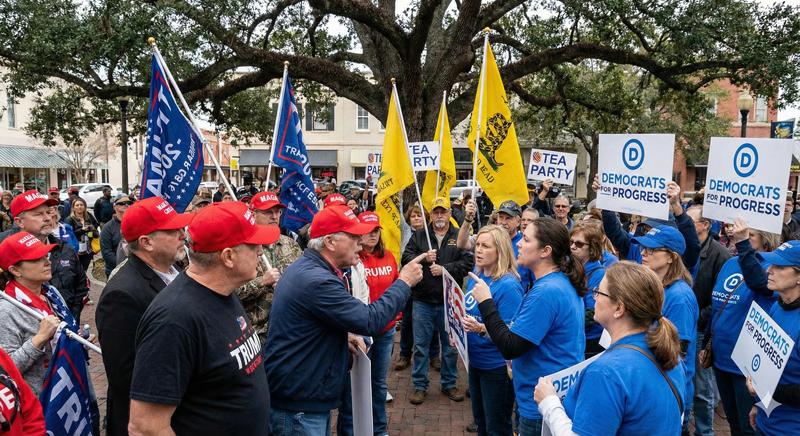
There has been a lot of confusion (obfuscation?) over what MAGA is and is not. I engaged ChatGPT to explore what MAGA really is and how MAGA compares to the TEA Party movement and the Democratic Party. The ChatGPT session is very long so only a summary is presented here. (The summary is fairly long, too.) For those who might wish to wade through the entire session, here is a link:
The short and sweet version is that MAGA is something entirely different. MAGA and the TEA Party are opposites on almost all 'conservative' issues.
Prompt: "Could you prepare a summary of the information that has been covered chat that compares and contrasts the TEA Party movement, grassroots MAGA movement, and the Democratic Party?" (There are some tidbits in the full session that will probably sour stomachs. Again, here's a link the to full session: )
ChatGPT:
Origin and Ideological Foundations
TEA Party
-
Emerged in 2009 during the Obama presidency.
-
Rooted in fiscal conservatism , free-market ideology, and anti-tax activism.
-
Strong intellectual lineage from Reagan-era conservatism and libertarian think tanks.
-
Not a fundamental challenge to the GOP’s identity.
Grassroots MAGA
-
Emerged between 2014–2016, but with earlier antecedents (Perot, Reform Party, UWSA).
-
Rooted in national populism , cultural conservatism, skepticism of globalism, and working-class economics.
-
Seeks to revive older Protestant civic-republican traditions within the GOP.
-
Represents a deeper revision of Republican priorities.
Democratic Party
-
Institutional continuity from 20th-century liberalism.
-
Ideologically grounded in public-sector solutions , social welfare, multiculturalism, expert-driven policy, and managed capitalism.
-
More technocratic and coalition-based.
Summary Comparison: TEA Party, Grassroots MAGA, and the Democratic Party
This summary captures:
-
ideological foundations
-
attitude toward elites
-
bottom-up vs. top-down organization
-
use of grievance
-
political style and mobilization
-
policy priorities
-
relationship to “establishment” institutions
-
their conflicts with each other
1. Foundational Worldviews
TEA Party
-
Rooted in libertarian and free-market conservatism.
-
Emphasizes fiscal restraint, limited government, deregulation, and tax reduction.
-
Frames national health in terms of economic freedom and small government.
-
Leans on the intellectual foundations of Reagan-era conservatism and supply-side economics.
Grassroots MAGA
-
Rooted in nationalist, populist, and community-based conservatism.
-
Prioritizes cultural stability, national identity, strong borders, industrial strength, and working-class interests.
-
Less concerned with doctrinaire economics; more focused on sovereignty, cohesion, and lived experience.
-
Draws ideological lineage from Perot-era reform populism and 19th-century grassroots populist movements.
Democratic Party
-
Rooted in technocratic progressivism, institutionalism, and pluralistic coalition politics.
-
Emphasizes social programs, regulatory oversight, equity-based policy, and expert-driven governance.
-
Frames national health in terms of institutional competence, social welfare, and managerial problem-solving.
2. Attitudes Toward Public- and Private-Sector Elites
TEA Party
-
Distrusts public-government elites (federal agencies, Congress, taxation).
-
Trusts private-sector elites (corporations, markets, donors).
-
Positions itself as anti-government, not anti-establishment in the broad sense.
Grassroots MAGA
-
Distrusts both public and private elites.
-
Government (bureaucracy, national-security agencies)
-
Corporate (Big Tech, global finance, multinational corporations)
-
Media and academic elites
-
-
Sees elites as out of touch with national and cultural needs.
-
Genuinely anti-establishment in a systemic sense.
Democratic Party
-
Trusts public-sector elites (scientists, policy experts, agencies).
-
Distrusts private-sector elites (corporations, unregulated markets, wealthy financiers).
-
Views government as the legitimate establishment.
3. Bottom-Up vs. Top-Down Decision Making
TEA Party — Top-Down
-
Although it had a grassroots veneer, its agenda was shaped heavily by:
-
conservative think tanks
-
major donor networks
-
GOP-aligned advocacy groups
-
-
Policy was pre-scripted before activists mobilized (“limited government,” “fiscal responsibility,” etc.).
Grassroots MAGA — Bottom-Up
-
Agenda comes from the base, not from institutions or think tanks.
-
Rallies, online communities, and localized cultural values drive policy priorities.
-
Rejects elite control of ideological direction in both parties.
-
Grassroots direction often contradicts the GOP donor class and conservative intellectual elite.
Democratic Party — Top-Down
-
Policy and priorities set by:
-
policy professionals
-
NGOs
-
academic experts
-
consultants
-
institutional donors and advocacy organizations
-
-
Grassroots groups operate within a framework created by party elites.
4. Use of Grievance
TEA Party
-
Grievance framed around taxation, debt, and perceived government excess.
-
More ideological than emotional; grievances serve to mobilize around shrinking government power.
-
Grievances targeted almost exclusively at the public sector.
Grassroots MAGA
-
Grievance serves as community-unifying glue .
-
Grievances aim to restore perceived national/cultural integrity, economic sovereignty, and moral order.
-
Grievances motivate collective purpose rather than transactional demands.
-
Focuses on existential/social issues rather than technocratic ones.
Democratic Party
-
Grievance tends to be issue-specific and transactional (e.g., healthcare access, racial disparity, climate impact).
-
Used to negotiate policy modifications for specific groups.
-
Emphasizes accommodation and incremental reform rather than cultural restoration.
5. Political Mobilization Style
TEA Party
-
Organized through donor-backed groups (FreedomWorks, AFP).
-
Focused on protests, town halls, and electoral primaries.
-
Heavy reliance on organized advocacy networks.
Grassroots MAGA
-
Rallies operate like cultural events, revival meetings, or populist festivals.
-
Decentralized communication: influencers, online networks, community ties.
-
More spontaneous, emotional, and communal than TEA Party mobilization.
-
Rejects traditional political machinery.
Democratic Party
-
Mobilization through formal organizations:
-
unions, NGOs, campus groups, activist organizations, party committees.
-
-
Protests are often coordinated through institutional networks rather than spontaneous community gatherings.
-
Emphasis on formal coalition-building rather than populist crowd energy.
6. Policy Priorities
TEA Party
-
Deficit reduction
-
Small government
-
Low taxes
-
Deregulation
-
Free trade
-
Minimal role of state
Grassroots MAGA
-
Border security
-
Cultural cohesion
-
Protectionist/industrial policy
-
Reduction of foreign entanglements
-
Anti-corporate globalism
-
Economic nationalism
-
Defense of traditional community institutions (often Protestant-influenced but not Evangelical-driven)
Democratic Party
-
Social welfare expansion
-
Regulatory activism
-
Climate policy
-
Equity-based frameworks
-
International cooperation
-
Professionalized governance
-
Technocratic problem-solving
7. Relationship to the Republican and Democratic Parties
TEA Party
-
Folded quickly into GOP establishment structures.
-
Aligned with GOP economic orthodoxy.
-
Served as a pressure faction within the party, not a transformative one.
Grassroots MAGA
-
Transformational, not merely influential.
-
Attempts to reconstruct the GOP’s identity, priorities, and electorate.
-
Represents a philosophical challenge to both parties’ elite structures.
Democratic Party
-
Continues to operate through professional, institutional, and managerial elites.
-
Faces internal tension between establishment Democrats and movement-based progressives.
8. Summary Table
| Feature | TEA Party | Grassroots MAGA | Democratic Party |
|---|---|---|---|
| View of Government | Distrust; government = main problem | Deep distrust; part of the elite system | Trust; government = legitimate authority |
| View of Corporations | Trust | Distrust | Distrust |
| Public vs Private Elites | Anti-public, pro-private | Anti-both | Pro-public, anti-private |
| Structure | Top-down | Bottom-up | Top-down |
| Grievance Use | Ideological; anti-government | Communal; moral and cultural restoration | Transactional; targeted reform |
| Mobilization | Organized protests | Rallies, community events, decentralized networks | Formal organizations, managed activism |
| Economic Orientation | Libertarian/free-market | Protectionist/nationalist | Technocratic/social-democratic |
| Role in Party Politics | Pressures GOP but conforms | Reconstructs GOP identity | Controls Democratic establishment |
The grassroots MAGA movement is not just another conservative faction within the Republican Party. MAGA is an attempt to restore the Republican Party to its founding ideals of progressive nationalism. Trump may fool people into believing he created MAGA but that's just another falsehood.
MAGA wants to restore the Republican Party to the party of Abraham Lincoln. Rally round the flag, boys.