
Locking Carbon Dioxide Into Concrete Is a Cool Idea

By: Peter Coy (Bloomberg)
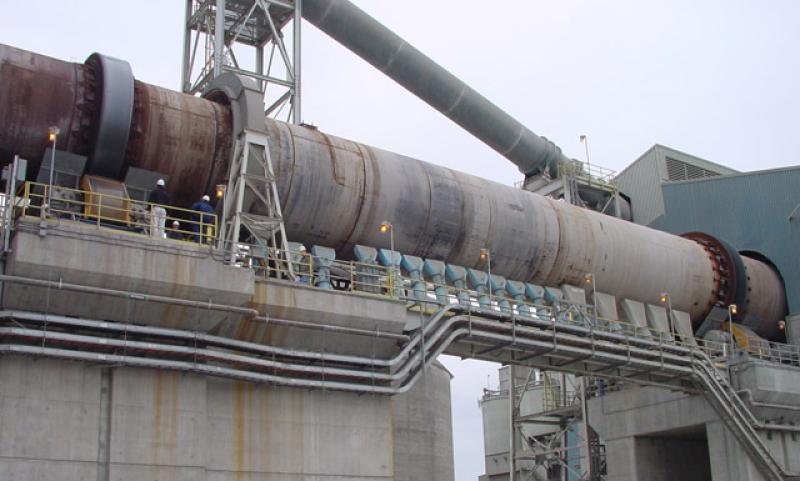


Hype can't overcome chemistry. Cement uses limestone as a raw material which is composed of calcium carbonate. Heating the limestone converts the calcium carbonate to calcium oxide and releases carbon dioxide. Injecting carbon dioxide into wet cement converts some of the calcium back to calcium carbonate or limestone.
So, the question becomes why not produce less cement and add limestone to the mix? Apparently injecting carbon dioxide causes a mineralization chemical reaction that binds the material together. Mechanically mixing limestone into the wet cement won't accomplish the same thing. Cement production would generate the carbon dioxide needed for injection in the curing stage.
Yeah, this is a cool idea. The reduction in carbon dioxide emissions probably won't live up to the hype. But the process would produce a better product and would achieve some reduction of carbon dioxide emissions. Just don't expect miracles.
 S E E D E D C O N T E N T
The cement industry alone is responsible for about 8% of annual emissions of carbon dioxide. For every ton of cement that’s produced, a ton of greenhouse gases is released into the atmosphere. That’s obviously a threat to the planet, but it’s also an opportunity, because it means cement is a big, fat target for technological progress.
Global Cement magazine is all over this story. In April, London-based web editor David Perilli published an article featuring 15 concepts—some in the idea stage, some in use—for reducing the amount of carbon dioxide embodied in cement and concrete. This month, the magazine’s December issue features more ideas on the cutting edge, including solar-powered cement production.
Concrete, of course, is the synthetic rock that forms buildings, dams, bridges, and so on. It’s made from gravel, sand, air, water, and cement. Cement is the binder. The most common type of it, ordinary Portland cement, is made mainly from limestone and clay. The limestone is heated to break it down into lime (calcium oxide) and carbon dioxide, then the lime and clay are fused. There are traces of other materials in cement, including iron oxides.
One of the coolest green ideas is to offset some of cement’s massive carbon dioxide emissions by putting carbon dioxide to good use in the production of concrete. It usually takes concrete a few weeks to reach maximum hardness, but injecting carbon dioxide speeds up the so-called curing process. The carbon dioxide becomes mineralized—and thus immobilized--by reacting with calcium ions in the cement.
“Because these building materials are used at enormous scale and have product lifetimes that span decades, mineral carbonation represents a significant opportunity for long-term carbon sequestration in addition to being an opportunity for carbon utilization,” a report from the National Academy of Sciences, Gaseous Carbon Waste Streams Utilization, said last year.
Bill Gates has invested in one of the companies in this space, CarbonCure Technologies Inc. of Dartmouth, N.S. Another player in carbon curing is Solidia Technologies Inc. of Piscataway, N.J. A venture between Korea Advanced Institute of Technology and Saudi Arabian Oil Co., known as Aramco, has also developed a method for locking carbon dioxide into concrete.
Another green idea is to replace some of the cement in concrete with other “cementitious” materials. Examples include fly ash, a byproduct of coal combustion, and slag, a byproduct of steel production. This isn’t exactly a new idea, but the urgency of reducing the environmental impact of cement and concrete is driving companies to invent ways to use these materials more.
A completely different approach to green cement featured in the December issue of Global Cement is being co-developed by Synhelion of Switzerland and Cemex of Mexico. The idea is to use mirrors to focus sunlight into a beam hot enough to sinter limestone and clay without any need for burning fuel. “It’s like an invisible flame!,” Synhelion Chief Executive Officer Gianluca Ambrosetti tells the magazine. The decarbonization of the limestone still emits carbon dioxide, but it’s pure, not mixed with combustion byproducts such as nitrogen oxides or sulfur dioxide, so it could potentially be used as a feedstock for synthetic fuels.
These are just a few of the ideas scientists and engineers are working on. Concrete is truly a building block of the modern world. It’s encouraging that there’s progress on making it less harmful to the environment.
Note: The seed article was not associated with an image. The image is by LinguisticDemographer - Public Domain, https://commons.wikimedia.org/w/index.php?curid=7464117

Tags
Who is online


96 visitors
A cool idea that probably won't live up to the hype. But it is an idea worth pursuing.
Nice if they can do it but I imagine cost and time will be deciding factors.
IMO the modifications wouldn't be too technically challenging. Cost would obviously be a factor but off-the-shelf technology is available. The biggest hurdle will likely be permitting.
Is there an issue of the quality or durability of concrete being negatively affected from the CO2 injection process?
The phrase “a drop in the bucket” comes to mind.