
Experts sound the alarm on declining birth rates among younger generations: "It's a crisis"

By: CBS This Morning
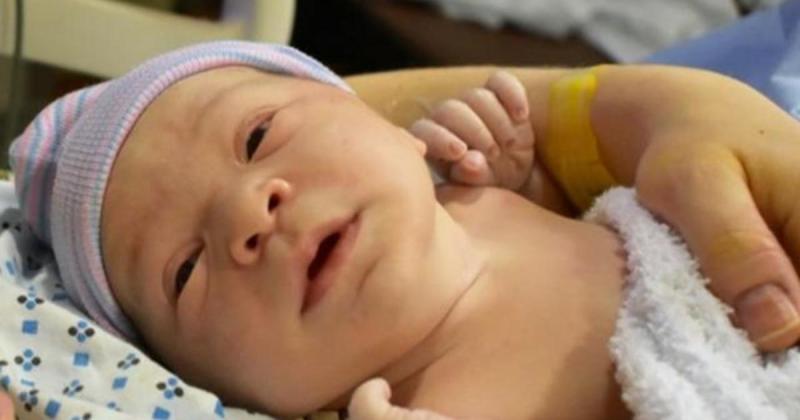


For those who thought over population was a problem, think again.
Hint: The concern is about the money.
 S E E D E D C O N T E N T
New data is confirming a baby boom that some doctors expected was actually a "baby bust." Health departments in more than two dozen states provided records to CBS News, showing a 7% drop in births in December — nine months after the first lockdowns began.
Researchers say it continues a much bigger plunge in fertility in recent decades.
The number of babies the average woman in the U.S. is expected to deliver has dropped from nearly four in the 1950s to less than two today.
The drop could present an entirely different risk to society than one that was first warned about decades ago — when an apocalyptic fear gripped America in the 1960s and 1970s.
"The stakes in this battle are far greater than any other we have ever fought," Walter Cronkite said in a 1970 CBS News broadcast. "The experts we interviewed told us population was the fundamental crisis."
As the world stampeded toward 10 billion people, many researchers back then predicted that overpopulation would ruin humanity.
Biologist Paul Ehrlich once explained the threat as "The Population Bomb," the title of a book he authored in 1968.
"Sometime in the next 15 years, the end will come — and by the end, I mean an utter breakdown of the capacity of the planet to support humanity," he said in a 1970 broadcast.
Today, however, a very different note is struck by researchers like University of Southern California Professor Dowell Myers, who studies demographic trends.
"The trouble is we overshot and we dropped it down too much now," Myers told "CBS This Morning" co-host Tony Dokoupil.
While the global population is still growing, a major study published in The Lancet in 2020 predicted it would peak in 2064, and then fall by nearly a billion people by the end of the century — the reason being, fewer babies.
The U.S. is already below the so-called "replacement level" by some measures, meaning fewer young people to support the country's otherwise aging population.
Myers said of the decline, "That's a crisis."
"We need to have enough working-age people to carry the load of these seniors, who deserve their retirement, they deserve all their entitlements, and they're gonna live out another 30 years," he said. "Nobody in the history of the globe has had so many older people to deal with."
The coronavirus pandemic is also making the problem worse — despite what some people previously thought.
"We thought, oh, we would see a baby boom. But we just haven't seen it," said Dr. David Jaspan, chair of the Department of Gynecology and Obstetrics at Einstein Medical Center in Philadelphia.
Jaspan said patients are not only worried about their health, but their finances as well.
"I get a report every morning at 5:15 about what has happened in the last 24 hours. And the first report that I see is the number of deliveries in the last 24 hours," Jaspan said. "It's less than it used to be."
It's not the main reason births have declined during the pandemic, but social distancing doesn't exactly lend itself to romance.@tonydokoupil crashed a first date to find out how the #coronavirus pandemic is affecting America's love life. pic.twitter.com/wTqmssRGRG — CBS This Morning (@CBSThisMorning) March 2, 2021
The Brookings Institution has predicted "a large, lasting baby bust" of at least 300,000 fewer children in 2021.
For Laura Lindberg, who tracks reproductive data for the Guttmacher Institute, the decrease in births could be a sign of progress — a marker of women's equality and freedom of choice.
"So it's a shift to later in life. In that shift comes more education, more career, more employment. So it's a reordering of how people engage in adulthood," Lindberg explained.
Dowell Myers doesn't disagree — but in the bigger picture, he worries the declining birth rate is also a "barometer of despair."
Myers said he never expected to be talking about a global declining birth rate during his lifetime.
Asked what changed, he pointed to "the burdens of life."
"The cost of housing, the cost of education, all these things have become more and more difficult," Dowell said. "I think the boomers themselves don't realize how much harder it is for millennials today. And they think, 'Oh yeah, when we were young we had to live, you know, on very little money, and we made do, and you can do the same.' That's the story, right? Well no, it really is a lot harder for young people today. It's amazing how much harder it is."

Tags
Who is online
73 visitors
Another day, another crisis. Don't worry, the Biden administration is recruiting replacement immigrants which has become a challenge.
This is all MSM can do is push fear, after all fear generates a lot more money for MSM than feel-good stories do.
I don't know why birth rates are dropping, sure some of it is probably better family planning and less babies wanted, but I have a feeling its also related to our modern diet.
Americans survive on processed foods. We get fat and lazy on processed foods. I think these food products would possibly perhaps probably reduce birth rates as well.
Our bodies know the crap we put into them and they react accordingly.
.........................................................
Though many consider environmental chemicals to be the primary cause of declining sperm counts, Sharpe says he’s “increasingly skeptical” of that hypothesis: “I would favor that it results from our huge dietary and lifestyle changes, both by pregnant women and by young men.”
ww.theatlantic.com/family/archive/2018/10/sperm-counts-continue-to-fall/572794/
To many people. We are entering the age of The Cylon and the cumbersome ordeal of managing the existence of the carbon based parasitic organisms is quickly reaching the realm of 'No longer needed and necessary.'
Rejoice in the new freedom for mankind-----it is in the bible somewhere someone said.
1/1000 s/
This is not a bad thing
Well, if humans are going to be replaced by AI and other technology what's the point in having babies?
I don't expect to become a grandmother...ever. My children are entering their late 20's and showing no signs of wanting to become parents. Of course, I didn't have my first one until I was 31. Maybe they are following my example.
It's more likely that kids follow in the footsteps of their parents or close to it as far as age of having children... at least that's what I've observed in my life.
My grandmother was 21 when her first of 5 was born. My mother was 22 when I was born [however, I was an only child]. I was 24 when my daughter was born and 29 when my son was born. I'd imagine my kids will have their first kids in their mid to late twenties, maybe in their early thirties.
I will not be a grandmother either, but the thought does not make me sad. I am glad my children have made the decisions that will make their lives happier & those lives for them do not include children.
I don't hear the forests, the oceans or the other life forms on earth complaining.
Not a crisis - common sense.
Hell yes it's more difficult. I owe more on my student loans [went back to school in my mid 30s] than I do on my home!!! My parents are baby boomers. They didn't have to have a 4 year degree to get a lower-middle class wage. Hell, my mom didn't have to work a full time job... ever. She worked part time when my stepdad was laid off from the Detroit News and she would occasionally babysit for a friend, but nothing full time or permanent.
And as a funny little side note... they forgot about the generation between baby boomers and millennials again. We're the forgotten generation; the "latchkey" kids.
Generation X is the generation in which people began having far fewer children and those in Gen X noticed how much tougher it was to financially support more than one or two kids [many times having "boomer" parents that both had to work or one had to work longer than they really wanted to]; therefore, not replacing the older generations. Now... millennials and older Gen Z realize that they REALLY need to go for their education FIRST, then get a decent paying job, a place to live and be self-sufficient before even thinking of having children. Too often, that means they can only have one before having a high risk pregnancy and for some... it's simply too late.
That's what my kids are currently going thru. I'm glad my kids are getting themselves established before saddling themselves with children
So... if your kids are in their late 20s, they're young Millennials, but clearly not raised by a "helicopter" mom.
From what I've read, Gen X is still the smallest generation comparatively speaking. Maybe that's why we're always forgotten in articles. Honestly, I've talked to my kids openly and honestly about things. I was talking to my nearly 18 year old daughter and her nearly 20 year old boyfriend [aka the adopted one]. If my daughter attends school for HVAC, it's 10 months. So, she'll be closer to 20 when she gets her HVAC cert. Then, she has to be accepted as an apprentice, which shouldn't take that long, but must apprentice for 4 years. So, nearly 25. Establish a good rapport in a company, save some money [20% for a down payment on a house] and in our area, for an 1100 sq. ft. home in a decent neighborhood, 20% would roughly be $26,000 and probably about half of her yearly income and by then... she's probably going to be damn near 30, but without debt. Her dad saved enough money for her HVAC education to be paid in full.
That's not to say that she won't have to work part time though... she's going to have to help pay for her auto insurance and pay for gas, because I certainly can't afford it alone. And if she's working full time in HVAC, even as an apprentice, I will expect her to pay a little rent, albeit not a lot. It's likely, I'll just take whatever money she gives me and put it into a savings account for her. I just want her to understand what it's like to pay bills BEFORE she moves out.
My daughter just turned 28 and my son is 26...so yeah, young millenials. And no, I was no helicopter mom. I threw my kids to the wolves to be raised.
Sounds like your daughter has a plan and it's good that you can help her.
I figured as much.
She does, but I'll tell you what, I sure wish the adopted one did!!!
Sounds like good news to me. The population of my state has doubled in my lifetime. Has the amount of freeway space doubled? Hell, no. More and more people pave over the natural landscape and create more pollution.
Only if you do it exclusively through the Ponzi schemes of government programs. Human beings supported their elders for thousands of years before those programs came along. I think we can figure it out.
Sure, because with more people, demand for housing and education increases, making more rare and expensive. Less people means a glut of housing and costs will go down. This is exciting! If only I could live in the future generations of lower population.