
Did the pandemic show us that we can cut carbon emissions? Sort of.

By: Denise Chow (NBC News)
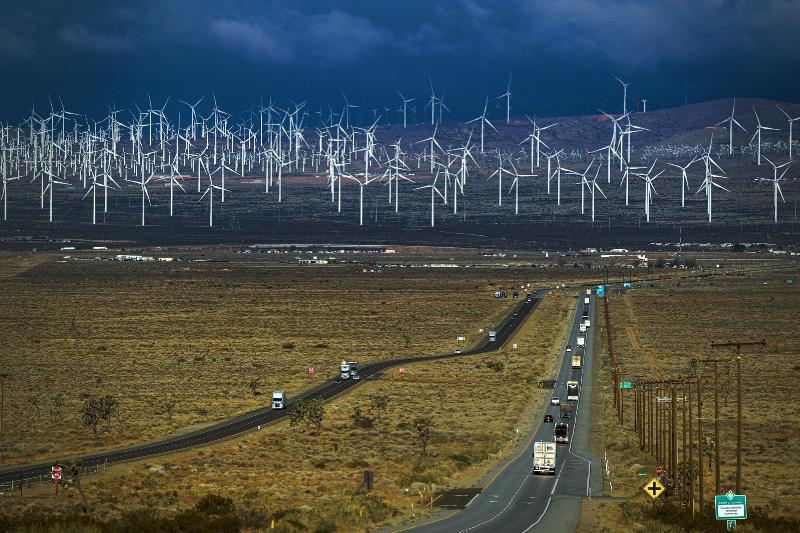

Yes, the response to the pandemic should provide cold, hard data about the contribution of various human activities to global carbon emissions. The pandemic should provide evidence to guide policy for addressing climate change. A one month global emission reduction of 17 pct is staggering and a one year global emission reduction of 7 pct is big news. The pandemic can tell us what non-essential human activities contribute most to climate change and where attention should be focused.
But it's doubtful the public will hear anything useful about how the pandemic lowered carbon emissions. Climate scientists don't want the public to know that huge emission reductions were possible without buying new gadgets, gizmos, and tech toys with boatloads of public cash. Climate politics is really about economics and profiteering.
Climate politics is not about the environment.
 S E E D E D C O N T E N T

They started as unexpected silver linings — clearer skies and cleaner air in cities from Los Angeles to New Delhi and a much-celebrated return of fish and crystal-clear waters to the oft-murky canals of Venice, Italy. By the end of last year, these local anecdotes were real and measurable markers of the pandemic's unintended climate benefits.
Yet, while heartening, the environmental reprieve isn't expected to last. There are already signs that as countries try to return to a new normal, economic activity — and all the emissions and pollution that go along with it — will creep up again.
And if the pandemic revealed what could be considered low-hanging fruit in the climate fight, it also highlighted the sheer scope of the problem.
"If you think about the scale of action that we need — if we want to limit warming as is proposed in the Paris Agreement — we would need to reduce carbon emissions by 1 or 2 billion tons every year," said Corinne Le Quere, a professor of climate change science at the University of East Anglia in the U.K. "That's less than what we did during the pandemic, but it's still a big number."
The 2020 declines were staggering.
A study published last month in the journal Nature Climate Change found that global carbon dioxide emissions last year fell by 7 percent compared to 2019. And about a year ago, a paper published in the same journal estimated that in April 2020, at the height of pandemic-related lockdowns in Asia, Europe and North America, daily global carbon dioxide emissions plummeted by 17 percent compared to 2019.
"Seven percent is actually a big drop in emissions for one year," said Le Quere, the lead author of both studies. "In absolute numbers, that's 2.6 billion tons of carbon dioxide. That's never been seen before."
But there are already indications that global emissions could rebound significantly. A new report from the International Energy Agency, an intergovernmental agency based in France, projected that increasing global energy demands this year could drive emissions above pre-pandemic levels.
Scientists aren't suggesting that the solutions to climate change lie in slowing down economies, paralyzing entire industries and enforcing extreme measures that disrupt people's lives. But experts say that after a year marked by profound behavioral changes, one that exposed how debilitating a global crisis can be, the pandemic offers important lessons for tackling climate change.
For one, it demonstrated that countries can mobilize to tackle big problems, Le Quere said.
"It showed that coordinated government action can deliver results rapidly," she said. "The important thing now is that measures need to be good for the people, good for health, good for employment and good for the economy."
In their recent study, Le Quere and her colleagues found that the biggest decrease in emissions last year was in the transportation sector. By the end of the year, emissions from surface transportation — which includes cars and trucks — were down by 10 percent compared to 2019 levels, and aviation was down 40 percent.
As countries reopen and life returns more to normal, emissions are expected to bounce back. Yet, it's possible that at least some lifestyle changes will stick around, said Zeke Hausfather, a climate scientist at the University of California, Berkeley.
"We're not going to stop traveling any time soon, but I think we've learned that a lot of travel is not essential," he said. "Instead of flying across the country to attend a conference for one day, we can join virtually. Telepresence, remote working and a number of other things from the past year aren't just going to go away."
The adjustments could have a significant effect. Transportation accounts for nearly one-quarter of global carbon dioxide emissions, according to the International Energy Agency. In the U.S. in 2019, transportation accounted for the largest share of the country's greenhouse gas emissions, at 29 percent.
Globally, air travel makes up only about 2.4 percent of carbon dioxide emissions, but before the pandemic, emissions from commercial air travel were rising. From 2013 to 2018, for instance, emissions from commercial air operations increased by 32 percent.
Changing how people get around may not solve climate change on its own, but it can certainly help chip away at the emissions equation, Hausfather said.
"We're slowly moving in the right direction and making some of the worst-case outcomes less likely," he said.
It's possible, however, to view the pandemic's climate benefits through a more pessimistic lens. While a 7 percent decline in emissions in one year is substantial in absolute terms, it only dialed back to the planet's 2011 emissions levels, Hausfather said.
And the long-term effects of climate change aren't driven by year-to-year fluctuations, he said.
"The problem of global warming is one of cumulative emissions, not annual emissions," Hausfather said. "It's not the 2020 emissions that determine what global temperatures are this year or last year, but all of our emissions since the Industrial Revolution."
John Reilly, co-director emeritus of the MIT Joint Program on the Science and Policy of Global Change, said the pandemic also demonstrated how challenging it can be to rely on behavioral changes as a solution.
"It was very hard to get people to mask up and socially distance," Reilly said. "People don't really want to change their lifestyle or have their lives disturbed. If we have to do this with behavior changes, it'll be very difficult."
But Reilly is hopeful that the Covid-19 crisis has lent urgency to the climate fight.
"I think some people saw the pandemic and said: 'Well, this wasn't caused by climate change, but this is the sort of global disaster that may befall us with climate change, so maybe we ought to do something about it,'" he said.
There are some indications that governments are connecting the same dots, too.
President Joe Biden is hosting a virtual climate summit this week with other world leaders in a bid to establish America's commitment to address climate change, days after the U.S. and China pledged to cooperate in the fight against climate change. The countries released a joint statement Sunday agreeing "to tackle the climate crisis, which must be addressed with the seriousness and urgency that it demands."
Other countries have also signaled that they intend to take aggressive action to combat global warming. Lawmakers in the European Union are finalizing an accord that would include the goal of achieving net-zero emissions by 2050.
They are the kind of pledges experts will pay attention to this year, particularly as countries prepare to meet in November to put forth more ambitious emissions targets as part of the Paris Agreement. Biden rejoined the landmark climate accord on the first day of his presidency, and all eyes will be on the U.S. to show its commitment on the world stage.
"We definitely have a lot of lost ground to make up for, particularly in terms of our credibility," Hausfather said.
Le Quere said it's hard to overstate the importance of climate action as countries recover from the pandemic and rebuild their economies. And perhaps the most difficult lesson from the past year has been how interconnected the world is and thus how devastating a global crisis can be, spilling over borders and across all parts of society, often deepening existing inequalities.
"These are all systemic threats to global society," Le Quere said. "There are a lot of parallels that are very real. Governments should get the signal now that you can't ignore climate change. And if you ignore it, it's at your own peril."

Tags
Who is online


177 visitors
Leaving the switch in the 'off' position more often really does reduce carbon emissions. The pandemic has proven that beyond doubt. Funny thing about the 'off' position is that it doesn't cost anything to use. We don't buy as much gasoline if we commute less. We don't buy as much diesel if we fly less. We don't buy as much electricity if office buildings are empty. That's the biggest problem with energy conservation; we don't buy because the 'off' position doesn't cost anything. There isn't any way for the rich to become richer if we use the 'on' setting less often.
Climate science is about creating a consumer market for gadgets, gizmos, and tech toys that people don't need but can't live without. Climate scientists are trying to scare us into parting with our cash. Just ignore that if we conserve energy we won't need as much cash because the 'off' position doesn't cost anything.
China Joe thinks we can a lot better.
However, as always, no details of how this will be accomplished are presented.
So you're saying climate scientists are only interested in getting people to shop and spend, because reasons? Seriously?
Scientists aren't appliance salesmen, are they?
Scientists have determined the climate is warming and have identified human greenhouse gas emissions as cause. But that's where the science ends.
That reflects a high-school understanding of science. I truly am surprised that you would write a comment where you express that you think the only accomplishments of climate science are verification that our planet is warming and that greenhouse gases are a significant contributing factor (not THE cause).
A simple yes or no would have sufficed. Regardless, scientists aren't "selling" anything. They identified a problem and the cause. Now they can propose possible solutions. So what's the issue.
Yes, scientists have identified a causal relationship between greenhouse gas emissions and climatic warming. But that is where the science ends.
Greta Thunberg is not representing science. Thunberg is using (or abusing) science to moralize. Where does moralizing fit into science? Disagreeing with Thunberg's moral advocacy isn't denying science.
Then scientists aren't advocates for technological alternatives? The evidence provided by the pandemic suggests that addressing climate change doesn't require technological alternatives.
Technology can certainly be used to solve a problem, if the technology exists or is feasible. The pandemic didn't prove technology to be a problem. Only that people are the problem. Abandoning all technology in favor of going back to the Bronze Age is not a feasible, or realistic solution.
Greta Thunberg is not a scientist. So her views or opinions are hers and hers alone. If she wants to "moralize" science, she does so of her own accord. She is not speaking for or acting on behalf of science.
Un-friggin-believable. That is like claiming engineers have figured out the dynamics of wind sheer on skyscrapers but that is where their knowledge and expertise ends. Or shipbuilders have figured out the relationship between water patterns and internal forces on a ship's hull but that is where their knowledge and expertise ends.
Hopeless ...
Science ends when the knowledge has been accumulated. Science does not extend itself into making moral judgements or into speculation based upon right or wrong. Science doesn't base conclusions upon geopolitical or economic factors. Science does not engage in advocacy to influence public opinion.
Science may arrive at a conclusion that human activities will result in the specie's extinction. But that's where the science ends. Attempting to alter social behavior, government policy, or economic functions based upon a moral judgement isn't in the job description of scientists.
But that's not a decision to be made by science or scientists.
Who said anything about abandoning all technology? Are you a true Scotsman? Humans spread around the world, built civilizations, and made scientific discoveries without relying upon fossil fuels. There have been a lot of technological developments long before humans began burning fossil fuels. The 18th century wasn't the stone age. The bulk of the world's population lived quite well during the 19th century without fossil fuels.
What does this have to do with anything? Nobody has claimed science is in the morality business.
Who said it was?
Strawman.
Nobody said it was.
And humans have exponentially done more since the usage of fossil fuels.
The path to greater technological and scientific innovations and discoveries were also not possible until fossil fuels were utilized.
It's not the modern age either.
Define "well." The world's population was also a lot smaller. And many people nowadays live far better than the 19th century equivalent of "well."
So what technologies should be abandoned?
That idealistic claim does not correspond with the climate science being disseminated to the public. Climate science, by consensus. delivers a moral message that abandoning any technology that utilizes fossil fuels is a moral imperative justified by fear stories about melting glaciers, wildfires, floods, hurricanes, droughts, and extinctions.
No Nerm, what climate science shows and what we're seeing is the effects of climate change. Science is delivering science, not morality.
You have me confused with the IPCC. Scientists on the Intergovernmental Panel on Climate Change are advocating that technology be abandoned through government imposed mandates. Those claiming to be climate scientists advocate the abandonment of any technology that emits greenhouse gases as a moral imperative. The IPCC was established by government to lobby government for the purpose of abandoning one type of technology in favor of other types of technology.
What I advocate is that we use technology less often and that we curtail nonessential activities. The nonspecific evidence provided by response to the pandemic indicates that using technology less often and curtailing nonessential activities are an effective way to achieve large reductions in carbon emissions very rapidly.
Joe Biden proposes a very large public expenditure to buy new technology and prohibit old technology. The Biden consumption driven approach would achieve the same level of carbon reductions over ten years that was achieved during April of the pandemic. The pandemic provides evidence that we can reduce carbon emissions in months instead of decades. And the pandemic provides evidence of how the climate will respond to lowered carbon emissions.
The pandemic justifies conservation efforts instead of exuberant consumption of new technology. The observations made during the pandemic (if they are ever reported) should tell us that we need to spend less instead of spending more.
The IPCC is not a scientific organization. Neither does it conduct independent research on its own.
Who are they? People can claim to be anything. But talk is cheap. Once again, you seem to label political entities as scientists, as TiG previously mentioned.
That's a political motivation and determination. Not a scientific one.
How do you propose to do that?
Everything was largely shut down in the early months of that pandemic. Of course there would be a reduction in the carbon footprint. But it also had deleterious effects. Gradual changes toward a positive goal is a more realistic and feasible approach. Baby steps Nerm.
Conservation is great. Newer technology can mean greater efficiency and reduction of consumption. We this with internal combustion engines as an example. Newer engines can have a much greater fuel efficiency than older ones, resulting in less waste and greater conservation. Your views on this matter seem quite short sighted and impractical.
Why is it that you constantly attack the scientists? Climate scientists are scientists; they are driven to understand our climate and the effects of changes on same. Don't label political entities 'scientists'. They are not. And any scientist who falsifies or exaggerates science to satisfy a benefactor is not operating as a scientist but rather as a prostitute. Portraying all climate scientists (unqualified) as you do is a broad brush, categorical slam to the serious scientists in this area of study.
There you go. Now you have it. Climate politics, Nerm, not climate science. There is indeed a political faction at play; one extreme exaggerates what is indicated by science and another downplays it. Rail on politically/ideologically-based forces and I am with you. Do not attack the scientists who are out there trying to understand the climate and other changes on our planet. Scientists are motivated to discover what is true (or at least get as close as possible). Your beef is with politicians, political operatives and business forces who care more about shareholder equity than our environment.
Because all good scientists know you need to pander to Democrats to get government money and keep the pork flowing.
Sorta like all good non-scientists like Ken Ham know that all you need to do is pander to Republicans?
The answer is quite simple; most of those claiming to be scientists aren't. Science is driven by ignorance. The search for knowledge isn't motivated by what is known. Scientists study the unknown to seek knowledge. The realm of science is questions and not answers.
Scientists who claim to know aren't scientists. Scientists who engage in advocacy because they know aren't practicing science. They are only using science to support their advocacy. Advocacy can't be based on ignorance so advocacy cannot be science.
Climate politics is about advocating solutions and attempting to influence public opinion to accept those solutions. When a scientist attempts to influence public opinion then they are not practicing science. Such scientists are, in reality, politicians utilizing knowledge generated by science to achieve a political objective. Influencing public opinion is not within the scope or purpose of science.
Yes, scientists may form opinions. Yes, scientists may advocate for policy and action. But opinionating and advocating are not scientific endeavors. Those are not activities performed by scientists. When scientists attempt to influence public opinion then they are no longer scientists.
Then do not label them scientists. Doing so discredits the actual scientists.
They label themselves scientists. By labeling themselves scientists they are attempting to influence public opinion. That's the problem that needs attention.
Disagreeing with the opinions and advocacy of people labeling themselves scientists has been characterized as denying science. But such opinionating and advocacy are not scientific endeavors. Disagreement with opinions and advocated actions isn't about science.
When you attack scientists (and science) using those labels, you are not attacking those who pretend to be scientists — you are attacking all scientists.
If you want to attack those who pretend to be engaging in science then why do you NOT use language that targets those individuals?
That fact that you repeatedly attack scientists and science suggests (strongly) that you intend to attack those who are actively engaged in real science. Why anyone would do that is beyond me, but you continue to engage in this practice.
It is both, they are symbiotic ... stating anything else is pedantic nonsense.
Actually it was my university that called me a scientist after I had studied math, chemistry, economics, ecology, anthropology, physics, biology, hydraulics, soil structure, atmospherics, monitoring systems, etc... for many years. Have done lots of field and lab work, have authored papers and have to believe I earned the title 'scientist'.
I figure a scientist must have dropped you on your head when you were a baby or they made fun of you in your first elementary school science class for you to have such a poor, twisted, opinion of those who live by the scientific method.
Scientists are not engaged in product development; that's engineering. Science is not about applying the body of scientific knowledge to real world problems; that's the role of engineers.
Science may explain how the universe works. But engineers utilize those explanations to change the universe.