
Document prepared for Kremlin outlines hard-line negotiating stance

By: Catherine Belton and Robyn Dixon (Washington Post)
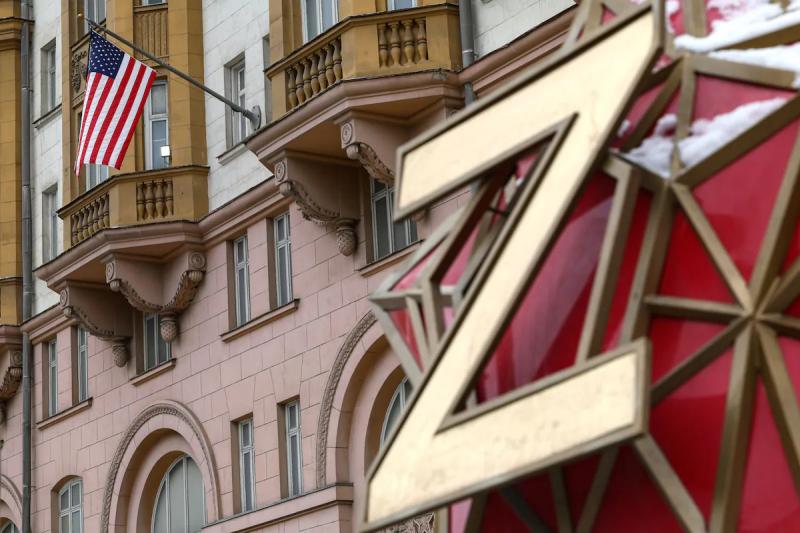


Weakening Vladimir Putin opens the door for Russian hardliners to regain power within Russian domestic and foreign politics. (Yes, hardline Russians that were opposed to Glasnost and who forced Mikhail Gorbachev out of office are still active in Russian politics.) Joe Biden allowing Volodymyr Zelenskyy to poison any diplomatic relationship with Russia has favored those hardline Russians wanting a direct confrontation with NATO and the United States.
The hardliners in both Russia and the United States really do believe it is possible to win a nuclear war. That's the Pandora box Joe Biden opened by refusing to engage in diplomatic negotiations with Russia. That's the legacy of Joe Biden promising that the United States would not fight in Ukraine.
Since the United States wouldn't negotiate and wouldn't fight then Biden only committed the United States to a quagmire; a brush war policy based upon balance of power. And that Cold War strategy of balance of power is why Ukraine cannot defeat Russia and why Russia cannot defeat Ukraine. The only thing the United States got out of Joe Biden's refusal to negotiate and refusal to fight was Sweden and Finland joining NATO. Big whoop!
So, Donald Trump's efforts to obtain a ceasefire and begin the process of negotiating a peace in Ukraine must overcome the influence of hardliners in the United States, Ukraine, and Russia. There are think-tanks in the three countries espousing the same hardline positions reported here. And Chinese interests in the peach process will only complicate the road to peace.
Just remember that all of this might have been avoided if Joe Biden had sent Antony Blinken to Moscow. A United States commitment to oppose NATO membership for Ukraine might have been all that was needed to avoid the whole thing. Russia is in a much better negotiating position now than they were in 2022 before the invasion. Russia only held Crimea then. Since then Russia has gained a lot more territory that can be used as bargaining chips.
 S E E D E D C O N T E N T
Russia should work to weaken the U.S. negotiating position on Ukraine by stoking tensions between the Trump administration and other countries while pushing ahead with Moscow’s efforts to dismantle the Ukrainian state, according to a document prepared for the Kremlin.
The document, written in February by an influential Moscow-based think tank close to Russia’s Federal Security Service (FSB), lays out Russia’s maximalist demands for any end to the conflict in Ukraine. It dismisses President Donald Trump’s preliminary plans for a peace deal within 100 days as “impossible to realize” and says that “a peaceful resolution of the Ukraine crisis cannot happen before 2026.”
The document also rejects any plan to dispatch peacekeepers to Ukraine, as some in Europe have proposed, and insists on recognition of Russia’s sovereignty over the Ukrainian territories it has seized. It also calls for a further carve-up through the creation of a buffer zone in Ukraine’s northeast on the border with Russian regions such as Bryansk and Belgorod, as well as a demilitarized zone in southern Ukraine near Crimea, which Russia illegally annexed in 2014. The latter would affect the Odessa region.
In addition, the document discusses the need for “the complete dismantling” of the current Ukrainian government.
The document, which was obtained by a European intelligence service and reviewed by The Washington Post, highlights the challenges still facing Trump in reaching any agreement with Russia for a peace deal, now that Kyiv has endorsed Washington’s proposal for a 30-day ceasefire, appearing to bridge a divide between the two countries.
While Russia has yet to signal that it would sign up for any ceasefire, analysts warned that Moscow still has a multitude of ways it could drag out agreeing to even a temporary pause in hostilities. The road to any long-term peace agreement remains treacherous, they said.
Russia is “not interested in an early resolution of the Ukraine crisis,” said Thomas Graham, a senior director for Russia at the National Security Council under George W. Bush and now a fellow at the Council on Foreign Relations. “They consistently talk about the root causes, which, as you know, are about the domestic politics in Ukraine, and even more important than that, the European security architecture, which would be the role of NATO. And a simple ceasefire which doesn’t take that into account is of no interest to Russia. And Trump doesn’t appear to understand.”
Spokesman Dmitry Peskov said the Kremlin “was not aware of such recommendations,” calling them “extremely contradictory” and adding, “We are working with more-considered options.”
The document was prepared by a think tank working closely with the FSB’s Fifth Service, the division that oversees operations in Ukraine, in the week ahead of talks between Russia and the United States in Riyadh, Saudi Arabia, which took place on Feb. 18. A Russian academic close to senior Russian diplomats said the main thrust of the recommendations reflects the broad consensus in Moscow, but added that it is never clear to what degree the Kremlin leadership reacts to documents being prepared for it.
While hawkish members of the Russian elite are urging the Kremlin to continue the war and “use the current situation to advance further,” other groups are pressing for a speedier resolution of the conflict and “for a ceasefire at least,” he said.
The FSB-linked document lays out ways in which Russia could boost its negotiating position by exacerbating tensions between the United States and both China and the European Union, and by proposing U.S. access to Russian minerals, including in the territories it occupies in Ukraine. Among them is the eastern region of Donbas, where the document says there are reserves of rare-earth metals.
In an interview on Feb. 24, Russian President Vladimir Putin said much the same when he suggested that Moscow could invite U.S. companies to develop Russian mineral deposits, including in the occupied territories in Ukraine. That appeared to be an effort to undermine a proposed accord on mineral resources development between Ukraine and the United States.
The document says Russia’s efforts should first be focused on normalizing relations between Washington and Moscow, through the restoration of full diplomatic staffing levels at both countries’ embassies and the appointment of Alexander Darchiev as Russia’s ambassador to the United States — suggestions that emerged publicly after talks between Russian and U.S. officials in Istanbul on Feb. 27, which apparently focused on the operations of their respective diplomatic missions.
The document proposes that Russia agree not to station its Oreshnik intermediate-range ballistic missiles in Belarus, on the border with the European Union, while in return the United States would agree not to place new missile systems on the continent. It suggests, too, that Russia stop weapons supplies to countries considered “unfriendly” to the United States, while in return the United States would stop arming Ukraine. But it adds that ending Russian arms supplies to Moscow’s allies would be “difficult to realize.”
The document dismisses what it says are initial proposals made by Trump’s special envoy for Ukraine, retired Lt. Gen. Keith Kellogg, for a peace agreement in which one suggested element would be Ukraine’s ceding of territories taken by Russia and Kyiv’s agreement not to attempt to regain them in the future through military or diplomatic means.
The FSB-linked document says, however, that even this type of settlement does not go far enough and that without official recognition of Russian sovereignty over the seized region, it is “fairly likely” the armed conflict will resume in the medium term, “for example after the next change of administration in the U.S.”
The document also dismisses any potential political concessions by Ukraine — such as Kyiv’s rejection of NATO membership and the holding of elections in which pro-Russian parties would be allowed to participate — as not being far-reaching enough. “In reality, the current Kyiv regime cannot be changed from inside the country. Its complete dismantling is needed,” it says.
The presence of any peacekeeping contingent in Ukraine is also dismissed as “absolutely unnecessary,” since any force would be under “serious Western influence.” U.S. plans to continue arming Ukraine after any peace deal are “absolutely unacceptable,” the document says, as is maintaining the Ukrainian army at its current 1 million-strong level.
Efforts to entice Russia into a peace deal by offering to partially lift sanctions were also dismissed in the document. “It’s not clear what would be the benefit for Russia,” it says, since “the importance of the factor of sanctions against our country has been clearly exaggerated.”
Boris Bondarev, a Geneva-based former Russian diplomat, said Russia is trying to lure Trump into talks by demonstrating its “openness and flexibility.” Putin, meanwhile, wants to drag out the negotiations by positioning himself as “a real, true friend to Donald Trump who understands him completely, who … wants to help him achieve his goals in United States,” Bondarev said. “But of course he would need something from him because he cannot do it just free.”
Dmitri Alperovitch, chairman of the Silverado Policy Accelerator, a national security think tank, said it could be difficult for Putin to reject the ceasefire proposal outright without risking Moscow’s potential realignment with Washington. “The stakes now [in his view] are much more than just Ukraine — the bigger prize is the US-Russia diplomatic normalization, dropping of sanctions, driving a wedge within NATO,” Alperovitch said in a post on X.

Tags
Who is online
149 visitors
Thanks, Joe Biden! You really made that pooch howl when you screwed it. Now look at the mess we're stuck with.
Doesn't matter what you feed that bull. You still don't want to run barefoot across the pasture.
One thing that the left is guaranteed to misunderstand is that this is a starting point for the negotiations.
If we only has a President that was competent 3 years ago when this started it wouldn't have gotten to this point
Gorbachev's unintended consequences opened the door for "hardliners" like Putin to become oligarchs.