
What Is the Strait of Hormuz and Why Is It Important?

By: Helene Cooper Eric Schmitt and John Ismay (The New York Times)


The press is spinning a fantasy of fear because, apparently, they want the United States to fail as a way to score political points. For whose benefit?
Iran attempting to close the Strait of Hormuz now would mostly harm China which is Iran's largest trading partner. Iran would lose 60% of it's government revenue if the oil trade is interrupted. Iran actually closing the Strait of Hormuz for the first time would be countered by a blockade and embargo of Iranian oil exports. Iran would become an unreliable trading partner for China. Wouldn't crashing the Iranian economy risk internal regime change?
The idea of US naval ships 'trapped' in the Persian Gulf is consistent with 40 year old analysis. But is that Ronald Reagan era analysis really applicable to the modern Navy? The bulk of the US Navy would not be trapped in the Persian Gulf. Closing the Strait of Hormuz would not close the Gulf of Oman so the Navy would still have access to the Strait of Hormuz and the rest of the Iranian coastline. And the US Navy no longer relies on WWII technology of mine sweepers and towed vanes to clear mines. The Navy has developed ordnance systems (such as Airborne Mine Neutralization System and the Barracuda Mine Neutralization System) to clear mines. There are now stand-off systems and drones capable of clearing mines.
The New York times is trying the convince its readers that the US would be helpless in a fight with Iran. To what end? That hyperbolic analysis seems rather spurious.
 S E E D E D C O N T E N T
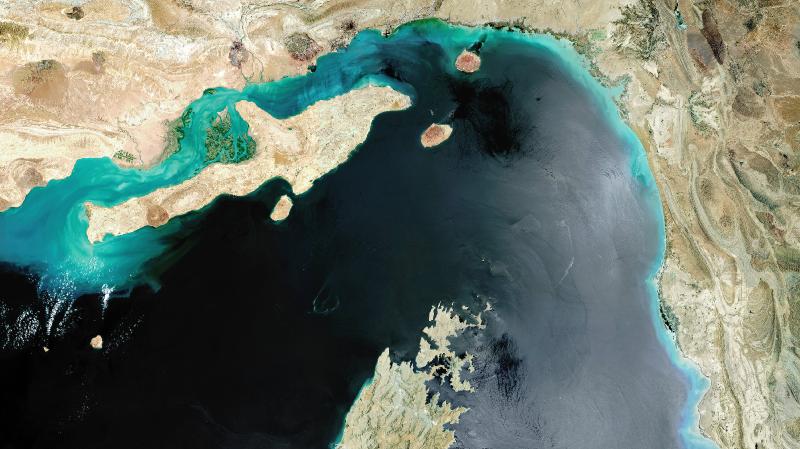
One way that Iran could potentially retaliate for the American strikes on three of its nuclear sites, analysts say, would be to shut down the Strait of Hormuz, a key shipping route for oil and gas.
In meetings at the White House, senior military officials have raised the need to prepare for that possibility, after Iranian officials threatened to mine the strait, a narrow 90-mile waterway connecting the Persian Gulf to the open ocean. Such a move could pin any U.S. Navy ships in the Persian Gulf, American military officials say.
In more than a week of fighting between Israel and Iran, Israel's military has steered clear of hitting Iranian naval assets. So while Iran's ability to respond to attacks has been severely damaged, it has a robust navy and maintains operatives across the region, where the United States has more than 40,000 troops. Iran also has an array of mines that its navy could lay in the Strait of Hormuz, which hugs a portion of Iran's southern border.
A quarter of the world's oil and 20 percent of the world's liquefied natural gas passes through the Strait of Hormuz, so mining the choke point would cause oil and gas prices to soar. The majority of those fuels go to Asia, meaning that countries there would most likely be severely affected by any closure. The United States and other countries would feel the effects in the form of higher energy costs.
Closing the waterway could isolate American minesweepers in the Persian Gulf on one side of the strait. Two defense officials indicated that the Navy was looking to disperse its ships in the gulf so that they would be less vulnerable. A Navy official declined to comment, citing operational security. The officials spoke on condition of anonymity because they were not authorized to speak publicly.
Even before the U.S. military struck Iranian nuclear sites over the weekend, Iran vowed that it would respond forcefully to any attack by American forces — potentially setting off a cycle of escalation. Since the strikes, Iran appears to be weighing its options.
“Iran is strategically weaker but operationally still lethal across the region, and Americans still have troops across that part of the world,” said Brian Katulis, a senior fellow at the Middle East Institute.
Military officials and analysts said missile and drone attacks remained the biggest retaliatory threat to U.S. bases and facilities in the region. Some also worry that the Quds Force, a shadowy arm of Iran’s military, could attack U.S. troops.
Much is at stake for Iran if it decides to retaliate. “Many of Iran’s options are the strategic equivalent of a suicide bombing,” said Karim Sadjadpour, an Iran policy expert at the Carnegie Endowment for International Peace. “They can do enormous damage to others if they mine the Strait of Hormuz, destroy regional oil facilities and rain a missile barrage against Israel, but they may not survive the blowback.”
But Iran can make it hugely expensive, and dangerous, for the U.S. Navy to have to conduct what would most likely be a weekslong mine-clearing operation in the Strait of Hormuz, according to one former naval officer who was stationed on a minesweeper in the Persian Gulf. He and other Navy officers said that clearing the strait could also put American sailors directly in harm’s way.
Mining the strait would also inflict severe economic damage in Iran because nearly all of the country’s oil exports move through the channel.

Tags
Who is online
257 visitors
The United States possesses the most powerful military on the planet. The unbiased liberal press lambasts the United States for military expenditures and being warmongers. And, yet, the United States would be helpless against the might of a terror state like Iran? The United States should avoid a fight with Iran because the United States cannot win that war?
Iran has defeated itself. And the New York Times cannot save Iran by spreading fear of failure and hatred for the United States. Someone needs to inform the editorial board of the New York Times that Ronald Reagan is dead.