
How effective was the US attack on Iran's nuclear sites? A visual guide

By: Peter Beaumont (the Guardian)


What an amazing admission by the Pentagon's Defense Intelligence Agency. According to the DIA preliminary assessment, the public has been lied to for over a decade about the need for inspectors on the ground and onsite verification. The quick assessment by the DIA raises serious questions about the information and justifications used to shape US policy toward Iran over the last 20 years.
We've seen the satellite images by now. The seeded article opens with a before/after comparison (that I can't include here, click the seed link). But there's no explanation of scale or, even, what we are looking at. The bomb penetration holes (not craters) shown in the after images are approximately twenty feet across. There won't be a huge cone shaped crater because the blast damage was deep underground. So what should we look for? Debris ejected from the boreholes indicates that the bombs did explode. The type of ejecta will provide clues to how deep the bombs penetrated. Chunks of concrete in the ejecta would indicate the bunkers were hit. (This would be difficult to detect from satellite images.) Subsidence would indicate underground voids, such as bunkers, have collapsed. Keep in mind that heavily reinforced underground structures may not collapse so lack of surface slumping and subsidence doesn't necessarily indicate the bunkers were missed.
The GBU-57 penetrating bomb consists of 25,000 pounds of steel casing and a 5,000 pound warhead using AFX and PBX explosives. The explosive force of the warhead would be equivalent to 9,000 to 10,000 pounds of TNT. The bombs are designed to penetrate into a void and to maximize damage by air blast inside the void. However, the ground-propagated shockwaves would also cause considerable damage. The tactic employed during the Midnight Hammer bombing was to use multiple bombs dropped on a small target area to punch through the overburden and improve odds to reaching the bunkers. The ground-propagated shockwave would fracture the rock matrix allowing following bombs to penetrate deeper. (This is the same principle for how a rock drill works.) 30,000 or 40,000 pounds of explosive force at depth, if not actually penetrating the bunkers, would likely crack the underground structures allowing groundwater intrusion. Groundwater mixing with the chemicals used to enrich uranium would create hydrofluoric acid that would dissolve stainless steel and react with calcium to create an almost impervious mineral coating on everything.
The images we've been shown does suggest the damage inflicted by the Midnight Hammer mission was massive. The Fordo site does appear to have been quaked and baked. Could the site be rebuilt? The United States has demonstrated that any military site can be rebuilt quickly with enough money and manpower. But Iran isn't that affluent. While Iranians may be competitive on the stupid-meter, it really will take more than single-minded stupidity to reconstitute a nuclear enrichment program. Where's the money going to come from?
 S E E D E D C O N T E N T
D onald Trump was quick to claim that US strikes on Iran's nuclear facilities had "completely and totally obliterated" them. Still, it remains unclear how much physical damage has been done or what the longer-term impact might be on Iran's nuclear programme.
What was the target?
The Atomic Energy Organization of Iran (AEOI) confirmed that attacks took place on its Fordow, Isfahan and Natanz sites, but insisted its nuclear programme would not be stopped. Iran and the UN nuclear watchdog said there were no immediate signs of radioactive contamination around the three locations after the strikes.
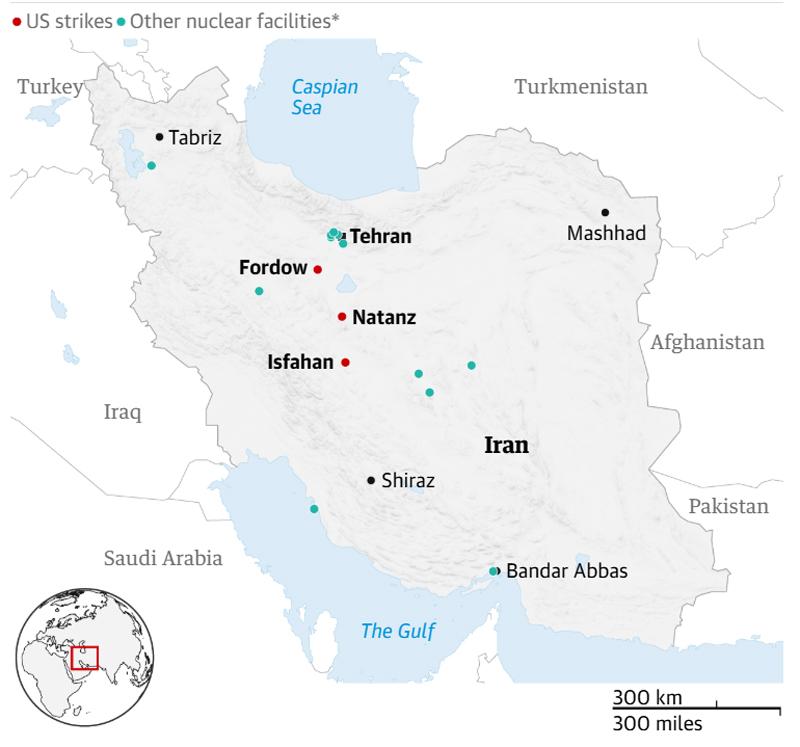
Guardian graphic. Source: International Institute for Strategic Studies (IISS), The Nuclear Threat Initiative. Note: *Nuclear facilities include industrial and research sites
The Iranian Red Crescent Society reported no deaths from the US strikes, appearing to confirm Iranian claims they had been largely evacuated in advance. The health ministry said those who were injured showed no evidence of nuclear contamination. In the immediate aftermath, US military officials said the three sites had suffered "severe damage" after an operation that had been planned for weeks, suggesting it was coordinated with Israel.
The Pentagon said a battle damage assessment was still being conducted.
What do we know about the strike on Fordow?
Long regarded as the most difficult military target among Iran's nuclear sites, the uranium enrichment facilities at Fordow - the primary target of the operation - are buried beneath the Zagros mountains. Reports have suggested that the site was constructed beneath 45-90 metres of bedrock, largely limestone and dolomite.
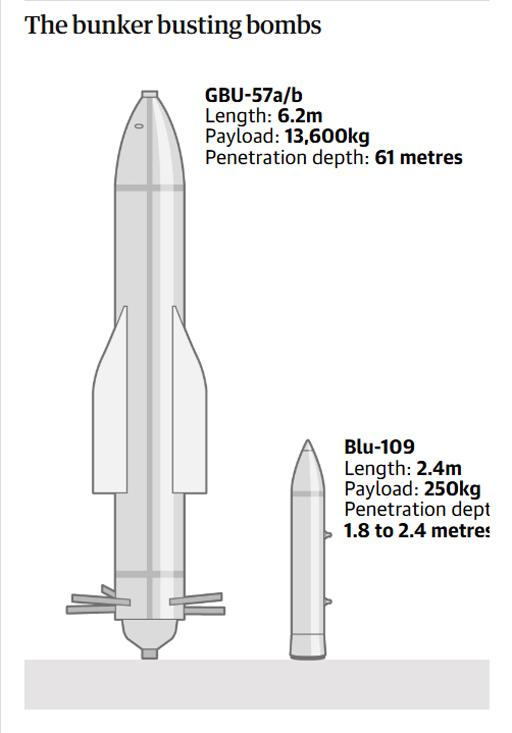
Guardian graphic. Sources: Michael A. Levi, Cargenie Endowment for International Peace. US Air Force
Some experts have suggested the layering of the sedimentary rocks, including faults, would also make it more difficult to strike the centrifuge array, providing a kind of geological cushioning against a blast wave.
The attack - codenamed Operation Midnight Hammer - was carried out by seven B-2 Spirit stealth bombers flying from the US, after a deception flight by other B-2s into the Pacific. Tomahawk missiles were fired from US ships in waters south of Iran.
The site was hit by a dozen 13,600kg massive ordnance penetrators - known as bunker busters - at approximately 2.10am Iranian time. It was the weapon's first operational use. The number used suggests a lack of confidence that a smaller strike could penetrate through to the target.
The result to a large extent depends on the kind of concrete inside the facility. Estimates of the bunker busters' penetration are based largely on reinforced concrete resistant to 5,000psi. Iran is believed to have used more resistant concrete.
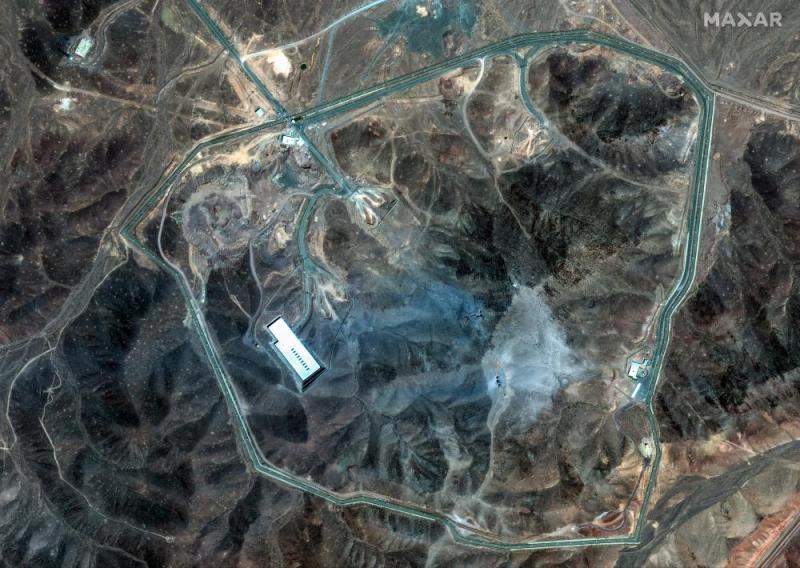
While video from the site showed evidence of a fire in the immediate aftermath, satellite images published on Sunday were suggestive but far from conclusive.
The main support building at the site appeared to be undamaged, but the topography of a prominent area of ridge line appeared to have altered and been flattened out, with some evidence of rock scarring close to two clusters of bomb craters around the ridge.
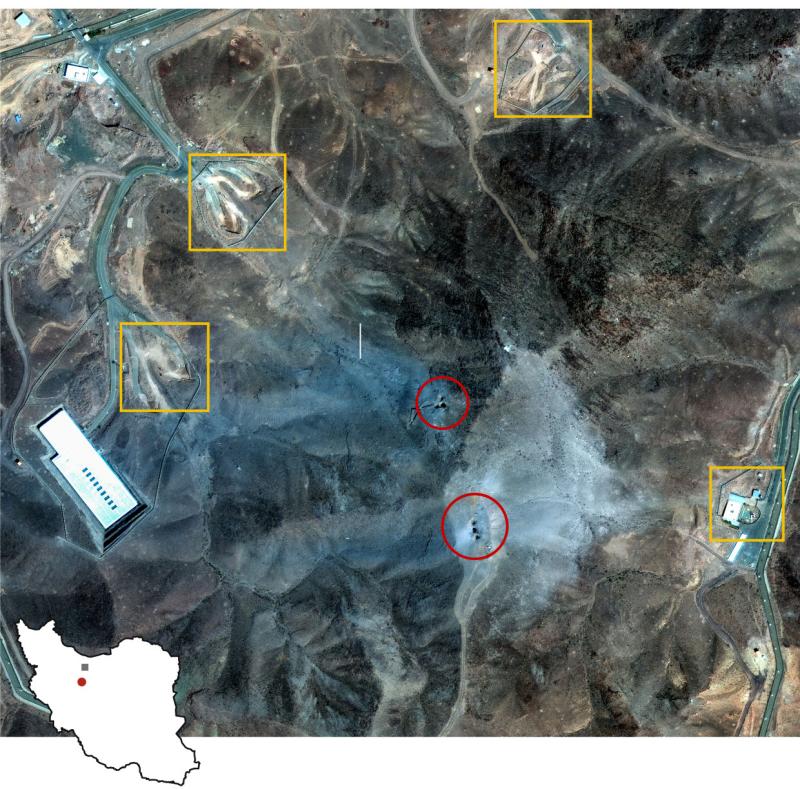
Guardian graphic. Source: Source: Satellite image ©2025 Maxar Technologies. Images captured 22 Jun
Analysts had suggested that a strike could hit the main entrance tunnel to the site, but the main effort appears to have been in a different location.
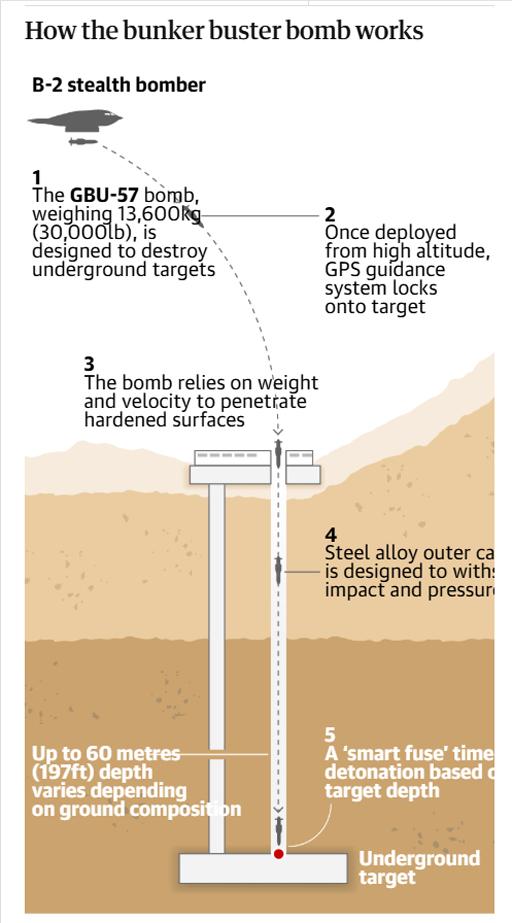
Guardian graphic. Source: US Air Force, DOT&E 2024 annual report
At odds with Trump's claim of "complete obliteration", two Israeli officials who spoke to the New York Times described serious damage at Fordow but said the site had not been completely destroyed.
The head of the International Atomic Energy Agency (IAEA), Rafael Grossi, added: "As for the assessment of the degree of damage underground, on this we cannot pronounce ourselves. It could be important; it could be significant, but no one … neither us nor anybody else could be able to tell you how much it has been damaged."
What was the impact at Isfahan?
Isfahan's nuclear technology centre was struck by Tomahawk cruise missiles fired from an Ohio-class submarine as opposed to bunker busters. Video posted on social media showed a distant detonation from the site on Saturday night.
According to the IAEA, in addition to four hit by Israeli strikes, six other buildings had now been attacked, including a fuel rod production facility. It said facilities targeted at Isfahan either contained no nuclear material or small quantities of natural or low-enriched uranium.
What was hit at Natanz?
Natanz had previously been damaged by the first Israeli strikes of the conflict, with assessments then suggesting they had hit the power plant supplying the main centrifuge hall. Uranium had been enriched to up to 60%, short of weapons-grade material.
It appears that Natanz's underground enrichment hall was targeted. Enhancement of satellite images from the site on Sunday showed fresh damage to overground buildings and new cratering in the centre of the site.
In response to the US strikes, Iran launched ballistic missiles at Israel on Sunday, triggering countrywide air raid sirens and injuring 16 people.
Was Iran's nuclear programme obliterated?
Iran has claimed that it evacuated the sites several days ago, and satellite imagery from several days ago suggests there was unusual truck traffic at Fordow. That appears to confirm the movement of some material from the site, possibly including the uranium stockpile - or parts of it - which remains unaccounted for.
Hassan Abedini, the deputy political head of Iran's state broadcaster, said Iran had evacuated the three sites - Natanz, Isfahan and Fordow - some time ago.
"The enriched uranium reserves had been transferred from the nuclear centres and there are no materials left there that, if targeted, would cause radiation and be harmful to our compatriots," he said.
Three days before the US attacks, 16 cargo trucks were seen near the Fordow entrance tunnel.
What a difference a week makes: Trump falls into the Netanyahu trapRead more
The head of the AEOI, Mohammad Eslami, claimed this month that Iran had another enrichment site "in a secure and invulnerable location" that could house centrifuges.
Analysts have long argued that while it is possible to disrupt the physical function of a nuclear facility and limit the scope of a programme through, for example, the killing of scientists, the breadth of technical knowledge acquired during the decades-long programme is impossible to destroy.
Ultimately, the question is whether the US-Israeli attacks are seen as sufficient for Iran to capitulate, or whether they instead encourage the regime to accelerate its efforts to produce a viable nuclear weapon.

Tags
Who is online
257 visitors
The damage caused by the Midnight Hammer mission might have set back a United States enrichment effort by a few months. The United States has a history of spending astronomical amounts of money and doing such things by brute force. But Iran is not nearly as affluent and does not have an adequate industrial base to support the same level of maximum effort.
We're supposed to believe that a society that still publicly whips women for being bareheaded can rebuild a complex technical program like uranium enrichment in a few months? If that is the case, then we've certainly been lied to about how all the woke, DEI social engineering makes us stronger.
BTW, for the doubters out there, it is now possible to prompt any number of AI models to obtain information about how the bombs work and potential effectiveness. The power of AI allows just about anyone to become their own analyst and news reporter.