
Unjammable fiber-optic drones are taking over and turning Ukrainian forests into spiderwebs of wires, video shows

By: Chris Panella (Business Insider via AOL)
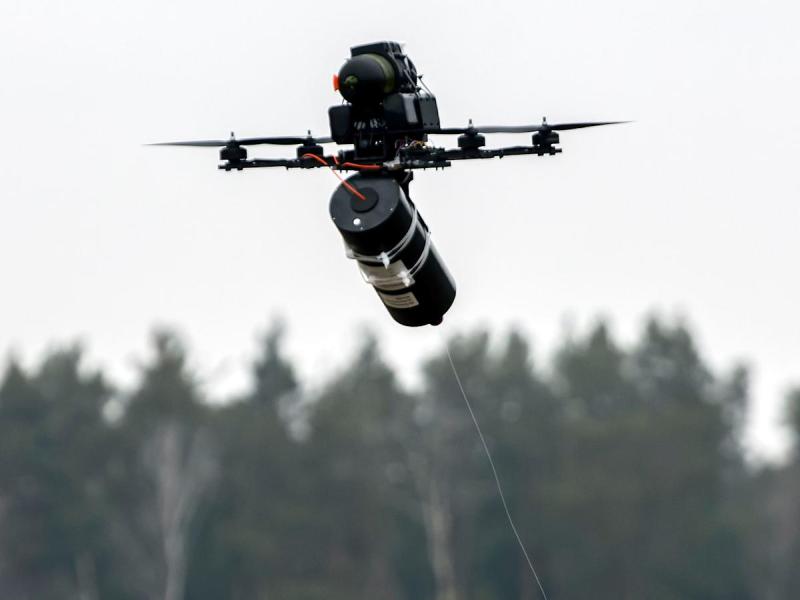


It's possible the drones may need to be equipped with cable cutters in the near future. Each advance seems to be taking the battlefield back to World War I tactics.
 S E E D E D C O N T E N T
-
A new video shows a forest in Ukraine covered in fiber-optic cables for unjammable drones.
-
These drones have become an increasingly prolific countermeasure to electronic warfare.
-
The hard wire ensures a stable connection between an operator and a drone even amid jamming.
A new video shows how prolific jamming-resistant fiber-optic drones are becoming on the battlefields in Ukraine. There are wires scattered all over the place.
On Friday, Ukraine's defense ministry shared a video from the 63rd Mechanized Brigade of Serebryansky Forest covered in webs of fiber optic cables.
"Just imagine how many drones are flying here," it wrote.
Fiber-optic drones, which are connected to operators via a long, thin fiber-optic cable, can't be jammed by electronic warfare tactics designed to disrupt the signal connection the way drones that rely on radio frequencies can.
In the video footage Ukraine's defense ministry shared, clumps of wires can be seen spread across the treetops. The lines are reflective, and at some points in the video, the sunlight flashes off of them, showing webs throughout the forest.
Some areas of the forest are packed with tons of wire, suggesting many fiber-optic drones have followed those paths, while others are scattered about. It's immediately clear from the video that there has been significant fiber-optic drone activity in the area.
Serebryansky Forest is a large nature preserve in Luhansk Oblast. It is located to the southeast of Kharkiv and just north of Bakhmut.
There have been other videos like this one, as well as photos of cabling stretching across battlefields.
This new video highlights the expanding use of fiber-optic drones on both sides of the war. Last year, Russia first introduced these hardwired systems as a countermeasure to persistent electronic warfare on the battlefield, which Russia and Ukraine are using to jam drones and prevent operators from communicating with them.
Electronic warfare has had a serious impact on regular drones, negatively impacting strike and surveillance missions and forcing combat innovations.
Ukraine then began using them as well. At the time, it was unclear if fiber-optic drones were just a temporary fix that would be countered until something better, like AI-enabled drones, came along or if they'd serve as a potential long-term solution.
These drones, which have clearly become more prolific, are useful for short-distance operations, typically over more open terrain. In forested areas, they can more easily get hung up in the trees.
Earlier this year, a Ukrainian special drone unit told Business Insider that it hadn't seen widespread adoption of fiber-optic drones in fighting just yet, but in recent months, these drone systems have had an increased presence on the battlefield.
Due to the constant threat posed by these unjammable drones, Ukraine has implemented countermeasures like shotguns as a kinetic answer, shooting the drones when they get close to personnel. The shotgun is the best defensive option right now.
While countermeasures are in the works, Ukraine is also continuing to develop and use its own fiber-optic drones. The country's larger drone industry has boomed since the war began three years ago, with many drone developers working closely with Kyiv's military on adaptations and new hardware and software.

Tags
Who is online
204 visitors
The environmental repercussions of battlefield expedience may outweigh the tactical advantage. This will be more difficult to clean up than mine fields and unexploded cluster bombs. And wildlife will have a more difficult time adapting to these war leftovers.