
'Corn Sweat' Can Add To Midwest Humidity In Summer

By: Chris Dolce (The Weather Channel)
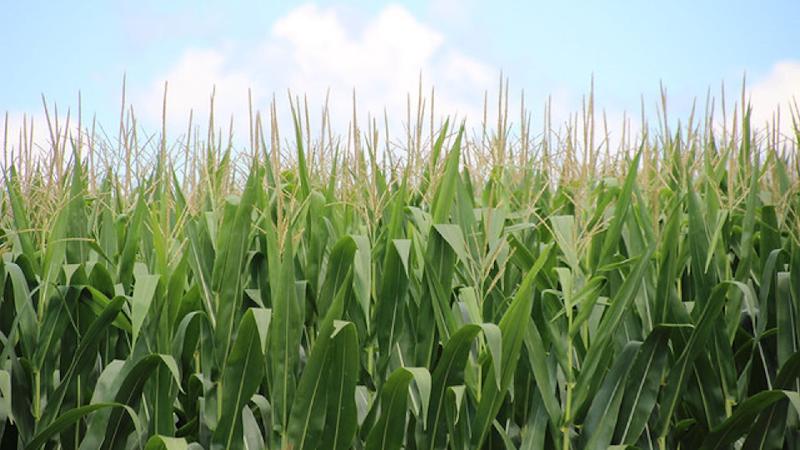


Aw, shucks!
 S E E D E D C O N T E N T
Hot temperatures during the summer months in the Midwest can be made even worse by a phenomenon called "corn sweat," which sometimes gives a boost to humidity in the region during intense heat waves.
How Does Corn Sweat Work?
As the root systems of plants like corn draw in water, the leaves of the plant then release water vapor (moisture) into the air through their stomata, according to agdaily.com. This is called evapotranspiration, essentially the plant's way of breathing.
A single acre of corn can give off 3,000 to 4,000 gallons of water per day, according to a post on X by the National Weather Service in Sioux Falls, South Dakota.
That added moisture in the air then increases already high dew points, making it feel even more humid on a localized scale. The increased humidity can then help boost heat index temperatures even higher.
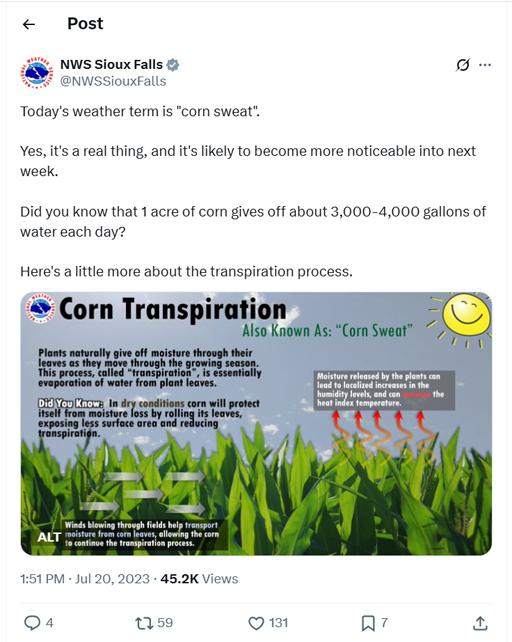
https://x.com/NWSSiouxFalls/status/1682101032367603717
Midwest 'Corn Sweat' Factor Adds To Already Humid Gulf Air
Southerly winds draw moisture from the Gulf of Mexico northward, leading to already higher dew points at times during summer in the Midwest.
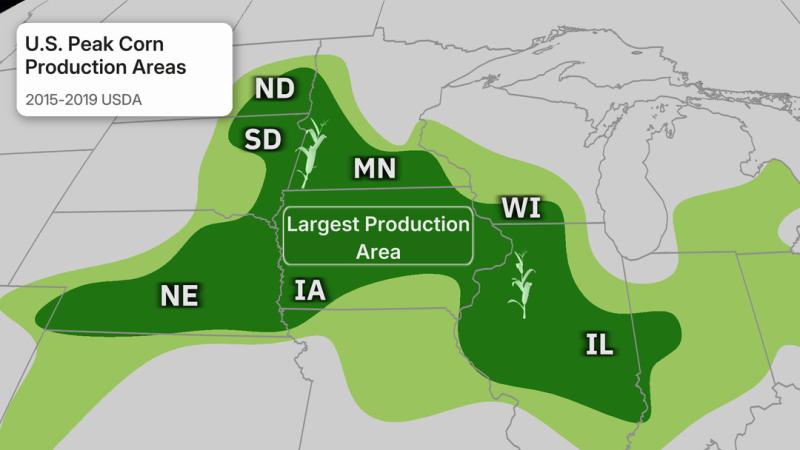
Corn sweat gives a localized boost to dew points in the region when the crop is in full swing during midsummer. That's especially the case in areas where the crop's production is largest, in the darker green shading below.
Dew Point Is The Best Indicator Of Humidity
It's not uncommon for dew points to reach into the upper 70s to low 80s thanks to corn sweat. That's a level of mugginess more typically seen near the Gulf Coast.
As the chart below shows, a dew point that's generally 75 degrees or higher is considered oppressive.

Chris Dolce has been a senior meteorologist with weather.com for over 15 years after beginning his career with The Weather Channel in the early 2000s.

Tags
Who is online


222 visitors
More a-maize-ing science?
And to top it off, corn can water itself from the dew that forms overnight, the natural funnel shape of the stalk directs the water to the roots.