
10 million EVs could be powered by lithium hidden in US mine waste

By: Kaif Shaikh (Interesting Engineering)


Do we need to hire Chinese engineers to do this stuff?
 S E E D E D C O N T E N T
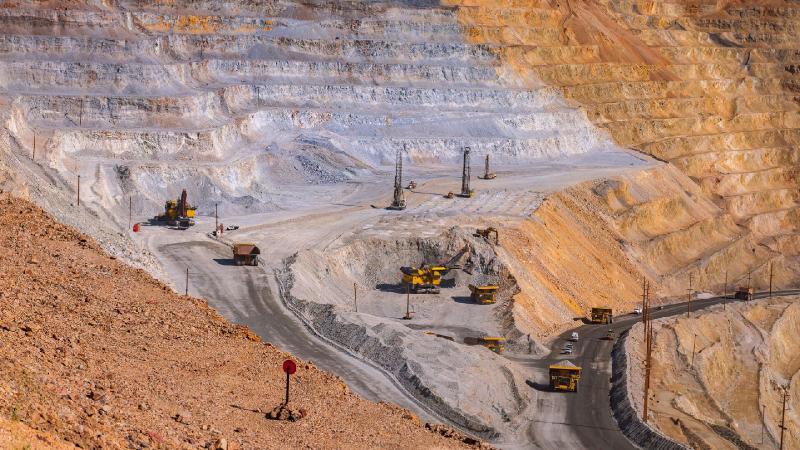
A new study argues that the United States could dramatically increase supplies of critical minerals by recovering them as byproducts from existing mines. Materials that are currently treated as waste.
An analysis across 70 elements at 54 active mines found enormous potential for recovery.
According to the authors’ estimate, one year of U.S. mine waste contains enough lithium to power 10 million electric vehicles and enough manganese to power 99 million. Figures that far exceed current domestic demand and import levels.
Lead author Elizabeth Holley, a professor of mining engineering at the Colorado School of Mines, framed the core question: “We’re only producing a few commodities,” she said. “The question is: What else is in those rocks?” The team’s answer points to a largely untapped reservoir of minerals essential to batteries, solar panels, and other low-carbon technologies.
Even modest gains could make a huge impact. The study finds that recovering just 1 percent of byproduct material would “substantially reduce” import reliance for most elements, and a 4 percent recovery of lithium could fully offset current imports.
Rapid gains from existing operations
The authors contend that the fastest path involves optimizing what the country already digs. “We could focus on mines that are already corporate and simply add additional circuits to their process,” Holley said. “It would be a really quick way of bringing a needed mineral into production.”
The analysis also aims to guide where to look for what. For example, Alaska’s Red Dog mine appears to have the nation’s largest germanium potential, while nickel could be found at the Stillwater and East Boulder mines in Montana.
The findings land amid heightened geopolitical and policy pressure to secure domestic sources. Today’s vast majority of lithium comes from Australia, Chile, and China, and cobalt predominantly from the Democratic Republic of the Congo. While expanding U.S. supply has been a goal for decades, the push has intensified.
Former President Joe Biden’s 2022 Inflation Reduction Act included incentives for domestic critical mineral production, and this year, President Donald Trump signed an executive order invoking wartime powers to allow more leasing and extraction on federal lands.
“Our national and economic security are now acutely threatened by our reliance upon hostile foreign powers’ mineral production,” the order read. “It is imperative for our national security that the United States take immediate action to facilitate domestic mineral production to the maximum possible extent.”
Costs, water, and policy hurdles
American non-profit magazine Grist reports industry experts see both promise and practical barriers. Hamidreza Samouei, a professor of petroleum engineering at Texas A&M University who was not involved in the study, called the research “very valuable,” but noted that success will require a multipronged approach, including addressing the “huge” amounts of water mines use and a stronger policy push to make recovery economical.
“Mining is a very old-fashioned industry,” he said. “Who is going to take the risk?” Grist also reports that the Department of Energy has launched a byproduct recovery pilot program, and the Pentagon has taken a $400 million stake in the operator of the country’s only rare-earth metal mine.
At the same time, Congress recently repealed large portions of the Inflation Reduction Act that would have driven critical-mineral demand, and cut funding for the U.S. Geological Survey and the Department of Energy’s Office of Science.
From ore to opportunity
Isabel Barton, a professor of geological engineering at the University of Arizona, called the study’s thrust “not new,” but emphasized that it reflects a real shift in thinking from single-target mining to extracting value from everything in the rock.
The technical path won’t be uniform. “There are some that are probably relatively simple. There are others that are heinously difficult to get to,” she said, adding that whether recovery happens will ultimately come down to cost. “Mining companies are there to make a profit.”
Holley said the next step is turning broad potential into mine-by-mine plans. “The [research and development] funding on critical minerals has been a little bit of a scattershot,” she said. “Our paper allows the development of a strategy.”
Be a good human. Grossly derogatory comments, blatantly inflammatory comments, excessive trolling, mean-spirited taunting and insults, scamming, spamming, and off topic comments may be removed in compliance with the site's Terms of Service and the Code of Conduct. The moderators have the final word.

Tags
Who is online
266 visitors
This is the kind of stuff the Bureau of Mines tackled. Even back then it was difficult to convince American capital to pick low hanging fruit.
Some investor's as well.
MP Materials ’ stock rose Friday after the miner narrowed its losses in the second quarter on record production of a key rare earth oxide, raising hopes among investors that the company is moving toward profitability after a big investment by the Defense Department.
Shares of MP closed more than 4% higher at $74.32.
MP booked an adjusted loss of $21.37 million, or 13 cents per share, down 24% compared with $28 million, or 17 cents per share, in the same period a year ago. Its sales jumped 84% to $57.4 million compared with $31.3 million in second quarter of 2024.
The miner produced a record amount of neodymium-praseodymium (NdPr) oxide in the quarter. NdPr is the main raw material in permanent magnets that are used in electric vehicle motors, robotics and electronics. MP produced 597 metric tons of NdPr in the second quarter, a 119% increase over last year.
(READ IT ALL)