
Ultra-Processed Foods Aren't the Villain You Think They Are, Scientists Reveal

By: Graham Finlayson, James Stubbs (SciTechDaily)


WHIPLASH!
Why the sudden reversal by the medical science community? Robert F. Kennedy Jr.’s Make America Healthy Again agenda. Ultra-processed foods were evil until MAHA came along.
 S E E D E D C O N T E N T
Perceptions of foods drive overeating more than labels like "ultra-processed." Researchers call for personalized approaches that address psychology and motivation in eating.
Ultra-processed foods (UPFs) are increasingly portrayed as the chief culprit in modern nutrition debates. They are linked to conditions ranging from dementia to obesity and what some describe as an epidemic of "food addiction."
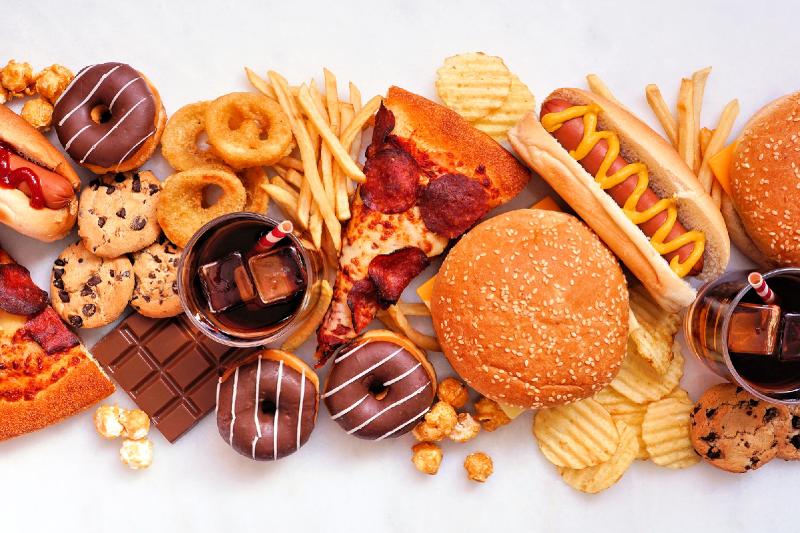
These industrially produced items—such as chips, ready meals, fizzy drinks, and packaged snacks—are frequently blamed for today's widespread health challenges. Critics argue that they are "specifically formulated and aggressively marketed to maximize consumption and corporate profits," exploiting the brain's reward systems to push us to eat more than we need.
Policymakers have suggested strong measures, including warning labels, marketing restrictions, taxes, and even outright bans near schools. But to what extent is this urgency supported by reliable evidence?
My colleagues and I wanted to step back and ask: what actually makes people like a food? And what drives them to overeat - not just enjoy it, but keep eating after hunger has passed? We studied more than 3,000 UK adults and their responses to over 400 everyday foods. What we found challenges the simplistic UPF narrative and offers a more nuanced way forward.
Liking food versus overeating
In nutrition research, two concepts are often confused: enjoying the taste of a food and engaging in hedonic overeating (eating for pleasure rather than out of hunger). Liking refers to flavor preference, while hedonic overeating describes the tendency to keep eating because the experience is enjoyable. The two are connected but not the same. For instance, many people enjoy porridge but rarely consume it excessively, whereas chocolate, biscuits, and ice cream are common triggers for both liking and overeating.
We conducted three large online studies where participants rated photos of unbranded food portions for how much they liked them and how likely they were to overeat them. The foods were recognisable items from a typical UK shopping basket: jacket potatoes, apples, noodles, cottage pie, custard creams - more than 400 in total.
We then compared these responses with three things: the foods' nutritional content (fat, sugar, fiber, energy density), their classification as ultra-processed by the widely used Nova system - a food classification method that groups foods by the extent and purpose of their processing - and how people perceived them (sweet, fatty, processed, healthy and so on).
The power of perception
Some findings were expected: people liked foods they ate often, and calorie-dense foods were more likely to lead to overeating.
But the more surprising insight came from the role of beliefs and perceptions. Nutrient content mattered - people rated high-fat, high-carb foods as more enjoyable, and low-fiber, high-calorie foods as more "bingeable". But what people believed about the food also mattered, a lot.
Perceiving a food as sweet, fatty, or highly processed increased the likelihood of overeating, regardless of its actual nutritional content. Foods believed to be bitter or high in fiber had the opposite effect.
In one survey, we could predict 78% of the variation in people's likelihood of overeating by combining nutrient data (41%) with beliefs about the food and its sensory qualities (another 38%).
Ultra-processed label limitations
In short: how we think about food affects how we eat it, just as much as what's actually in it.
This brings us to ultra-processed foods. Despite the intense scrutiny, classifying a food as "ultra-processed" added very little to our predictive models.
Once we accounted for nutrient content and food perceptions, the Nova classification explained less than 2% of the variation in liking and just 4% in overeating.
That's not to say all UPFs are harmless. Many are high in calories, low in fibre, and easy to overconsume. But the UPF label is a blunt instrument. It lumps together sugary soft drinks with fortified cereals, protein bars with vegan meat alternatives.
Some of these products may be less healthy, but others can be helpful - especially for older adults with low appetites, people on restricted diets, or those seeking convenient nutrition.
The message that all UPFs are bad oversimplifies the issue. People don't eat based on food labels alone. They eat based on how a food tastes, how it makes them feel, and how it fits with their health, social, or emotional goals.
Relying on UPF labels to shape policy could backfire. Warning labels might steer people away from foods that are actually beneficial, like wholegrain cereals, or create confusion about what's genuinely unhealthy.
Rethinking strategies for healthier eating
Instead, we recommend a more informed, personalized approach:
- Strengthen food literacy: teach people what contributes to satisfaction in eating, what triggers cravings, and how to identify their own signals that lead to overeating.
- Reformulate with purpose: create foods that are both enjoyable and satisfying, instead of defaulting to plain "diet" items or overly engineered snacks designed for indulgence.
- Understand eating motives: recognize that people eat for reasons beyond physical hunger, including comfort, social connection, and enjoyment. Encouraging healthier alternatives while still preserving pleasure could help reduce reliance on low-quality foods.
It's not just about processing
Some UPFs do deserve concern. They're calorie-dense, aggressively marketed, and often sold in oversized portions. But they're not a smoking gun.
Labelling entire categories of food as bad based purely on their processing misses the complexity of eating behavior. What drives us to eat and overeat is complicated but not beyond understanding. We now have the dataand models to unpack those motivations and support people in building healthier, more satisfying diets.
Ultimately, the nutritional and sensory characteristics of food - and how we perceive them - matter more than whether something came out of a packet. If we want to encourage better eating habits, it's time to stop demonizing food groups and start focusing on the psychology behind our choices.
Reference: "Food-level predictors of self-reported liking and hedonic overeating: Putting ultra-processed foods in context" by Graham Finlayson, Rebecca Allen, Angelika Baaij, Kristine Beaulieu, Nicola J. Buckland, Clarissa Dakin, Michelle Dalton, Ruairi O'Driscoll, Cristiana Duarte, Catherine Gibbons, Mark Hopkins, Graham Horgan and R. James Stubbs, 26 April 2025, Appetite.
DOI: 10.1016/j.appet.2025.108029
Be a good human. Grossly derogatory comments, blatantly inflammatory comments, excessive trolling, mean-spirited taunting and insults, scamming, spamming, and off topic comments may be removed in compliance with the site's Terms of Service and the Code of Conduct. The moderators have the final word.

But, but, but science is never, ever influenced by politics. Until it is. If you don't believe that, just follow the money.
There wasn't. If that's what you got out this article, I suggest reading it again.
This article was good, but I don't think it says what it's seeder wants it to say. I like ScienceDaily and it's clear what they're saying here, but it's likely very different than what many conservatives might be imagining having only read the headline. From the headline you'd think that "Science" has proved these UPF's safe and are somehow the 'victims' of an overly aggressive nanny state. Of course, the reality is that this article doesn't say that UPF's aren't harmful, they're just pointing out that UPF's are just one of the many reasons for the climbing obesity rates, especially in conservative majority States. As they point out, " how we think about food affects how we eat it, just as much as what's actually in it".
Again, they point out " Some UPFs do deserve concern. They're calorie-dense, aggressively marketed, and often sold in oversized portions. But they're not a smoking gun". So they're saying these foods do represent a danger if not consumed responsibly. So, the other science showing that to be healthier we should avoid only eating the high sugar, high fat, calorically dense foods, but having a burger now and then isn't going to kill you.
Their recommendations are very reasonable:
Obesity rates in US, though one might mistake it for just pointing out "Red" States where conservatives are the majority. But no, those are red because they have the HIGHEST rates of obesity.
Adult Obesity Prevalence Maps | Obesity | CDC
This articles says what should have been said all along. However, the reporting was opposite of what is being said in the seed before MAHA came along. The prior reporting suggested ultra-processed food was a killer and should be avoided. (NOTE: the CDC references I found are all PDFs so I haven't included those.)
There is exactly ZERO connection between the two. The woefully moronic MAHA hasn't done shit for America. Trying to claim this ScienceDaily report about how UPF's are just one of the things Americans want to watch out for if they are striving to be healthy was somehow changed or empowered by the moronic MAHA bullshit is laughable. Not just laugh out loud laughable, but roll on the ground holding your stomach and pointing at the dumbass who made the claim laughable.
RFK Jr. isn't just talking about the evils of processed foods, he's planning to crack down on processed foods. (I did provide a link.)
The issue is no longer following the bureaucratic pattern of 'all talk, no action'. So the food manufacturers need to load up the scientific literature to blunt whatever action RFK Jr. plans to take.
The food manufacturers are doing the same thing that climate deniers have been accused of doing -- squirreling the science. Look, squirrel!!!
Oh, no. It's the attack of the broccoli spears
My understanding plain and clear is ultra-processed foods are manipulated substances and largely are not good for the body. It may take years, decades, and maybe a relatively shortened life to individually prove it, nevertheless. Turns out, ultra-processed foods are not HEART HEALTHY!
(BTW, this is a very good topic to 'land' on. Let's see if people really want to put down their 'nasty' fork, spoon, and knife any time soon.)
That depends on what processes have been used on the ingredients. With that said, generally the closer you can get it to fresh,the better.
On a separate note, how the hell can one determine that ultra processed foods aren't that bad for the health if you're only looking at pictures and indicating whether they are likely to be over eaten....?
This study just says that labeling on the package isn't likely work because people don't care, and I am not sure that much can be taken from it. Maybe a more fitting title would have been "People like foods that are not healthy"
Here is the thing, 'ultra' is the operative word, to my understanding. It signifies that too much/many manipulations have been gone through. Yes, food can be PROCESSED minimally or so on and so forth but when "ultra-processed meats have been pulled, shaped, received "additives" to enhance their. . . attractive to the senses. Think of it as being, "junk food" near the end of the process. Or, as the saying goes: "Good across the lips, bad across the hips"—and other internal organs overtime. The (ultimate) problem-makers in ultra processed foods:
1. Saturated fats in higher percentages.
2. Sodium in high percentages.
3. Added Sugar in high percentages.
Note: I have some experience to speak from on this as I am undertaking a 'complete' overall of my own diet since earlier in this year. Our foodstuff is heavy on liberty and not on nutrition. Also, we suffer with/from a high cost for 'whole' foods.
I am with you, Friend.
I can understand why sodium is put in food as a preservative, and yet one has to wonder why so much? And, why does 'industry' not realize that in a course of a day or in making a meal. . . multiple cans or 'sources' of sodium will be compiled into the creation of one meal (in percentages?
The closer you can get it to the farm, in general, the better.
Raw milk, probably not.
Companies have to sell their products. Salt is cheap. Not many people actually read the labels and either go with the best value (this is a personal determination), or brand loyalty. So a little bit more Salt may make the difference between a brand that is returned to time and again and one that is perceived as less than.
So it's salt 'competition' being waged?
The issue with salt in foodstuffs is the cumulative factor of adding one salt product to another salt product to another salt product. . . . Think of this way. . . if each product bought has its 'measure' of sodium chloride how much salt is one individual consuming in a single meal. . . multiply it by three meals a day. . .and add salty snacks as well. How much sodium in a day is that (roughly)?
Above and beyond the daily recommended allowance.
We are 'forced' for the sake of liberty to eat what we wish and want - effectively consuming more sodium than we need. . . and we do so ignorant of the long-term effects of so much sodium!
Food for Thought: The amount of sodium in a single Top Ramen seasoning packet is 'astronomical'. . . it's ridiculously high. Children, young adults, brought up on that 'stuff' eat it without any recognition that its one packet is nearly their daily requirement (more or less), and what happens when the same individual consumes two packets of 'ramen' noodles with seasoning? And, what about the rest of the meal surrounding the noodles additional salt quantities?
As I said, I am right there with you.
I just had a tune up on my ticker, and so am looking closely at labels. I am trying to confine my purchases to products without labels, or products with only a few ingredients.
To your question on the amount of salt? There is only awareness of what one is putting in their body, which translates as "Read the label". We can't force people to eat well, we cannot make the manufacturers of food products modify their formulations as long as they are made with non-poisonous ingredients, so are you suggesting some labeling convention or just wondering what to do?
I know a thing or two about a 'ticker tune up' myself! Yes! We must read the labels. Additionally, understand the 'tipping points' in percentages of what we are to ingest on a daily basis. . . as a 'start'! The government should have a vested interest in 'Americans' staying heart, body, and mind healthy. But, the food lobbyists are too strong I reckon.
I eat amazingly well (if I do say so myself) from what I call "The bottom of the fridge". I buy lots of veggies and stick them in the fridge. When it's time to make a meal I look for whatever is closest to it's "expiration" and figure out how to make it into a meal. That shows how much I plan ahead. Fresh fruits and veggies... and twinkies Just kidding
You'd better be kidding about the twinkies, 'Ticker' guy!
Up next: Let's check how much "ADDED SUGAR" you are ingesting daily. What are your percentages?
That's the old (apparently obsolete) science based narrative before MAHA began cracking down on processed foods. You actually believe that RFK Jr., who questions the safety of vaccines, is going to give a pass to food processors? Kennedy isn't playing politics; he's making real policy.
Kennedy is cracking down on processed foods because they are unhealthy. So, new science is needed to show they're not that bad.
I did not make any comment based on "MAHA," and I certainly was not discussing RFK Jr., work.
My comments (so far) are about ultra-processed food's impact on the body. . . .
Now, I am having trouble understanding what this article's 'point' (position) is.
You seem to be making a point about RFK's policies and something along the lines that ultra-processed foods can be inherently good for us. I would like to understand where the proper quotients (percentages) of nutrients are in such foods. In order, that we can 'drive it home' or not.
The point of the article is to backpedal on the narrative that you provided. You said "Turns out, ultra-processed foods are not HEART HEALTHY!" The point of the article is to tell you that processed foods are not as bad as you have been told.
I also posted a link that explains RFK Jr. is going to crack down on processed foods. Kennedy's planned policy changes has prompted a shift in the science based narrative so that now processed foods are not as bad as you've been told. The science has made a U turn.
Where is the link? 2.1? Please point me directly to it. I will read it.
It's in my editorial comments at the top of the page. But I can provide it again:
Okay. Read it. I think I agree. I am confused about the title of this article, "Ultra-processed foods aren't the villain you think they are scientists reveal." It does not seem to align with what RFK is proposing and doing. What say you?
I agree. Ultra-processed foods are a problem (a villain) for humans, because they lack proper levels of good nutrition. Is that you view?
That is correct. The reported science in the seed has made a U turn from what had been reported before RFK Jr. took over.
My view is that the scientists reporting on the issue are prostitutes. It's not about the food, it's about the science making a U turn now that Kennedy is taking action.
You have for lack of a better understanding. . . an interesting writing style. I struggle to find whatever meaning you are applying in your comment/s. Thus, I feel as though I am not getting a full view of what you actually are saying to me.
Shut off the corporate welfare to the food manufacturers - there's no reason for the public to be funding chips, cookies and ice cream for the poor. SNAP buys far too many goodies, including prepared meals. Start it over with chicken, rice and broccoli.