
Shutdown fight over Obamacare highlights drawback of health care law

By: Paige Winfield Cunningham (Washington Post via MSN)
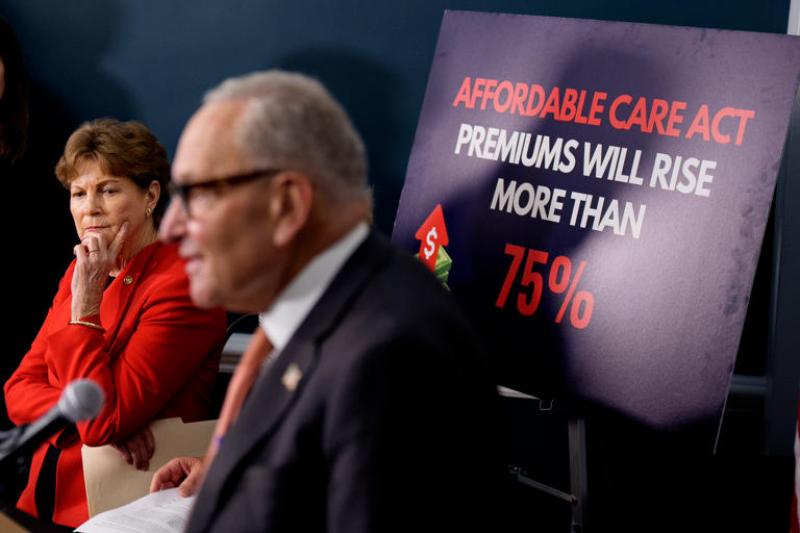


More money solves every problem created by Democrats. But where does all that money go? It's not lifting up people in poverty. It's not making anything more affordable. Seems like Democrats spending more always makes things less affordable.
 S E E D E D C O N T E N T
The fight over covid-era health insurance subsidies that could trigger a government shutdown highlights what even supporters of the Affordable Care Act fight admit is a flaw in the original law: It wasn’t generous enough to make plans affordable.
Democrats want to keep providing extra subsidies to enroll in plans offered through the ACA. But Republicans who control Congress say that it’s time to scale back because the pandemic is over.
As the two parties battle over legislation to keep the government funded beyond Oct. 1, millions of Americans face spikes in their health insurance costs and many could flee government-run marketplaces as a result.
President Barack Obama’s 2010 health law allowed people to buy insurance on marketplaces with subsidies based on their income.
But the marketplaces long struggled with high premium costs, especially burdensome for middle-income people who earned too much to qualify for assistance. Enrollment surged after Congress expanded the subsidies in 2020, a move to make sure people had health care during a pandemic.
Many Democrats and supporters of the health care law don’t want to erase that progress in getting Americans insured. They say low enrollment because of insufficient subsidies is a problem they always meant to fix.
“When we passed the ACA, we knew and assumed on a regular basis we would have to go back and see whether the … subsidies were adequate,” Rep. Frank Pallone (D-N.J.), the top Democrat on the House committee that handles health issues, said in an interview on Friday. “We knew if health care costs continued to go up we would have to expand it to a little higher income.”
Political fights over the Affordable Care Act aren’t new. The government shut down in 2013 for 16 days amid disputes over the law, including Sen. Ted Cruz (R-Texas) filibustering a spending bill that funded it. For years, Republicans tried to chip away at it and in President Trump’s first term failed to repeal the law.
But this time, the fight is over expanding the Affordable Care Act instead of tearing it down.
The extra marketplace subsidies gave the average customer $700 more dollars annually for their premium, according to KFF, a nonpartisan health policy organization. That meant many families with low incomes could get a plan for free and many middle-income families qualified for subsidies for the first time.
Going back to the original subsidies would be disastrous, Democrats and health plans say, because they just weren’t sufficient.
“That was clearly a flaw in the design,” said Andy Slavitt, a partner at a health care investment firm who served as acting administrator of the Centers for Medicare and Medicaid Services under Obama.
When Democrats were writing the health care law, they committed to paying for it largely with new taxes. That limited how much they were able to spend on subsidies, which were set at levels below what some lawmakers wanted.
They hoped enough healthy people would enroll in the new marketplaces to keep premiums affordable even without subsidies. But that didn’t always play out. In 2017, insurers hiked premiums sold through the Healthcare.gov marketplace by an average of 25 percent. Premiums continued rising after that, but more slowly.
“If I could wave a magic wand, I would make all kind of changes to the ACA myself, but we are where we are,” Sen. Amy Klobuchar (D-Minnesota) said in an interview on Friday.
Ceci Connolly, chief executive of the Alliance of Community Health Plans, said it’s “reasonable” to consider lowering the subsidies. But suddenly cutting them off for millions of people won’t solve underlying problems with the law, she said.
“Health care is still in need of some significant reform,” Connolly said.
Letting the subsidy enhancement expire would have little effect on the lowest-income earners in the marketplaces: singles making less than $21,000 or families of four making less than $42,000. That’s because they could already buy fully subsidized plans.
But analysts say it will cause price shocks for just about everyone else. And those price hikes would come just as Republicans seek to retain their House and Senate majorities. Twelve House Republicans, many of them in vulnerable seats, have signed onto a bipartisan bill by Rep. Jen Kiggans (R-Virginia) to extend the subsidies for another year.
For example, a couple earning $30,000 would go from paying nothing for their annual premium to spending $1,107 for a mid-range insurance plan, according to a KFF analysis. A single person making $35,000 would have to pay $2,615, up from $1,033.
People earning more than 400 percent of the federal poverty line — about $129,000 for a family of four — would no longer be eligible for any subsidies at all.
House and Senate GOP leaders have said they don’t plan to include the extra subsidies in a government funding bill but haven’t ruled out year-end legislation to extend them.
Senate Majority Leader John Thune (R-South Dakota) told CNN this week that if the subsidies are extended it should be done alongside reforms that make the program “a better deal for the American taxpayer.” House Speaker Mike Johnson (R-Louisiana) called it “a December policy issue, not a September funding issue.”
The extra assistance prompted record-high enrollment in the ACA programs, boosting enrollment from 11 million in 2020 to more than 24 million this year.
Nearly 4 million fewer people will be enrolled in the marketplaces a decade from now if the subsidies end, according to the nonpartisan Congressional Budget Office. Many of those losses may be among relatively healthier people who, weighing the costs and benefits of coverage, will decide to go without. That would leave behind a sicker pool of people buying insurance, causing premiums to rise. Insurers selling plans through Affordable Care Act marketplaces have cited that likelihood in proposing double-digit premium hikes for 2026.
The subsidies come at a significant cost to taxpayers, however: Extending them another ten years would cost $350 billion, according to the CBO. Republicans highlight that cost — and argue that people should have to contribute toward their premiums, not have them fully covered, so that they have skin in the game.
Brian Blase, an influential conservative health policy analyst, calls the extra subsidies the “Biden covid credits” and has visited Capitol Hill to urge Republicans to go back to the original subsidy levels.
“I’m not advocating doing anything with Obamacare other than restoring it,” he said.
Be a good human. Grossly derogatory comments, blatantly inflammatory comments, excessive trolling, mean-spirited taunting and insults, scamming, spamming, and off topic comments may be removed in compliance with the site's Terms of Service and the Code of Conduct. The moderators have the final word.

DEMOCRATS TO THE RESCUE!
The insurance companies thank you for your monetary support. Such sacrifices to enrich for-profit shareholders is commendable.