
Marijuana use for many starts as coping mechanism, becomes habit

By: LEAH WILLINGHAM (AP News)
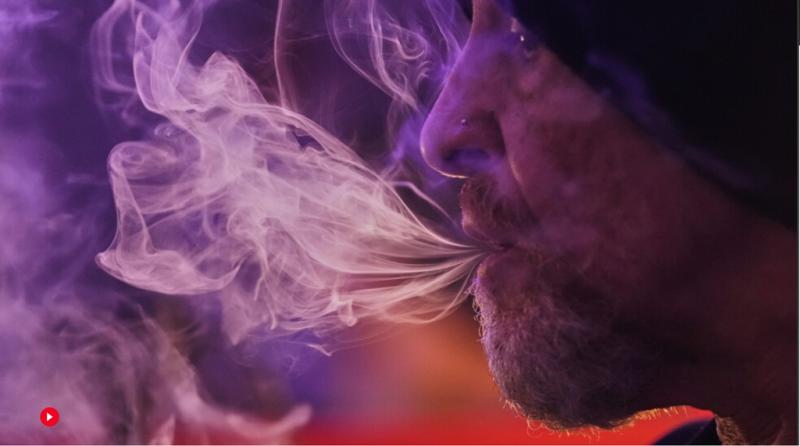


An emerging issue whose political influence can only increase over time. A crystal ball isn't needed to foresee tougher regulations coming.
 S E E D E D C O N T E N T
BROOKLINE, Mass. (AP) — For the past several years, 75-year-old Miguel Laboy has smoked a joint with his coffee every morning. He tells himself he won't start tomorrow the same way, but he usually does.
"You know what bothers me? To have cannabis on my mind the first thing in the morning," he said, sparking a blunt in his Brookline, Massachusetts, apartment. "I'd like to get up one day and not smoke. But you see how that's going."
Since legalization and commercialization, daily cannabis use has become a defining — and often invisible — part of many people's lives. High-potency vapes and concentrates now dominate the market, and doctors say they can blur the line between relief and dependence over time so that users don't notice the shift. Across the country, people who turned to cannabis for help are finding it harder to put down.
Overall, alcohol remains more widely used than cannabis. But starting in 2022, the number of daily cannabis users in the U.S. surpassed that of daily drinkers — a major shift in American habits.
Researchers say the rise has unfolded alongside products that contain far more THC than the marijuana of past decades, including vape oils and concentrates that can reach 80% to 95% THC. Massachusetts, like most states, sets no limit on how strong these products can be.
Doctors warn that daily, high-potency use can cloud memory, disturb sleep, intensify anxiety or depression and trigger addiction in ways earlier generations didn't encounter. Many who develop cannabis use disorder say it's hard to recognize the signs because of the widespread belief that marijuana isn't addictive. Because the consequences tend to creep in gradually — brain fog, irritability, dependence — users often miss when therapeutic use shifts into compulsion.
How a habit becomes an addiction
{Photo - click Seed Link}
Miguel Laboy smokes a joint on Oct. 3, 2025, in Brookline, Mass. (AP Photo/Robert F. Bukaty)
Laboy, a retired chef, began seeing a substance-use counselor after telling his doctor he felt depressed, unmotivated and increasingly isolated as his drinking and cannabis use escalated.
Naltrexone helped him quit alcohol, but he hasn't found a way to quit marijuana. Unlike alcohol and opioids, there is no FDA-approved medication to treat cannabis addiction, though research is underway.
Laboy, who first smoked at 18, said marijuana has long soothed symptoms tied to undiagnosed ADHD, childhood trauma and painful experiences — including cancer treatment and his son's death. Through decades in restaurant kitchens, he considered himself a "functional pothead."
Lately, though, his use has become compulsive. After retiring, he began vaping 85% THC cartridges.
Miguel Laboy, a daily cannabis user, vapes, Friday, Oct. 3, 2025, in Brookline, Mass. (AP Photo/Robert F. Bukaty)
"These days, I carry two things in my hands: my vape and my cellular — that's it," he said. "I'm not proud of it, but it's the reality."
Cannabis eases his anxiety and "settles his spirit," but he's noticed it affects his concentration. He hopes to learn to read music, but sustaining focus at the piano has grown difficult.
He's seen an addiction psychiatrist for six months, but he hasn't been able to cut back. The medical system doesn't seem equipped to help, he said.
"They're not ready yet," Laboy said. "I go to them for help, but all they say is, 'Try to smoke less.' I already know that — that's why I'm there."
Younger users describe a similar slide — one that begins with relief and ends somewhere harder to define.
Brain fog becomes 'your new normal'
{Photo - click Seed Link}
Kyle, a college student, smokes cannabis out of a bong, Oct. 29, 2025, in Boston. (AP Photo/Robert F. Bukaty)
Kyle, a 20-year-old Boston University student, says cannabis helps him manage panic attacks he's had since high school. He spoke on the condition that only his first name be used because he buys cannabis illegally.
In the Allston apartment he shares with fraternity brothers, they have a communal bong.
When he's high, Kyle feels calm — and able to process anxious thoughts and feel a sense of gratitude. But that clarity has become harder to reach when he's sober.
"I think I was able to do that better a year ago," he said. "Now I can only do it when I'm high, which is scary."
He said the brain fog and feeling of detachment develop so gradually they become "your new normal." Some mornings, he wakes up feeling like an observer in his own life, struggling to recall the day before. "It can be tough to wake up and go, 'Oh my God, who am I?'" he said.
Still, he doesn't plan to stop anytime soon.
Kyle says cannabis helps him function — more than seeking professional treatment would. Doctors say that ambivalence is common: many people feel cannabis is both the problem and the solution.
A dream turns into a nightmare
{Photo - click Seed Link}
This April 22, 2016, file photo shows a marijuana bud at a medical marijuana facility in Unity, Maine. (AP Photo/Robert F. Bukaty, File)
Anne Hassel spent a month in jail and a year on probation for growing cannabis in the 1980s. She cried when Massachusetts' first dispensaries opened — and left her physical therapy career to get a job at one.
Within a year, though, "my dream job turned into a nightmare," she said.
Hassel, 58, said some consultants pushed staff to promote high-potency concentrates as "more medicinal," downplaying their risks. After trying her first dab — a nearly instantaneous, "stupefying" high — she began using 90% THC concentrate several times a day.
Her use quickly became debilitating, she said. She lost interest in things she once loved, like mountain biking. One autumn day, she drove to the woods and turned back without getting out. "I just wanted to go to my friend's house and dab," she said. "I hated myself."
{Photo - click Seed Link}
Anne Hassel, a former cannabis user, rides her motorcycle, Nov. 6, 2025, in Chicopee, Mass. (AP Photo/Robert F. Bukaty)
She didn't seek formal treatment but recovered with the help of a friend. Riding her green motorcycle — once named "Sativa" after her favorite strain — has helped her reconnect to her body and spirit.
"People don't want to acknowledge what's going on because legalization was tied to social justice," she said. "You get swept up in it and don't recognize the harm until it's too late."
Community for those who want to leave
Online, that realization unfolds daily on r/leaves, a Reddit community of more than 380,000 people trying to cut back or quit.
Users describe a similar push-pull — craving the calm cannabis brings, then feeling trapped by the fog. Some write about isolation and regret, saying years of smoking dulled their ambition and presence in relationships. Others post pleas for help from work or doctors' offices.
SLIDESHOW: The every day high {click Seed Link}
- An advertisement for a cannabis delivery company is seen on a public trash bin, Sunday, Nov. 16, 2025, in Boston. (AP Photo/Robert F. Bukaty)
- Miguel Laboy shops at a cannabis dispensary, Friday, Nov. 14, 2025, in Brookline, Mass. (AP Photo/Robert F. Bukaty)
- A customer holds a package containing one gram of cannabis purchased from a dispensary, Friday, Nov. 14, 2025, in Brookline, Mass. (AP Photo/Robert F. Bukaty)
- A package of fruit-flavored cannabis gummies is displayed at a dispensary, Friday, Nov. 14, 2025, in Brookline, Mass. (AP Photo/Robert F. Bukaty)
- A gram of cannabis is seen, Friday, Nov. 14, 2025, in Brookline, Mass. (AP Photo/Robert F. Bukaty)
- Miguel Laboy plays the keyboard after smoking cannabis, Friday, Oct. 3, 2025, in Brookline, Mass. (AP Photo/Robert F. Bukaty)
Together, they paint a portrait of dependence that is quiet and routine — and difficult to escape.
"When people talk about legalizing a drug, they're really talking about commercializing it," said Dave Bushnell, who founded the Reddit group. "We've built an industry optimized to sell as much as possible."
What doctors want people to know
Dr. Jordan Tishler, a former emergency physician who now treats medical cannabis patients in Massachusetts, said low doses of THC paired with high doses of CBD can help some patients with anxiety. Many products have high levels of THC, which can worsen symptoms, he said.
"It's a medicine," he said. "It can be useful, but it can also be dangerous — and access without guidance is dangerous."
{Photo - click Seed Link}
Miguel Laboy rolls a joint Friday, Nov. 14, 2025, in Brookline, Mass. (AP Photo/Robert F. Bukaty)
Dr. Kevin Hill, an addiction director at Boston's Beth Israel Deaconess Medical Center who specializes in cannabis use disorder, said the biggest gap is education, among both consumers and clinicians.
"I think adults should be allowed to do what they want as long as it doesn't hurt anybody else," but many users don't understand the risks, Hill said.
He said the conversation shouldn't be about prohibition but about balance and informed decision-making. "For most people, the risks outweigh the benefits."
Be a good human. Grossly derogatory comments, blatantly inflammatory comments, excessive trolling, mean-spirited taunting and insults, scamming, spamming, and off topic comments may be removed in compliance with the site's Terms of Service and the Code of Conduct. The moderators have the final word.

Tags
Who is online
107 visitors
Stricter regulations on marijuana are unavoidable. There are numerous health issues that will need to be addressed, such as second-hand exposure. The current Federal regulations are a Hodge podge of restricted activities, typically with zero tolerance, such as air traffic controllers, nuclear plant operators, and public transport operators. As use and associated problems become more widespread and visible the need for uniform regulations will become apparent.
Regulation at the Federal level will also be needed as litigation over self and public harms increase. The best defense against litigation is regulatory compliance.
Have been a night-time user of high level CDC and low level THC for PTSD under medical supervision for many years. The advice by the two physicians at the end of the thread is very real and very sound.
Have a few buddies who go for the high THC/low CDC usage - and two of them are thoroughly screwed up - but they won't/can't quit.
Unfortunately - just like alcohol - you're addicted and can't break the cycle.
I’m a daily user but never during or before work, and I routinely go away for a week here and there without use with no problem. I sleep much better with a light dose. I’m not saying there aren’t people with dependency issues, but it’s not the norm and neither is weed a gateway to hard drugs. Alcohol dependence is a far, far bigger issue.
Marijuana acceptance is a runaway train anymore. Where it’s recreational use is still illegal (like Texas and Louisiana), that fact doesn’t matter at all. I was in Dallas recently and marijuana shops have names so explicit that there can be no confusion over what they are selling. The dude I was with said I had to try their marijuana infused drinks, so I got one thinking it must be a fairly weak concentration. Man was I wrong. As I was loudly slurping the bottom of the glass 30 minutes later I looked over and saw he had barely touched his. That shit kicked my ass, and he didn’t finish his until the next day. I asked the shop owner how they get away with this, and he said one word - “loopholes”. I just came back from New Orleans and the smell of it is literally everywhere, to a nauseating degree. I even witnessed a young woman vaping in the middle of a crowded theater on a cruise ship, where it is definitely not legal. She thought she was being slick but it stunk so bad everyone around her turned their heads. This scene from New Orleans was so out of the ordinary that I had to take a photo. I’m guessing they don’t drug test their applicants.