
Why haven't Trump's tariffs crashed the US economy?

By: Jeffrey Frankel (The Guardian)
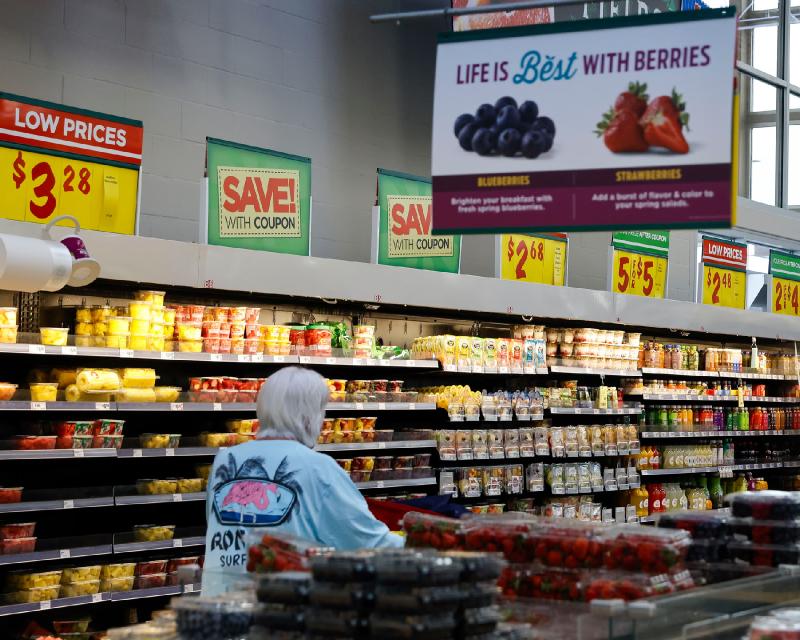


The tariffs are doing what they are supposed to do. The history of the Smoot-Hawley Act doesn't apply today because global capital is more mobile and less constrained by reserve limitations.
 S E E D E D C O N T E N T
When Donald Trump took office last January, most economists feared what would happen if he raised tariffs. The expectation was that, as the new duties drove up prices of consumer goods and inputs - affecting households and companies, respectively - surging inflation and falling real incomes would follow. This would be a supply shock, so the US Federal Reserve could not do much to counteract it.
Trump did raise tariffs to shocking levels, violating international agreements and blowing up the Republican party's oft-professed commitment to free trade. In terms of severity and disruptiveness, Trump's 2025 tariffs went far beyond the already harmful tariffs of his first term, and even beyond the infamous Smoot-Hawley Act of 1930. According to the Yale Budget Lab, the average effective tariff on US imports rose from 2% to 18%, the highest level since the 1930s, this year. Add to that the uncertainty caused by frequent and inexplicable policy changes, and large adverse effects on inflation, employment and real incomes appeared all but inevitable.
But things did not turn out as anticipated. It is possible that consumer price inflation (CPI) did not rise at all: the most recently reported rate, for the 12 months ending in November, is 2.7% - the same level as in the closing months of 2024. (Of course, the price level is higher, contrary to Trump's claims.) The unemployment rate rose only a little, from 4.1% at the end of 2024 to 4.6% in November. Economic growth probably slowed toward the end of the year, but the situation remains unclear, because a US government shutdown delayed data collection.
In any case, it is pretty safe to say that the economic damage caused during Trump's first year back in office has been smaller than predicted. There are four reasons why his tariffs' biggest effects were limited or delayed in 2025.
First, US economic statistics are unusually vulnerable to measurement problems, owing to the government shutdown, which stretched from 1 October to 12 November. Some CPI information is missing because the Bureau of Labor Statistics could not collect data as usual, particularly for October. Even in November, there is reason to doubt that housing cost inflation amounted to zero, as reported. If true, this would bias the overall CPI estimate downward. GDP releases by the Bureau of Economic Analysis are way behind schedule, with the release of third-quarter GDP data having been postponed.
The second reason we have seen less damage from Trump's tariffs than expected is that many of the highest ones are not fully in effect. Trump has postponed some tariffs repeatedly. He rolled back others on 14 November, because they were driving up grocery prices.
Moreover, Trump introduced major tariff exceptions for some countries. For example, the integrated North American auto industry would have been devastated if he hadn't decided on 6 March to exempt goods from Mexico and Canada from the 25% levy that had gone into effect two days earlier. Goods from these countries now face no penalty if they are imported under the US-Mexico-Canada agreement.
This softening was predictable. US business would have suffered enormously if Trump had fully implemented the tariffs he had announced, let alone threatened, so it was never likely that he would persist with the worst of them. Trump regularly stakes out extreme negotiating positions, only to back down when the heat is on, even if he hasn't gotten what he demanded from the other side. In fact, investors' assumption that "Trump always chickens out" - known as Taco - has become a taunt. But when a madman threatens Armageddon, it is foolhardy to goad him into following through. The tariffs Trump has implemented are still very high.
But this does not mean economists got their predictions all wrong. There are good reasons to think that many of the adverse effects of Trump's tariffs have simply been delayed, and we should expect them to show up in 2026.
This brings us to the third point: as soon as Trump was elected in November 2024, companies began front-loading imports, in order to accumulate stocks of goods - especially gold from Switzerland and weight-loss drugs from Ireland - before the anticipated tariffs were introduced. The Penn Wharton Budget Model estimates that this strategy saved US importers as much as $6.5bn (£4.8bn) - equivalent to 13.1% of the new tariff bill - through May 2025.
After the tariffs entered into effect, most retailers still didn't raise prices, as they had not depleted their pre-tariff inventories. This is common practice among retailers, though an economist might say that it violates the principle of profit maximisation. Even today, many importers have still not fully passed along the added costs to their customers.
In fact - and this is the final and most important point - importers have continued to absorb much of the cost increase, even after depleting their pre-tariff inventories. Using real-time data from large US retailers, Alberto Cavallo and his co-authors find that the prices of goods subject to the new tariffs - the imported products and their US-made substitutes - have been rising since April. The increase, which amounted to about 5.4% at the retail level, has been enough to raise the inflation rate on the overall CPI basket by 0.7 percentage points above where it otherwise would have been. But it represents a small fraction of the costs that could potentially be passed through, at current tariff levels.
To be sure, the prices importers pay have risen proportionately with tariffs, contrary to Trump's claims that foreign exporters cover the costs of the duties by lowering their prices. It is US companies that have been absorbing the costs, much as they typically do when the dollar depreciates. This partly reflects the fact that they have no idea how long the tariffs will be in place. Trump might change his mind, or perhaps the supreme court will decide to adhere to the law and strike them down. This uncertainty also helps to explain why many affected companies have so far refrained from laying off workers.
But companies will not let tariffs erode their profit margins indefinitely. Assuming the tariffs remain, the US can look forward to more price increases, and downward pressure on real incomes, in 2026.
Jeffrey Frankel is a professor of capital formation and growth at Harvard University. He served as a member of President Bill Clinton's Council of Economic Advisers.
Be a good human. Grossly derogatory comments, blatantly inflammatory comments, excessive trolling, mean-spirited taunting and insults, scamming, spamming, and off topic comments may be removed in compliance with the site's Terms of Service and the Code of Conduct. The moderators have the final word.

Tags
Who is online
110 visitors
Imports have lost their price advantage. Trade deficits really have gone down significantly (nearly cut in half). Manufacturers are beginning to invest in US manufacturing.
No one should expect the economy to transform itself overnight. But what has been accomplished in 8 months has defied the doom and gloom predictions.
Why? Exactly as you said.
Prices are going up and a recession is looming on the horizon.
Why haven’t Trump’s tariffs crashed the US economy?
As Trump's tariffs kick in, economist breaks down inflation and recession warning signs
Tariffs are fueling fears of a recession. What does it take to actually declare one?
Have the risks been realized? The economy is not in recession in spite of dire warnings throughout the year.
Whose profits are being squeezed? Domestic producers sourcing domestic labor and resources wouldn't need to raise prices or lose profits. In fact, the market trend would allow these domestic producers to become more profitable competing in out own marketplace.
What supply chains have been disrupted? The cost of foreign supplies have increased with the addition of tariffs but that has not prohibited imports. The supply chains are still open.
How will manufacturing and construction be slowed with increased investments in manufacturing? There really has been an uptick of foreign investment for manufacturing in the US because of the tariffs.
Why is reducing trade volumes a bad thing? Trade deficits really have been nearly cut in half.
The AI Overview seems to be relying upon old tropes, such as the Smoot-Hawley Act. But todays economy is nothing like any US economy before 1971. The constraints of a metal reserve on credit and investment do not exist any longer. Global capital is mobile and no longer tied to sovereign restrictions of currency of exchange.
As you said yourself, the economy does not change overnight. But it is currently moving in that direction.
So you are saying that American made TV's prices will not be affected by the tariffs? So who is your favorite American television manufacturer?
Manufacturing does not appear overnight. It will take years if not decades for the US to bring back manufacturing that is usually done foreignly, That is assuming a company is willing to pay the millions and millions of dollars to restart our manufacturing base.
Who said it was a bad thing? Who said tariffs were a bad thing? They are tools, but it is the way they are currently being used that is irresponsible and dangerous.
We had a trade surplus with Canada, yet Trump has chosen to apply tariffs to them.
We are paying billions of dollars to soybean farmers because of these tariffs. The Chinese were our biggest soybean customer now they are getting the product from different locations and may never return to trading with us, putting soybean farmers in a possible death spiral where we will be needing to bail them out every year because of it.
Trade with Canada may be permanently effected by his tariffs.
AI Overview
Yes, recent U.S. tariffs under the Trump administration on Canadian goods, including steel, aluminum, auto parts, and others, significantly disrupted trade, increased costs for consumers and businesses, risked jobs, and created economic uncertainty, leading to calls for Canadian retaliation and concerns that long-term investment and competitiveness could be permanently harmed if policies remain volatile. While some goods remain exempt under the USMCA (United States-Mexico-Canada Agreement), the higher tariffs and policy instability threaten to lower Canada's economic output and shift production, impacting sectors from agriculture to manufacturing.
Ha, ironic... Who is yours?
Lol. The economy grew 4.3% last quarter and 3.8% the Quarter before that..