
This Supreme Court ruling may doom ICE agent who gunned down Minnesota mom

By: Robert Davis (Raw Story)
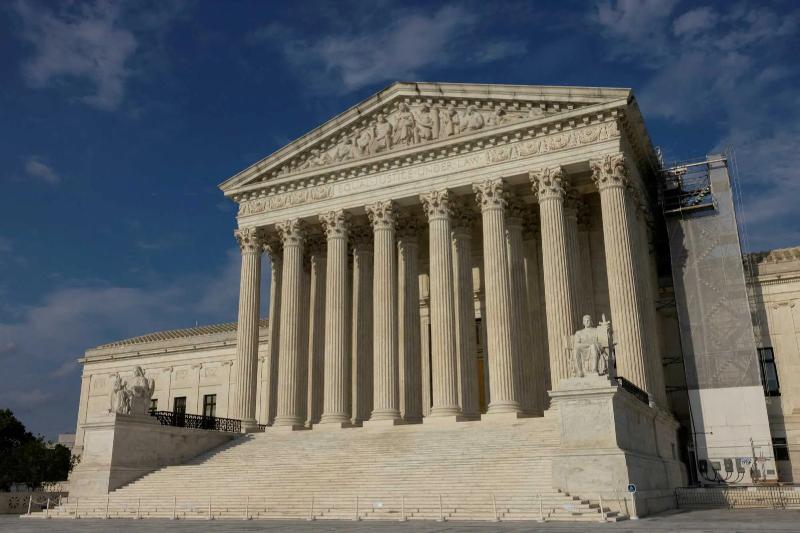

Jonathon Ross' violation of procedure and protocol should be enough to overcome a 'moment of threat' argument. And the Supreme Court has already ruled that 'moment of threat' arguments, alone, aren't a valid defense.
 S E E D E D C O N T E N T

A Supreme Court precedent that was reaffirmed just last year may not bode well for the immigration officer who killed Renee Good in Minneapolis last week, according to a legal expert.
President Donald Trump's administration rushed to justify Good's killing shortly after the shooting occurred. Department of Homeland Security Secretary Kristi Noem called Good a "domestic terrorist" after the shooting, and Trump said she was being "disrespectful" to officers. They also accused Good of "weaponizing" her car against Ross, and provided isolated clips as video evidence. However, witness testimony and video recordings appear to contradict the government's evidence.
If the shooting is challenged in the courts, Cynthia Lee, a professor of law at George Washington University, argued in a column for Slate that the Supreme Court may not be on Ross's side.
Specifically, the high court may take issue with the government's assertion that Ross felt his life was in imminent danger in the moment he pulled the trigger.
"In assessing whether a law enforcement agent's use of deadly force was reasonable or excessive, the court this past summer rejected the 5th Circuit's narrow 'moment of threat' doctrine—which stated that the only thing that matters in determining whether an officer reasonably fears for their life in a use-of-force situation is the moment of the shooting itself—as inconsistent with the Fourth Amendment," Lee wrote.
Lee added that Good's death was "completely preventable," and Ross made several moves that are against the department policy, like placing himself in front of a moving car and shooting at a moving vehicle.
"The court, in Barnes v. Felix, rejected this narrow time-framing approach and repeated what it had held in Graham v. Connor: In assessing the reasonableness of an officer's use of force, one must consider the totality of circumstances," Lee wrote.
Read Lee's entire column by clicking here .
Be a good human. Grossly derogatory comments, blatantly inflammatory comments, excessive trolling, mean-spirited taunting and insults, scamming, spamming, and off topic comments may be removed in compliance with the site's Terms of Service and the Code of Conduct. The moderators have the final word.

Tags
Who is online
126 visitors
Jonathon Ross' own cellphone video convicts him. That video shows that Ross, alone, is responsible for creating the 'moment of threat'. SCOTUS has already ruled that a 'moment of threat' argument cannot ignore the chain of events. A 'moment of threat' argument, by itself, is no longer a valid defense.
How sad is it that common sense no longer matters, and we need to defer to SCOTUS rulings to justify that the sky is blue.