
Australia now has so much solar power it’s becoming a massive problem

By: Everett Sloane (Morning Overview via MSN)
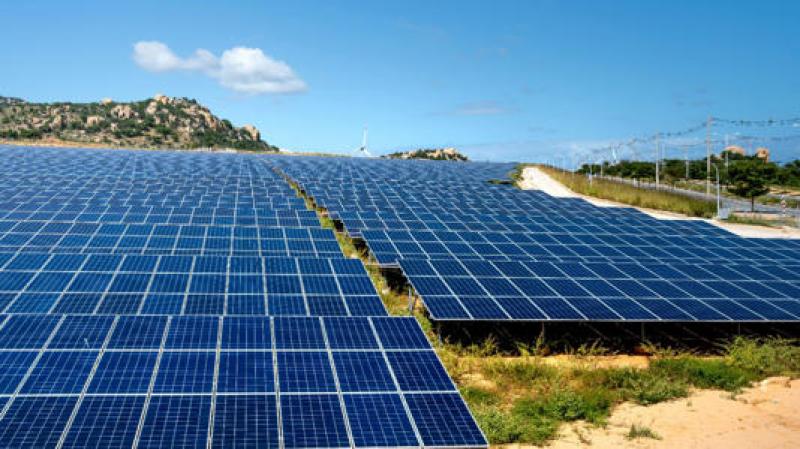


Another headache that wasn't mentioned in the fine print.
 S E E D E D C O N T E N T
Australia’s grid is buckling under the weight of its own solar success, With rooftop panels now installed on 2.7 million homes across the country, midday electricity generation regularly overwhelms demand, crashing wholesale prices to zero or below, only for costs to spike violently when the sun sets and wind drops. State governments in South Australia and Victoria have responded by granting authorities the power to remotely switch off household solar systems during emergencies, a regulatory step that would have seemed unthinkable just a few years ago.
Prices Swing From Negative to Extreme in Hours
The core paradox of Australia’s solar boom is that the grid now swings between too much power and too little within the same day. During the first quarter of 2025, the Australian Energy Regulator reported 11 instances where wholesale electricity prices exceeded $5,000 per megawatt-hour, driven by high demand, low wind output, network constraints and strategic rebidding. In practical terms, that means that once the sun disappears and dispatchable supply tightens, the market can lurch from oversupply to scarcity in a matter of hours, with consumers and retailers exposed to sudden price shocks.
At the other end of the spectrum, the same regulator’s quarterly analysis shows that strong renewable output is now pushing wholesale prices to very low or negative levels during periods of peak solar generation. This pattern creates a financial squeeze for solar owners who export power at midday for little or no return, then draw from the grid at night when prices are highest. For the broader system, extreme volatility complicates investment signals: generators and storage providers that could smooth the gap struggle to justify new capacity when daytime revenues are collapsing, even as evening prices suggest an urgent need for more firm supply.
States Step In With Remote Shutdown Powers
South Australia, which has the highest per-capita rooftop solar penetration in the country, has moved to give grid operators a direct lever over household systems. Under the state’s Smarter Homes regulatory framework, new rooftop installations must appoint a “relevant agent,” an approved intermediary authorised to remotely disconnect or reconnect a system when lawfully directed during a power system emergency. The framework also imposes compliance obligations on customers and installers, meaning homeowners cannot simply opt out of remote management if they want to connect new systems or significantly upgrade existing ones.
Victoria has taken a parallel approach by establishing a formal emergency backstop mechanism that enables remote control of rooftop solar exports and generation as a last resort. Stage 1 of the regime began in October 2023, and a Stage 2 ministerial order was updated in October 2025 to refine how and when curtailment can occur. Both states stress that these powers are intended for emergency use, such as when excess rooftop output threatens system security, but the direction is clear: as solar capacity grows, regulators are building the infrastructure to curtail it when the grid demands it. For households that invested thousands of dollars in panels expecting uninterrupted export revenue, the shift introduces a new financial and regulatory risk that was rarely discussed at the time of purchase.
Why Batteries Alone Will Not Fix the Mismatch
Grid-scale batteries are often cited as the obvious answer to solar oversupply, and there has been tangible progress. The AER’s first-quarter 2025 report noted record new battery entry, adding storage capacity that can soak up some of the midday surplus and release it during the evening peak. Yet the scale of the mismatch still outpaces deployment: on clear days, millions of rooftop systems can collectively generate gigawatts of power that the grid cannot absorb, store or transmit fast enough, especially in regions where transmission upgrades lag behind rooftop uptake. Batteries can help shave peaks and fill short troughs, but they remain capital-intensive and take years to permit and build at the scale required to fully buffer the daily solar cycle.
Market incentives also cut in conflicting directions. Storage assets earn the most when price spreads between low and high periods are wide, which currently encourages investment because negative daytime prices and extreme evening spikes create rich arbitrage opportunities. However, if enough batteries enter the market to flatten those spreads, the business case for the next project weakens, slowing further build-out just as system operators might want it to accelerate. An ARENA-supported analysis of customer behaviour around orchestration programs notes that “disruption rarely occurs without challenge,” arguing that the mass uptake of rooftop solar has fundamentally altered how the grid operates and that new coordination tools, rather than hardware alone, will be needed to manage the transition.
Electric Vehicles as a Possible Pressure Valve
One technology that could absorb a meaningful share of excess solar already sits in Australian driveways. Vehicle-to-grid (V2G) systems allow electric vehicles to charge during periods of solar oversupply and then feed stored energy back into the grid during evening demand peaks. Research by CSIRO on V2G highlights the combination of rapid rooftop solar uptake and growing EV ownership as a strong rationale for accelerating pilot projects. In theory, if millions of EV batteries can be coordinated to charge when the grid is flooded and discharge when it is strained, they could function as a vast, distributed storage network that complements dedicated battery farms and pumped hydro.
The practical barriers, however, are substantial. Most current EVs and home chargers in Australia are not yet equipped for bidirectional power flow, and standards for communication between vehicles, chargers and grid operators are still evolving. Consumers may also be wary of using their cars as grid assets if they fear faster battery degradation or losing charge when they need to drive, which means V2G programs will have to offer clear financial rewards and transparent controls. Regulators will need to decide how to treat EV exports within existing market rules, including whether households are classified as generators, how network charges apply and how to verify that cars are available when contracted. Without careful design, V2G risks becoming another source of complexity for households already trying to navigate feed-in tariffs, time-of-use pricing and emerging orchestration schemes.
Designing a Smarter, Fairer Solar Future
The collision between abundant rooftop solar and a grid built for one-way power flows has exposed a deeper design challenge. Emergency backstop mechanisms and remote shutdown powers are, in effect, blunt tools for managing a system that lacks the flexibility to dynamically match supply and demand. To move beyond crisis management, policymakers are considering a suite of reforms: more granular pricing that better reflects local network constraints, incentives for flexible demand such as smart hot water and pool pumps, and expanded orchestration programs that pay households to allow their solar, batteries and potentially EVs to be controlled in response to grid conditions. These measures aim to turn millions of small systems from an unmanaged problem into a coordinated resource.
Equity will be central to whether such reforms are accepted. Households without solar already shoulder a growing share of network costs as others reduce their grid consumption, and blunt export limits or remote shutdowns risk deepening perceptions that the rules are being rewritten at the expense of early adopters. Transparent communication about why curtailment is needed, clear compensation frameworks when exports are constrained, and accessible pathways for renters and low-income households to benefit from distributed energy will all shape public trust. Australia’s solar success story has delivered cheaper, cleaner power for many, but keeping the lights on in a decarbonising grid will depend on whether regulators can balance system security, investment certainty and fairness as they retrofit 20th-century infrastructure for a 21st-century energy mix.
Be a good human. Grossly derogatory comments, blatantly inflammatory comments, excessive trolling, mean-spirited taunting and insults, scamming, spamming, and off topic comments may be removed in compliance with the site's Terms of Service and the Code of Conduct. The moderators have the final word.

The big electricity supplier in Minnesota had made heavy investments in wind power in this part of the state. Then spreadsheet jockeys figured out that by divesting of this green energy area, they could sell electricity to us at spot market prices. So, now our area has the problem of variable supply, little backup generation, and much higher electricity bills.
No one mentioned that business strategy when there was talks of creating our own local cooperative. And we're discovering that maintenance costs on the distributed network of turbines is more costly than maintaining a gas powered steam generator. That wasn't mentioned either.
This is all about growing pains... almost all technologies have bugs and need improvements as issues arise. I can't believe they don't use solar batteries that charge during those daylight hours for use during evening hours.
Adding storage capacity still costs 2.5 to 3 times the cost of the generating capacity. Trying to find a replacement for lithium ion batteries won't lower the cost of storage that much. Most of the alternative storage available today is only suitable for grid scale storage.