
Two drone-related mishaps in one month highlight problems between agencies

By: Lara Seligman, Dean Seal, Joseph Pisani (The Wall Street Journal via MSN)
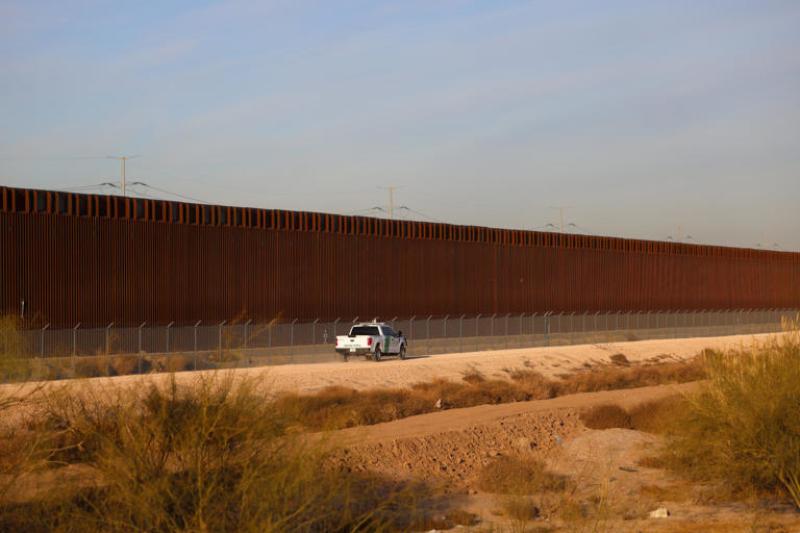

Even the Dept. of War considers ICE and CBP operations a threat. But it does provide Trump Republicans a double opportunity to celebrate government sponsored violence in the United States.
How is "oorah" pronounced in Spanish?
 S E E D E D C O N T E N T

On Wednesday, U.S. military forces operating near the Mexican border detected an unidentified drone.
The troops hadn’t received any notification that any other U.S. agency was flying unmanned aerial systems in the area. The servicemembers conferred, and decided the object could pose a threat to their position.
Unbeknown to them, the drone belonged to Customs and Border Protection. The military forces shot it down with a high-energy laser weapon, marking the second time in less than two weeks that the controversial technology had been fired on the southern border, yet again setting off a scramble to deconflict myriad government agencies operating in the area.
The incident prompted a startlingly similar chain of events to the Feb. 12 event near El Paso, when CBP personnel fired the laser weapon, on loan from the military, at aerial objects that were later determined to be likely party balloons.
The new shootdown is likely to intensify scrutiny of the communications problems among the government agencies responsible for protecting the border over the use of a potentially dangerous counterdrone technology.
Sen. Tammy Duckworth (D., Ill.), the top Democrat on the Senate aviation subcommittee, said she would call for an investigation into the El Paso and Fort Hancock incidents. “The situation is alarming and demands a thorough, independent investigation,” she said.
Aviation experts say high-powered lasers can temporarily blind or distract pilots, leading to eye injuries and potential loss of aircraft control. Yet the Pentagon believes the weapons have great potential to solve the growing problem of drone threats worldwide.
The Wednesday shootdown led aviation officials to expand flight restrictions around an area of Fort Hancock, Texas, and was met with alarm from Democratic lawmakers.
“Our heads are exploding over the news that DOD reportedly shot down a Customs and Border Protection drone using a high-risk counter-unmanned aircraft system,” said a joint statement by Reps. Rick Larsen of Washington, Bennie Thompson of Mississippi and Andre Carson of Indiana, top Democrats on committees overseeing aviation and homeland security issues. The lawmakers criticized the “lack of coordination” between the Defense Department, the FAA and the Department of Homeland Security, which oversees CBP.
The White House had directly notified some lawmakers that the Pentagon had used a laser to shoot down a CBP drone, according to a person familiar with the matter. A representative for the White House didn’t respond to a request for comment.
After this article was published, a U.S. official said that the CBP forces had not followed proper procedures in notifying the Pentagon that they were flying a drone in military airspace. A CBP spokesperson didn’t immediately respond to a request for comment on Friday.
The incident occurred when the Department of Defense used a weapon to shoot down “a seemingly threatening unmanned aerial system operating within military airspace,” the Pentagon said Thursday evening in a joint statement with CBP and the FAA.
The Pentagon said the incident took place far from populated areas and that there were no commercial planes in the vicinity. It said it has been working with the FAA and CBP to prevent drone threats by Mexican cartels at the southern border.
“These agencies will continue to work on increased cooperation and communication to prevent such incidents in the future,” the Pentagon said in a joint statement with the FAA and CBP.
The FAA said a temporary flight restriction was already in place for an area near Fort Hancock, but that it was expanded “to include a greater radius to ensure safety.” Because of the location of the restriction, it doesn’t affect commercial flights, the agency said.
The broader restriction went into effect Thursday after 7:30 p.m. local time and covered a roughly 15-mile area. The FAA didn’t say what prompted the expanded flight restriction beyond “special security reasons.”
After the El Paso incident, Transportation Secretary Sean Duffy defended the decision to close the airspace and said there wasn’t a lack of communication between agencies involved. El Paso Mayor Renard Johnson blasted the FAA no-fly order, saying the move was “unnecessary” and caused “chaos and confusion.”
Duffy also said last Friday that he would brief lawmakers on Capitol Hill about the El Paso incident sometime this week. A Transportation Department representative didn’t respond to an inquiry about whether that briefing had occurred.
Be a good human. Grossly derogatory comments, blatantly inflammatory comments, excessive trolling, mean-spirited taunting and insults, scamming, spamming, and off topic comments may be removed in compliance with the site's Terms of Service and the Code of Conduct. The moderators have the final word.

Tags
Who is online
92 visitors
Looks like CBP is continuing Biden's policy of shooting down party balloons, too. But apparently Trump has ordered them to be trigger happy.
Yippee Ki-Yay!