
Iran war: Gulf states debate US bases, military alliance

By: Kersten Knipp (Deutsche Welle via MSN)

Benjamin Netanyahu got the war he wanted and can choose the victory he desires. But the United States is not in a position to share that victory.
 S E E D E D C O N T E N T

The statements made following an emergency meeting of Arab and Islamic foreign ministers on Thursday in Riyadh had one clear subject: Iran.
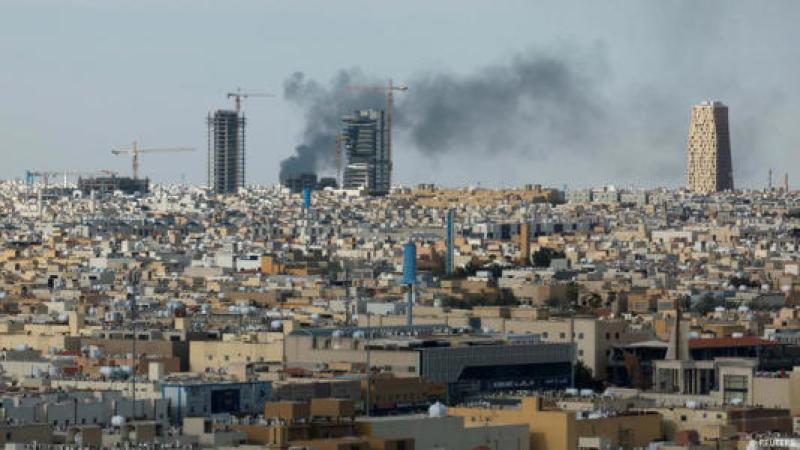
The previous day, in a major escalation of the war which started at the end of February when the US and Israel attacked Iran, the Iranians targeted a major energy hub in Qatar. That followed an Israeli strike against Iran’s South Pars gas field.
Saudi Arabia's patience is running out, the country's foreign minister, Prince Faisal bin Farhan, said at a press conference after the meeting. His country would prefer a diplomatic solution and has made it clear it wouldn't allow Saudi territory to be used to launch attacks on Iran, the senior Saudi said. But Saudi Arabia would also use every lever they had to get Iran to stop targeting neighboring countries that were not directly involved in the conflict, he added.
It is clear that the Gulf states are coming closer to being pulled into a war they never wanted to be a part of.
Not our fight, say Gulf states
Although Iran is the country attacking them, there's also a growing disillusionment with the US in the Gulf. Observers say the idea that the US would defend Gulf states because it has major military bases there has proven illusory, or at least not as effective as had been hoped. Many of the Iranian missiles and drones targeting the Gulf were not able to be intercepted by Gulf militaries or by the US.
Iran has justified its attacks on Gulf states by pointing out they host these US bases — even though Iranian missiles have also hit oil infrastructure and civilian sites like airports and hotels.
"This is Netanyahu's war," Saudi Arabia's former intelligence chief, Prince Turki al-Faisal, said in an interview with CNN at the beginning of March, referring to Israeli Prime Minister Benjamin Netanyahu. "He somehow convinced the president [Donald Trump] to support his views."
Apparently the US also brushed aside warnings from the Gulf when deciding to proceed with the war, anonymous sources from the region told the news agency Associated Press in March.
So Gulf states have learned a bitter lesson — that those US bases don't necessarily provide deterrence or protection and that, in fact, the bases make the host country a target.
Age of 'cautious neutrality' in the Gulf is over
In fact, the US bases have seen the Gulf states lose their agency, a commentary in Arabic in the Qatari-funded newspaper Al Araby Al Jadeed said. The US bases don't protect the Gulf states, the commentator argued, they prevent them from making decisions independently and from defending themselves.
The Iran war has started a debate about strategy and security, observers say. Qatar-based think tank The Middle East Council on Global Affairs calls the pre-war attitude one of "cautious neutrality." Such a stance was meant to prevent the Gulf states from becoming battlefields and to stop conflict from endangering their plans for future development.
"The perception at first was that Israel — and to some extent the US — was responsible for the escalation," Bruno Schmidt-Feuerheerd, a political scientist and researcher at Oxford University said.
After Iran started to target the Gulf states, it became clear that their security was dependent on third parties.
"In that respect, the frustration is directed primarily at external actors," Schmidt-Feuerheerd told DW.
Pauline Raabe, a senior analyst with the Berlin-based consultancy Middle East Minds has also seen criticism directed at the US getting louder and more public.
"The Gulf states are united, first and foremost, in their shock," she told DW. Saudi Arabia, in particular, has "openly criticized Trump and Netanyahu," while Qatar reacted more cautiously, she recounts. This week Omani Foreign Minister Badr al-Busaidi wrote in an op-ed in British weekly, The Economist, that "America has lost control of its own foreign policy" and that Washington’s allies must help extricate the US "from this unwanted entanglement."
The United Arab Emirates has been particularly heavily targeted by Iran.
"So it might not just be about the US bases," Schmidt-Feuerheerd suggested, "but also about putting the successful [economic] models in the region — such as Dubai — under pressure."
Dubai's reputation as a safe business location and as a tourist attraction is a central pillar of the UAE's plans to develop non-oil sectors of its economy. And that's why it's particularly sensitive to the kind of instability that war brings, US think tank The Atlantic Council has previously pointed out.
Long-term changes in Gulf-US relations likely
In the longer term, the Iran war is likely to bring about a reassessment of Gulf states' relationships with the US.
"I would expect there to be a review after the war," Schmidt-Feuerheerd said. The Gulf states will have to decide "whether US military bases are a security benefit or a risk."
Having said that, he added that military integration with the US is so deep that a change would take years.
"In the meantime, the decades-old arrangement of cheap-oil-for-American-security-guarantees is starting to look like an outdated model," Raabe argues.
But a swift break with the arrangement is unlikely, she confirmed. The ties between the US and Gulf states have evolved over decades and go well beyond military cooperation.
There were already signs before this war that a new orientation was developing, Raabe continued. Saudi Arabia has been developing partnerships with Pakistan and Turkey, Qatar has reached out to European countries like the UK and France.
"These developments were already in motion previously," Raabe says. "But given the current situation, they have become more meaningful."
Gulf states might look to diversify
Schmidt-Feuerheerd agrees. "In recent years, observers have talked about a hedging strategy," he recounted, which had seen the development of closer ties to multiple other partners, including China, Turkey and European nations.
The term "hedging" originates in economics. It's not quite clear how it works when it comes to security and defense. It's doubtful that security in the Gulf can be as easily diversified as an investment portfolio.
As Schmidt-Feuerheerd pointed out, "none of these [new] partners represent a genuine military alternative."
Additionally the Gulf states are not always united in their political direction.
"By no means is it a given that they will act as a unified entity," Schmidt-Feuerheerd said.
Before this war began and forced them back together, Saudi Arabia and the UAE for example had been moving towards an increasingly rivalrous and antagonistic relationship.
There is one thing they do have in common though: "Regional stability is the decisive factor for all the Gulf states," Raabe says.
All of the countries' plans to develop their economies away from oil and into a prosperous future — from Saudi Arabia's Vision 2030 to the global ambitions of Dubai and Doha — are predicated on peace and a stable regional environment, and therefore also on their ability to defend themselves.
Be a good human. Grossly derogatory comments, blatantly inflammatory comments, excessive trolling, mean-spirited taunting and insults, scamming, spamming, and off topic comments may be removed in compliance with the site's Terms of Service and the Code of Conduct. The moderators have the final word.

Tags
Who is online


83 visitors
The Arab states must live with the aftermath of the war. Those Arab states will naturally evaluate their future relationship with the United States based upon the impact of a war the United States imposed on them. The promises of security and stability made by the United States have certainly not satisfied expectations of the Arab states. And the apparent willingness of the United States to place greater importance on Israel's security than Arab stability raises doubts about relationships in the region.
President Trump, through words and actions, has created a clear impression that the only interest of United States in the Arab states is oil. Oil that the United States does not buy but rather competes with. American meddling in the Middle East only serves to influence oil prices for the benefit of the United States. The Arab states have recognized a need to become less reliant on the oil economy and diversify into other commercial activities. Obviously that conflicts with expectations and interests of the United States..
The war with Iran will naturally change the balance of power in the Middle East. But the aftermath will also be marked by a realignment of interests among the Arab states. Commercial diversification by the Arab states will weaken the influence of the United States in the region. The Arab states desire to reestablish stability must consider the evidence that the United States is an unwanted destabilizing influence. The United States has unabashedly declared that regional stability must be sacrificed for the sake of securing Israel.
Israel clearly gains increased security. The Arab states clearly gain independence from outside influence. What does the United States get out of the war with Iran? Cost of reconstruction? Distrust? Loss of influence? Iran will definitely be the loser but it's beginning to look like the United States won't be the winner.