
800,000 EVs Are About to Hit the Used Market

By: Natalie Neff (Autoweek)
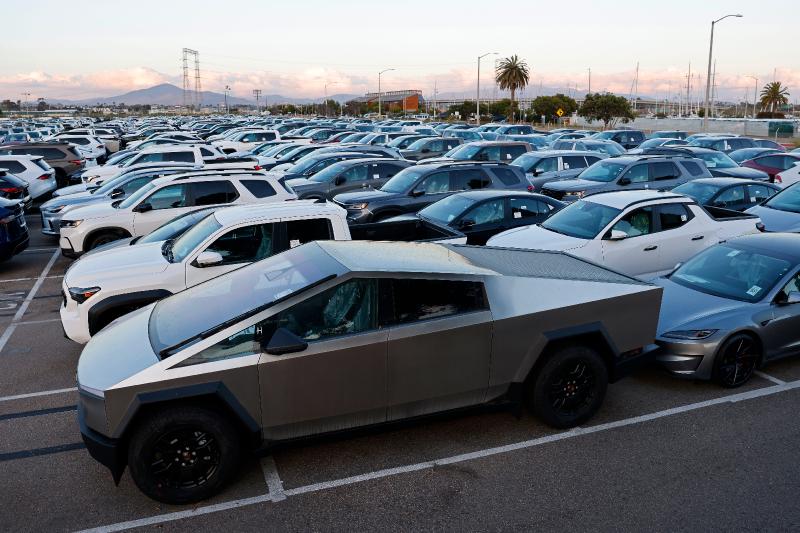


Who wants to buy a used EV that the manufacturer no longer supports? The batteries are only warranted for 8-10 years. The duration of software support is typically 5 to 10 years. And some of the electronics are obsolete before the vehicle leaves the assembly line.
EVs are built to be disposable consumer goods. That's one of the reasons high prices are a barrier to adoption.
 S E E D E D C O N T E N T
Mar 31, 2026 - A wave of off-lease electric vehicles is set to create billions of dollars in losses for automakers, as resale values fall far short of earlier expectations, reports Automotive News.
Leasing played a major role in boosting EV adoption in the United States over the past few years. Incentives, especially federal tax credits that applied more broadly to leased vehicles than purchases, helped to lower monthly outlays and drove car shoppers toward short-term leases. Now, those two- and three-year leases are beginning to expire, sending a wave of used EVs back into the market.
The problem is that those vehicles are worth much less than predicted.
A three-year-old EV retained about 40 percent of its original value at auction by the end of 2025. Compare that to early 2022 when comparable vehicles held roughly 90 percent of their value, says Cox Automotive. Analysts say that difference could translate into losses of around $10,000 per vehicle on average, adding up to as much as $8 billion across the industry by 2028.
All automakers won't feel the same level of pain. Tesla sees the most EV leasing volume and is expected to experience the biggest fallout, followed by General Motors, Hyundai-Kia, Volkswagen Group, Ford, and Honda. Industry analysts say any automaker with a significant EV lease portfolio will have some level of loss.
Automakers have been adjusting their strategies, however. Finance companies are working with dealerships and auction platforms to move vehicles as quickly as possible to lessen losses. Some are even toying with direct-to-consumer sales or new certified pre-owned leasing programs to prod more demand.
And the used EV market itself is changing. Some outfits have invested in things like battery testing systems that provide buyers with health scores, which is a major factor in resale confidence. In some markets, like California, EVs now make up a significant chunk of auction inventory.
Dealers say there is still demand—at the right price. Lower upfront costs compared with new EVs, combined with improving battery transparency, are helping attract buyers. However, success may depend on cooperation between automakers and retailers, including pricing incentives to help move inventory.
The situation reflects broader challenges in the EV market. While new electric vehicles continue to gain ground, rapid technological changes, pricing pressure and fluctuating incentives have made residual values difficult to predict.
As more vehicles come off lease in the coming years, the industry will be forced to adapt quickly. The peak is expected around 2028, when nearly 800,000 off-lease EVs could hit the market—testing whether demand can keep pace with supply, and how much of a financial hit automakers are willing to absorb.
Natalie Neff: But for a couple of sketchy, short-lived gigs right out of college, Natalie Neff has had the good fortune to spend the entirety of her professional life around cars. A 2017 Honda Ridgeline, 1972 VW Beetle, 1999 Ducati Monster and a well-loved purple-and-white five-speed Schwinn currently call her garage home.
Be a good human. Grossly derogatory comments, blatantly inflammatory comments, excessive trolling, mean-spirited taunting and insults, scamming, spamming, and off topic comments may be removed in compliance with the site's Terms of Service and the Code of Conduct. The moderators have the final word.

Tags
Who is online
138 visitors
Not many EVs will become collector cars. So, buying an EV is not an investment; it's all cost.
Who buys used cars? Kids and low wagers. The law of supply and demand will even things out...
All cars depreciate quickly when heavily used.
There is a lot to take into consideration. Individual needs / wants, budget, purpose, etc.
It all depends on the car. Some have increased. I bought a '71 Challenger for $250 at a teen in 1986 as a "project car", it's now valued at over $75k with over 200,000 miles.
Can't find those deals anymore,
You have to really dig for them but they're out there.
Yeah, this is gonna be a big mess. Wonder how badly this is gonna hit the market.
These cars coming in are the old battery technology which means the batteries are new end of life. So you buy a cheap used car, how much does the battery replacement cost.
More than replacing the engine in a gasoline powered car, but of course most gasoline powered cars have engines that last well over 200,000 miles but those batteries might last half that so it's not competitive valuewise.
and, there is a supply of new and rebuilt engines and parts as well as parts and engines from wrecked vehicles
How big of a mess it could become depends on just how educated a potential buyer makes ones self .
most of these vehicle MAY have some manufacturers warranties left , but one would have to really look at those warranties , most for batteries i have seen , are 8-10 years OR a specified milage like 130k-150k miles , whichever comes first . And there are some models that the battery can NOT be replaced . so one has to consider that as well.
another factor they need to be educated on is insurance rates and how common is it to total out a vehicle even in a simple fender bender , it is a whole new market there after all.
It is up to the buyer to decide what risks they will take though .
And people wonder why so few people want them.
Makes me wonder how many went back to gas powered vehicles when their leases expired.