
The next casualty of the Gulf War is already here

By: Ambrose Evans-Pritchard (The Telegraph via MSN)

Gee, that was fun. Let's do it again.
NOT
 S E E D E D C O N T E N T

April 28, 2026 -- The world has lost 40pc of its helium supply since the start of the Gulf war, first from Qatar and then from Russia.
We will find out soon enough whether the global digital economy can shrug off losses on this scale and whether political leaders will allow the AI boom to keep gobbling up an ever greater share of the scarce helium that remains.
Industry cannot make advanced AI chips or semiconductors below 10 nanometres without ultra-high purity helium to cool the wafers and stabilise the plasma for etching. Even workhorse chips for cars and computers require lower-grade helium at 99.999pc purity.
But we also need helium for other high priorities: in nuclear power, advanced weaponry, aerospace, fibre-optic cables, quantum computing, chromatography or to cool superconducting magnets in MRI machines.
“Everybody is scrambling around trying to scoop up whatever they can find in the world,” said Phil Kornbluth, the founder of Kornbluth Helium and former head of gases at BOC.
There are no easy substitutes. Liquid helium is the coldest known substance on Earth, with a boiling point of -269°C.
It cannot be synthesised artificially – it comes from the radioactive decay of thorium and uranium – and is hard to store. China has strategic stockpiles of everything but not for this one vital input.
Helium is a small cost for digital behemoths with the deepest pockets in the world, relying on “fabs” or foundries that cost $20bn (£15bn) a shot. “They are not going to close a wafer fab, so we all know what they’ll do: they’ll just pay more than anybody else,” said Kornbluth.
Another insidious process is at work. The semiconductor industry is in effect hoarding its scarce supply for the most lucrative AI fabs while rationing helium for routine “mature-node” chips that play a far bigger role in the day-to-day economy.
“They triage,” said Piers Nash, the head of AI at Farmers Insurance. They reserve what they have for AI accelerators, high-bandwidth memory and advanced logic chips for data centres. There is less left for chips in cars, laptops and the consumer electronics that we all rely on.
“Everybody is talking about petrol prices but nobody is talking about helium,” said Sepp Müller, a Christian Democratic politician leading a task force on the Iran war in the German Bundestag.
The fear is that there could be a repeat of the chip shortage that shut down European car factories during the pandemic. A Covid lockdown at a plant in Malaysia caused crippling losses on the other side of the globe.
“If a semiconductor factory anywhere in the world says that it won’t be able to supply more chips, the car industry is going to have big problems in the third and fourth quarters,” he said.
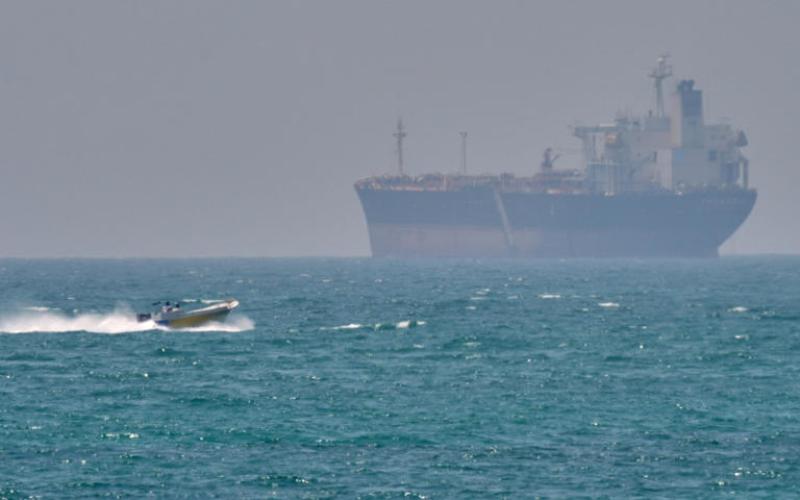
Qatar normally supplies a third of the world’s helium, a by-product of natural gas production at its giant North Field. Not a single shipment has moved through the Strait of Hormuz since the war began.
Some 200 cryogenic containers are stranded in the Gulf and are slowly heating up, causing gas to leak out through the pressure valves to avert a lethal explosion.
Vladimir Putin has compounded the shortage by imposing what amounts to a ban on helium exports outside the Eurasian Economic Union, purportedly to secure supply for Russia’s domestic economy and fibre-optic industry.
This endangers another 9pc until the end of 2027.
For once, it is China that is taking the immediate brunt of the supply chain shock. It produces barely 15pc of its own helium needs. All the rest comes from Qatar and Russia.
“Mainland Chinese fabs (foundries) could run out in a matter of weeks,” said the research group Trivium China. Air Liquide has already declared “force majeure” on its sales to China.
America is sitting pretty in one sense. It is the world’s biggest helium producer with two fifths of the market.
But that does not shield the American people from the larger supply-chain consequences any more than US oil supremacy spares them from rising crude prices or mounting shortages of jet fuel and diesel.
The US subcontracts most of its chip production to Asia. Its share of global semiconductor output has collapsed to 10pc from 37pc in the 1990s. It will be years before the US chips act and manufacturing rearmament turn this around.
Over 75pc of the world’s semiconductors are made in the Far East. Nvidia either makes or finishes all of its most advanced Blackwell chips at TSMC plants in Taiwan, while Samsung makes high-bandwidth AI chips for Google in South Korea. Both countries normally rely on Qatar for two thirds of their helium.
Large volumes of workhorse chips for just about everything else are made in Vietnam, Malaysia and Thailand, often as arm’s-length operations for China.
Kornbluth says the world had plenty of helium before the war broke out and can probably cover half the loss from Qatar at a pinch. The industry has an informal system for allocating scarce supply to the most critical needs.
“The top of the food chain are MRI machines, chip manufacturing, aerospace and nuclear power. At the bottom end are things like welding. Some people are going to get hurt badly,” he said.
One thing we should have learned from Covid is that once the world’s just-in-time supply chain goes into convulsions, with ships scattered to the four winds and stuck in the wrong place, the effects can be drastic, long-lasting and out of all proportion to the nominal value of the goods themselves.
If the war drags on for a few more weeks – as it may well do since both Donald Trump and Iran’s Revolutionary Guards think they are winning – there are only two solutions.
Either the market destroys demand in its own ruthless way or governments step in with emergency measures and make hard choices, something that Sir Keir Starmer’s Government seems incapable of ever doing.
For jet fuel, diesel or naphtha, it may mean a taste of wartime rationing. For helium, it may soon be a question of whether liberal democracies allow billionaire tech brothers to outbid everybody and hoard scarce gas for unpopular AI expansion.
Do politicians finally face down the hyperscalers and redirect helium supplies to the urgent priorities of military and energy rearmament, as well as to sustain routine sectors of the economy that employ infinitely more people?
Marco Rubio, the US secretary of state, more or less admitted on Monday that Iran’s regime now has enormous power to do harm and that Washington has no coherent plan to restore the status quo ante, let alone to reach a better outcome that vindicates the war.
“The Strait of Hormuz is basically an economic nuclear weapon that they’re trying to use against the world,” he said.
Indeed, sir, and what are you going to do about it?
Be a good human. Grossly derogatory comments, blatantly inflammatory comments, excessive trolling, mean-spirited taunting and insults, scamming, spamming, and off topic comments may be removed in compliance with the site's Terms of Service and the Code of Conduct. The moderators have the final word.

Tags





Who is online
138 visitors