
Modern Manners: Can I Use AI for My Friend's Eulogy?

By: Lizzie Post (AARP)
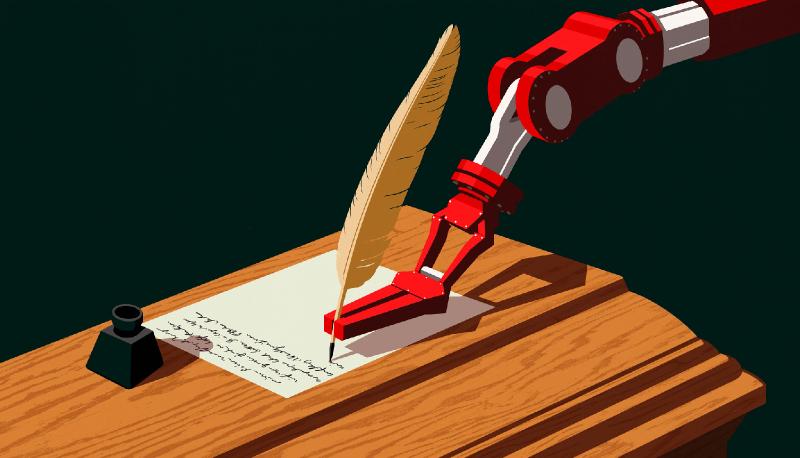


21st century questions of etiquette answered by Emily Post's great-great-granddaughter, no less.
 S E E D E D C O N T E N T
AARP research shows that while just 25 percent of respondents over age 70 know about and use artificial intelligence (AI) and AI-driven chatbots, nearly half (47 percent) of respondents in their 50s do. The anonymous reader below surfaces a dilemma that many people might be dealing with as AI finds its way into every aspect of our lives — even death.
I was asked to give a eulogy for a friend of mine who recently passed away. I'm thinking of using AI to help me. Where do I even begin? And do I need to disclose it if I do use AI?
Delivering a eulogy is a big responsibility, and the pressure may have you second-guessing your skills and ability. But I want to start this column with a big overarching thought when it comes to using AI:
Keep the person in personal.
Think about how personal the situation is, and be sensitive to the fact that anytime we use AI we are removing ourselves — sometimes a lot, sometimes just a bit — from the finished product. It can end up being very obvious, and this can make us look disingenuous or lazy.
Creating project timelines, generating a marketing plan and brainstorming are all great ways to use AI. Writing eulogies, vows, personal letters or thank-you notes … not so much. It's not that you can't use AI to help you generate ideas for those things, but that you need to make sure you go over what was generated and make it sound not only human, but like you.
In the case of a eulogy, we’re honoring the deceased. This is an incredibly personal moment, and you want it to sound as though the words you’re speaking to those gathered at the funeral, memorial or homegoing are deeply felt and distinctly connected to the deceased. AI simply cannot mimic that — and in all honesty, do you really want AI speaking for you on this one?
Recently, my cousin and copresident at Emily Post attended a preschool event where each kid was highlighted by the teacher, who shared a little bit about the student. My cousin said that by the second kid’s highlight, you could tell the information had been generated by AI and not reworked by the teacher. It became boring and impersonal — the exact opposite experience the teacher was trying to create with the event as a whole.
You may not be the best writer, or you may struggle with how to get started; that’s OK. It’s even OK to turn to AI to help you structure a eulogy or provide you with examples of how one is written. But be sure to put your own personal touch on the piece. You knew this person well enough to be in a position to give a eulogy. Think about some of the memories you have of them, their personality, their character and their life achievements, and add those things to what’s been generated. You’ll not only honor this person; you’ll also honor your unique ability to communicate what was so special about them.
Once you’ve gotten the eulogy to a place you feel good about, read it aloud, and ask someone else who knew the deceased well to read it (or listen to you read it). AI can check your spelling and grammar, but human eyes (and ears) will help you ensure you’re honoring this person in the best possible way.
Finally, if someone compliments your eulogy after the service, you don’t have to reveal that you used AI to help you draft it, especially if you only used it to brainstorm. A compliment probably means that you struck the right tone, and it sounded like it came from the heart, which is the goal.
Lizzie Post is the great-great-granddaughter of etiquette legend Emily Post. She’s the co-president of The Emily Post Institute, co-author of Emily Post’s Etiquette: the Centennial Edition and Emily Post's Business Etiquette. She is co-host of the Awesome Etiquette podcast.
Remember the Golden Rule, be a good human. We're here to relax and chat, so let's keep it civil and fun. Please, remember to quote the person(s) you are replying to as a courtesy so everyone can follow the conversation. Grossly derogatory comments, blatantly inflammatory comments, excessive trolling, mean-spirited taunting and insults, scamming, spamming, and off topic comments may be removed in compliance with the site's Terms of Service and the Code of Conduct. The moderators have the final word and may remove comments at their judgement (or lack thereof).
Past performance does not guarantee future results. Comment at your own discretion. The owners of the site, the owner of this group, and the moderators are not responsible or liable for any stupid thing you do. You break it, you buy it. No shirt, no shoes, no service. Don't poke the bear. Mind the gap.

Tags
Who is online
85 visitors
AI is just another resource available to authors. The problems arise when people expect AI to be the author.
Personally, I don't see a problem with using AI as a tool to help organize thoughts, correct grammar, and maintain a consistent tone, flow, and structure in the text being written. AI can help provide reference material, too.
I just purchased an AI comic book for my grandson. You upload a picture and as many details of the person as you can. It was the hit of his birthday.
I also bought a book for my wife. Same deal. My wife said it was OK but cheesy. (but that is what I was aiming at).
People are using AI in creative ways to make money.
I had not heard of that. I'll need to do a search. Thanks for the tip!