
The Feds Could Soon Clear The Way For A Tesla With No Brake Pedal

By: Stephen Rivers (Carscoops)


What are these developers trying to prove?
 S E E D E D C O N T E N T
July 1, 2026 --
- NHTSA wants to remove brake pedal requirements for driverless vehicles.
- Human-driven vehicles would still keep existing braking requirements.
- Tesla and Zoox stand to benefit from the proposed regulation changes.
Autonomous vehicles (AVs) are still, evidently, the future, but there are certain hurdles that need to be overcome first. Opening up the path to a future full of AVs seems to include removing physical controls. Now, the federal government is taking a step in that direction. The NHTSA has just proposed a new rule that would eliminate the requirement for manual brake controls in vehicles designed to operate exclusively with automated driving systems.
If approved, the move would clear one of the biggest regulatory hurdles standing between companies like Tesla and purpose-built robotaxis and large-scale deployment. The proposal is part of the Trump Administration's Automated Vehicle Framework. It exists to modernize Federal Motor Vehicle Safety Standards written around the idea that every car has a human driver. That said, this isn't greenlighting a situation where AVs have lower braking performance requirements.
Same Standards, Different Testing
Autonomous vehicles would still have to meet the same stopping-distance standards as conventional vehicles, just through alternative testing methods. Likewise, vehicles that retain steering wheels and pedals would continue to be subject to the current rules. The real change here is building a pathway so that companies that want to build vehicles without pedals can do so with the knowledge that testing will be lawful.
The agency says it is simultaneously working on broader performance standards for autonomous driving systems and will continue investigating defects, unsafe behavior, and recalls involving self-driving technology.
What It Means For Tesla And Zoox
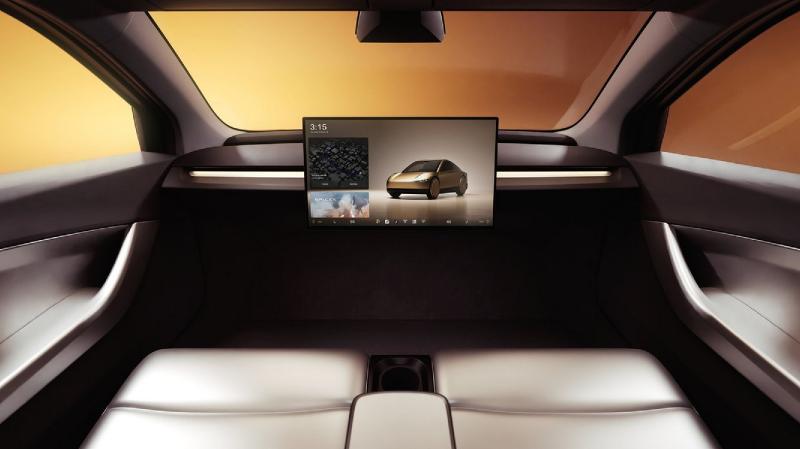
The change could be particularly significant for Tesla. The automaker's Cybercab concept was designed from the start without a steering wheel or pedals, but current regulations have put its future into question.
Tesla has instead focused on launching a limited robotaxi service in Austin while waiting for regulations to evolve. It's also said that it can add a steering wheel and pedals if it absolutely has to. Zoox, meanwhile, has already secured exemptions allowing it to test its purpose-built robotaxi and is seeking approval for commercial operation.
The proposal now enters a 30-day public comment period. If finalized, it could mark another major milestone in transforming autonomous vehicles from heavily regulated exceptions into products built around an entirely different set of assumptions than the cars most of us drive today.
Be a good human. Grossly derogatory comments, blatantly inflammatory comments, excessive trolling, mean-spirited taunting and insults, scamming, spamming, and off topic comments may be removed in compliance with the site's Terms of Service and the Code of Conduct. The moderators have the final word.

Tags
Who is online
128 visitors
Does this demonstrate technical innovation or human stupidity? Or is it just to prove the power of money?
Interesting, but I'm skeptical automated driving is anywhere close to ready yet.
For me, the question isn't 'when will automated driving be close to perfect?' which many seem to consider the standard to be "ready". It's 'when will automated driving be safer than your average human driver?'. For that, I think we're really close if not there already.
It does look like it is on a surface level, I'm just not yet convinced the numbers aren't the tail wagging the dog. I hope I'm wrong. I've always wanted to take longer trips and nap and read rather than drive and navigate.
If automated driving had those statistics that I just posted, how far from handing it the wheel would you be? And that's where we are now.
There are only 4000 commercial self-driving cars currently on the road globally compared to 299M cars registered in the US. It's not a fair comparison.
What's kinda cool are the 1000 self-driving long haul trucks on the roads today. I really hope the tech excels and we can get to it affordably before my kid takes my keys.
I totally understand that. My question was more intended to imagine if all 299M cars were self-driving and they had those statistics. I'm saying that we have 299 million cars driven by humans with those terrible stats right now.
If the 299 million cars were self-driving and had those stats most people would be screaming and hollering at how unsafe automated driving is and be demanding the right to drive themselves because it couldn't be any worse, and they'd be right. That's where we are now with human driving. I believe automated driving won't be any worse than human driving even with the current technology.
Ahh... thanks for clarifying. I probably would be okay if we had the same stats, but then I don't like driving to begin with, so there's that.
I'd hope it would be better. The worst thing to happen would be a terrorist state hacking one of the company's software controlling systems and either shutting down millions of cars, or causing them all to crash at the same time.
Note: I have a 2026 Kia and it does automatic updates to the car's computer all the time.
I was just reading an article that the US Commerce Dept has blocked the Swedish EV company Polestar from selling 2027 vehicles in the US under the Biden rule blocking with vehicle-connectivity hardware linked to China or Russia.
Me too.
Great premise for a movie, but not reality. Besides, we already are driving around in computers that have all sorts of things automated, hackers could already wreak havoc on drivers, but the results would be far too unpredictable for any terrorist group to invest in such an operation.
Like I said, most vehicles these days are just computers with wheels.
It's possible, though not probable. Every car manufacture has already been hacked. Individual vehicles have been hacked. It's a good thing all current cars, including self-driving cars, are controlled locally and not via a remote connection.
My former boss has a tesla and he demonstrated the self driving portion of the car and I'll admit it was impressive, but in no way is it perfect.