
15 TV Commercials Every ’70s, ’80s and ’90s Kid Still Knows by Heart

By: Jeryl Brunner (Parade)


 S E E D E D C O N T E N T
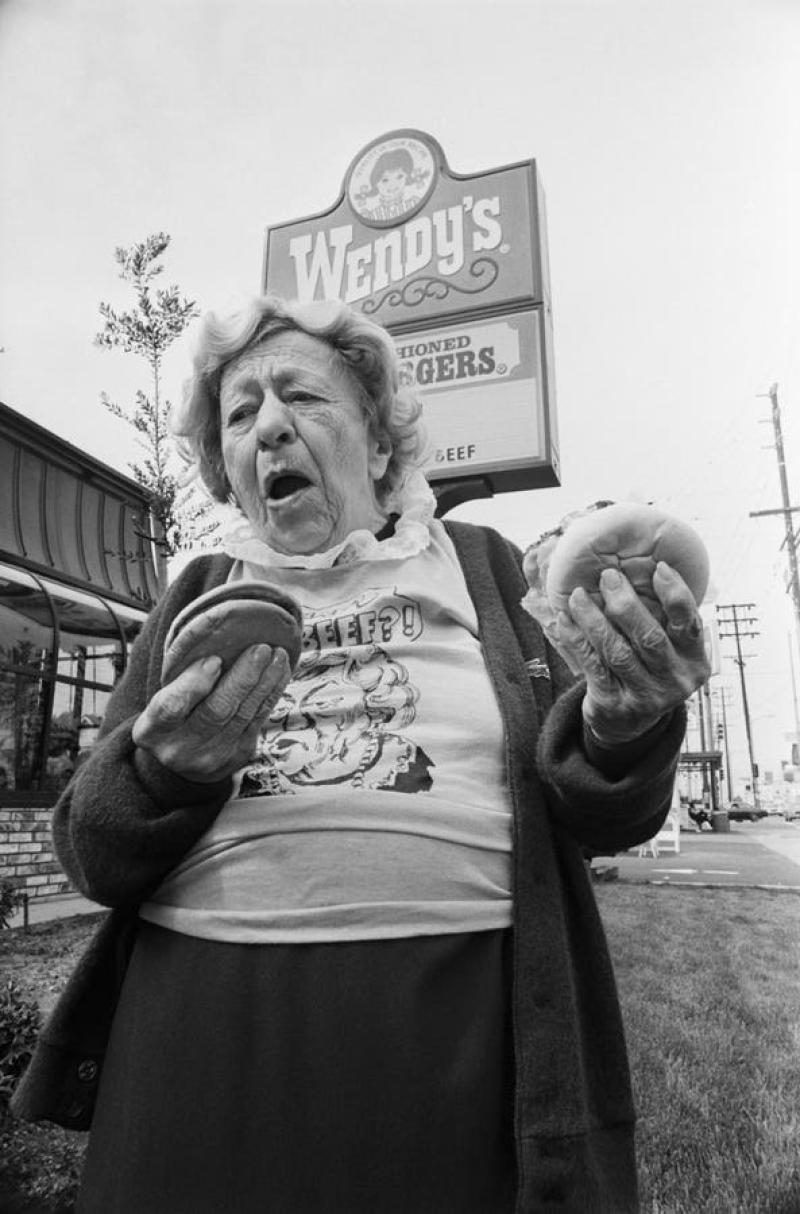
Picture this: Three women are standing over a hamburger from a fictional fast-food restaurant called “Home of the Big Bun.” Two of the women admire the giant bun, commenting, “It’s a big bun. It’s a very big bun.” But when the third woman, (Clara Peller), lifts the top, she discovers the problem. Despite the enormous bun, there is only a tiny little patty hiding inside.
With her unmistakable raspy voice and perfect comic timing, Peller delivers the question that would become one of the most famous advertising catchphrases ever created: “Where’s the beef?”
That 1984 Wendy’s commercial was more than an ad for a hamburger. It was a cultural moment. Clara Peller, an 81-year-old former manicurist who had done occasional acting work, became an unlikely celebrity, and the phrase “Where’s the beef?” quickly moved beyond television screens into everyday conversation, comedy routines and even the 1984 presidential campaign.
And that was the magic of television commercials in the 1970s, ’80s and ’90s. They weren’t just something you watched while waiting for your favorite show to return. They were PART of the entertainment.
The best commercials of the era felt like miniature television shows, filled with unforgettable characters, catchy jingles and moments people discussed. Kids repeated the catchphrases at school, families sang along with the jingles during dinner and coworkers quoted their favorite lines around the water cooler.
These ads didn’t just sell hamburgers, cereal, soda and donuts. They created pop culture. Michael Vale became America’s favorite exhausted baker with “Time to make the donuts.” Little Mikey became a cereal legend when he surprised his brothers by actually loving Life Cereal. And some commercials introduced future stars before they became famous, including Keanu Reeves in a Coca-Cola ad and Brad Pitt enjoying Pringles.
Long before hashtags and viral videos, these commercials were America’s shared language. From a fast-food slogan that became a political punchline to a tiny cereal lover who won over America, these are the 15 classic TV commercials we all grew up watching—and the stories behind the ads, stars and unforgettable moments that made them legendary.
Wendy’s “Where’s the Beef?” (1984)
When Wendy’s debuted the commercial in 1984, the goal was simple: highlight that the chain’s burgers featured larger beef patties than its competitors. Instead, the ad became a cultural phenomenon. The commercial turned Clara Peller, an 81-year-old former manicurist who had done occasional acting work, into an unexpected celebrity almost overnight.
Peller appeared on talk shows, inspired countless parodies and became one of the most recognizable faces in advertising. The phrase even entered the 1984 presidential campaign when Walter Mondale used “Where’s the beef?” to criticize rival Democratic candidate Gary Hart.
The campaign helped raise Wendy’s visibility and contributed to strong business results for the company. But its greatest achievement was cultural: Clara Peller transformed three simple words into a phrase that became part of everyday conversation.
Peller remained associated with the slogan until her death in 1987 at age 86. More than 40 years later, “Where’s the beef?” remains one of advertising’s most memorable catchphrases—and proof that a perfectly delivered line can make pop-culture history.
Dunkin’ Donuts “Time to Make the Donuts” (1982)
Every morning, Fred the Baker woke up with the same sleepy mission: “Time to make the donuts.”
Debuting in 1982, Dunkin’ Donuts’ campaign turned a simple phrase into one of the decade’s most memorable advertising slogans. The character of Fred the Baker captured the dedication of someone who showed up every day to do his job. Even when everyone else was still asleep.
Fred was played by Michael Vale, a veteran Broadway and television actor who had built a successful career before becoming one of advertising’s most recognizable personalities. Vale reportedly appeared in more than 1,300 commercials during his career, but Fred the Baker became the role millions of viewers remembered.
The campaign resonated because Fred felt familiar. He wasn’t a celebrity or a superhero —he was the hardworking person who quietly kept things running. In 1997, Dunkin’ Donuts retired the character with a farewell campaign that treated Fred like a beloved member of the family.
Vale continued acting until his death in 2005 at age 83. For generations of viewers, he will always be the man who reminded America it was “Time to make the donuts.”
Coca-Cola “I’d Like to Buy the World a Coke” (1971)
Few commercials have ever captured a feeling as powerfully as Coca-Cola’s iconic 1971 “Hilltop” commercial.
Filmed on a hillside outside Rome, the ad featured a multicultural group of young performers singing together while holding bottles of Coke. The message was simple: people from different backgrounds could come together around a shared moment of optimism and connection.
The commercial introduced the unforgettable jingle: “I’d Like to Buy the World a Coke.” Its popularity was so strong that the tune was later expanded into the full-length song “I’d Like to Teach the World to Sing (In Perfect Harmony),” which became an international hit after recordings by groups including The New Seekers and The Hillside Singers.
Unlike many famous commercials, this one did not create a celebrity spokesperson. The song and the message became the stars.
Life Cereal “Mikey Likes It!” (1972)
When two brothers convinced their famously picky little brother to try Life Cereal, television history was made.
The 1972 commercial starred real-life brothers John Gilchrist as Mikey and his brothers Michael and Tommy, as the siblings trying to convince Mikey to taste the cereal. After he finally takes a bite, the surprise reaction becomes the moment everyone remembers: “He likes it! Hey, Mikey!”
The role turned John Gilchrist into one of America’s most recognizable child performers. During his childhood, Gilchrist appeared in hundreds of commercials, but Little Mikey became the role that followed him for decades.
The commercial became so popular that it inspired one of advertising’s most persistent urban legends: the false story that Mikey had died after eating Pop Rocks and drinking soda. The rumor was completely untrue, but it showed just how famous the character had become.
Today, John Gilchrist works in media sales and has largely embraced a private life away from the spotlight. His brothers have also chosen to remain out of the public eye. More than 50 years later, “Mikey likes it!” remains one of the most beloved phrases in advertising history.
LifeCall “I’ve Fallen, and I Can’t Get Up!” (1989)
Some commercials are remembered for their message. Others become famous for a single unforgettable moment.
LifeCall’s late-1980s medical alert commercial was created to promote a device that could help people summon assistance during an emergency. But the ad became famous because of actress Dorothy McHugh’s urgent plea: “I’ve fallen, and I can’t get up!”
The serious message behind the commercial was quickly overshadowed by the popularity of the phrase, which became a fixture of comedy routines, television references and everyday conversation. The line became one of the most recognizable commercial catchphrases of the era.
McHugh had worked as an actress before the ad and continued performing afterward. While the commercial became her best-known role, it also demonstrated the unusual power of television advertising: a brief appearance could turn a performer into a familiar face across the country.
Coca-Cola “Hey Kid, Catch!” (1979)
In 1979, Coca-Cola created one of the most beloved sports commercials of all time by pairing one of football’s toughest stars with one very determined young fan.
The ad featured “Mean” Joe Greene, the legendary Pittsburgh Steelers defensive tackle, walking off the field after a difficult game. A young boy waiting nearby offers Greene a bottle of Coca-Cola. At first, the intimidating football star barely responds. But after taking a drink, he softens, smiles and tosses the boy his jersey with the unforgettable line: “Hey kid, catch!”
Greene was already one of the NFL’s biggest stars and would later become a Pro Football Hall of Famer, but the commercial revealed a warmer, more approachable side of his personality. The young fan was played by Tommy Okon, who became instantly recognizable from the ad but did not pursue a major acting career.
The commercial resonated because it told a simple emotional story rather than just selling a soft drink. It became one of Coca-Cola’s most memorable campaigns and helped redefine how sports stars could be portrayed in advertising.
Pepsi “The Choice of a New Generation” (1984) with Michael Jackson and his brothers
At the height of the “Cola Wars,” Pepsi landed one of the biggest stars in the world: Michael Jackson .
The 1984 “The Choice of a New Generation” campaign featured Jackson and his brothers performing a Pepsi-themed version of his hit song “Billie Jean.” Jackson was already a global superstar following the record-breaking success of Thriller, making the partnership one of the most talked-about celebrity endorsements of its era.
The commercials became even more famous after Jackson suffered burns to his hair and scalp when a pyrotechnic effect went wrong during filming. The accident made international headlines and became forever linked with the campaign.
The Pepsi ads helped usher in a new era of celebrity-driven advertising, where major entertainers became closely associated with global brands. Jackson continued making music history until his death in 2009, and the commercials remain among the most recognizable celebrity campaigns in advertising history.
Coca-Cola (1983): Keanu Reeves Before He Became an Action Hero
Before Speed, The Matrix and John Wick, Keanu Reeves was a young actor looking for his first big opportunities.
One of his first professional jobs came in a 1983 Coca-Cola commercial, where he played a cyclist celebrating after a race. At the time, Reeves was virtually unknown, making the ad a glimpse of a future superstar before worldwide fame arrived. As he told David Letterman he shot the commercial in winter with “fake sweat” and ended up high on sugar. “It was a good experience for me,” said Reeves. “It was a three day shoot. It was one of my first jobs. You had to pretend it was hot in the winter.”
Like many young performers, Reeves took on commercial work while building his acting career. Looking back, viewers enjoy spotting the natural charm and quiet charisma that would later make him one of Hollywood’s most beloved actors.
More than 40 years later, the Coca-Cola commercial remains a favorite “before they were famous” discovery—a reminder that even the biggest stars often begin with small roles.
Pringles (1989): Brad Pitt
Long before he became an Academy Award-winning actor, Brad Pitt was a young performer looking for his breakthrough.
In 1989, Pitt appeared in a Pringles commercial, one of his early television appearances before Hollywood turned him into a household name. The ad shows the future star enjoying a snack while displaying the easygoing charm that would soon become one of his trademarks.
Just a few years later, Pitt’s breakout role in Thelma & Louise launched him into stardom. He went on to become one of the most successful actors of his generation, earning an Academy Award as a producer for 12 Years a Slave and later winning a Best Supporting Actor Oscar for Once Upon a Time… in Hollywood .
Alka-Seltzer “I Can’t Believe I Ate the Whole Thing” (1972)
Sometimes a single line is enough to turn a commercial into a cultural reference.
Alka-Seltzer’s 1972 commercial featured actor Ralph Bell waking up after overeating and delivering the now-famous complaint: “I can’t believe I ate the whole thing.”
The ad worked because the situation was instantly relatable. Almost everyone has experienced the feeling of eating too much, especially after a big holiday meal. And Bell’s delivery captured that familiar moment of regret with perfect comic timing.
Bell was a working actor who appeared in television and film roles throughout his career, but this commercial became his most recognizable performance. The phrase quickly moved beyond advertising, becoming part of everyday conversation.
McDonald’s “You Deserve a Break Today” (1971)
When McDonald’s launched “You Deserve a Break Today” in 1971, it wasn’t just selling hamburgers—it was selling a feeling.
The memorable campaign suggested that families and busy workers deserved a small moment of relief. Someone else could prepare the meal, and they could simply enjoy it. The cheerful jingle became one of the most recognizable advertising songs of its era.
The campaign did not rely on a celebrity spokesperson. ( John Amos, who would make in big in Good Times in 1974, played one of the employees.) Instead, the music and message, created by advertising writers and musicians including Sidney Woloshin and Kenny Karen, became the stars. It reflected a changing America where convenience was becoming increasingly important.
More than 50 years later, “You Deserve a Break Today” remains one of advertising’s most memorable jingles. It helped strengthen McDonald’s identity as more than a place to buy food—it became a brand associated with shared experiences and everyday moments.
Taster’s Choice “The Taster’s Choice Couple” (1986)
Most commercials last 30 seconds. Taster’s Choice created a love story that unfolded over years.
Beginning in 1986, viewers followed neighbors Tony and Sharon as their casual coffee encounters slowly developed into a romance. The serialized campaign was structured almost like a television drama, with audiences returning to see what happened next.
The commercials starred British actors Anthony Head and Sharon Maughan, who became familiar faces to American viewers. Head later gained international recognition as Rupert Giles on Buffy the Vampire Slayer , while Maughan continued a successful career in British television and theater.
The campaign was unusual because it asked viewers to invest in characters rather than simply remember a product. More than a traditional commercial, it became a small ongoing story that audiences looked forward to seeing.
Decades later, the Taster’s Choice couple remains one of advertising’s most memorable examples of turning a product campaign into a cultural conversation.
The California Raisins (1986)
The California Raisins proved that even dried fruit could become pop stars.
Introduced in 1986 as part of a campaign by the California Raisin Advisory Board, the claymation characters sang a soulful version of “I Heard It Through the Grapevine,” winning audiences with their personalities, dance moves and Motown-inspired style.
The campaign transformed the animated raisins into unexpected celebrities. Their popularity led to television specials, a Saturday morning animated series, albums, toys and merchandise. For many viewers, the characters became entertainers first and an advertising campaign second.
The California Raisins remain one of advertising’s most successful examples of turning a simple product into a cultural phenomenon—and proof that creativity can make even the most unlikely subjects unforgettable.
Energizer Bunny “Keeps Going and Going” (1988)
Few advertising mascots have become as instantly recognizable as the Energizer Bunny.
Introduced in 1988, the pink rabbit wearing sunglasses and carrying a drum became famous for interrupting other commercials while demonstrating that Energizer batteries “keep going and going.” The campaign was created as a playful response to the long-running Duracell Bunny advertising concept, turning the idea of battery endurance into a memorable visual joke .
There was no celebrity behind the character—the mascot itself became the star. The Bunny’s endless energy made it a symbol of persistence and helped turn a battery brand into a household name.
Still appearing in advertising decades later, the Energizer Bunny remains one of the most enduring and recognizable mascots in television history.
Budweiser Frogs (1995)
Sometimes a commercial needs only three words. Or in this case, three unforgettable syllables.
Debuting during the 1995 Super Bowl, Budweiser’s frogs slowly croaked “Bud”… “Weis”… “Er” from a swamp, creating one of the decade’s most memorable advertising moments.
Created through computer animation and brought to life through voice performances, the frogs each developed their own personalities. Their popularity led to additional commercials featuring the Budweiser lizards and other characters, creating an entire advertising universe.
The campaign proved that a commercial did not need a celebrity spokesperson or a complicated storyline to capture America’s attention. With a simple idea and perfect timing, three animated frogs became pop-culture stars.
What Is One of the Most Successful Commercials of All Time?
One of the strongest contenders is Wendy’s 1984 “Where’s the Beef?” campaign. The commercial transformed a simple question into a national catchphrase, helping Wendy’s stand out in the crowded fast-food industry.
The campaign dramatically increased Wendy’s visibility and helped fuel a major business turnaround. Reports at the time credited the campaign with contributing to a significant increase in sales, including a reported 31% rise in worldwide sales to approximately $945 million in 1985. Studies also showed that the commercial achieved extraordinary levels of advertising recall.
Its biggest impact, however, was cultural. Clara Peller, an 81-year-old former manicurist turned actress, became an unexpected celebrity, and the phrase entered everyday conversation. During the 1984 presidential campaign, Walter Mondale famously used “Where’s the beef?” to criticize Gary Hart’s policy proposals during a Democratic debate.
More than 40 years later, “Where’s the Beef?” remains a rare advertising achievement: a campaign that boosted sales, created a star and permanently changed popular culture.
Be a good human. Grossly derogatory comments, blatantly inflammatory comments, excessive trolling, mean-spirited taunting and insults, scamming, spamming, and off topic comments may be removed in compliance with the site's Terms of Service and the Code of Conduct. The moderators have the final word.

Tags
Who is online

105 visitors
Set the way-back machine for when TV defined pop culture. Now a word from our sponsor ...
the one that kinda gets me now is the lifecall/life alert one , when i was younger i thought cute , got a chuckle , never thought it would apply to me at the time .
Son in law had 2 spinal fusions and he isnt even out of his 40s yet , he was doing something and i commented that he should remember , that the biggest cause of injury and death in old men , is thinking they are still young men ......he keeps saying he is going to put that on a sign /plaque and give that too me .
Those were better than ones they make now