
Trump Needs to Choose How to Lose the Iran War

By: Jonah Shepp (The Intelligencer)
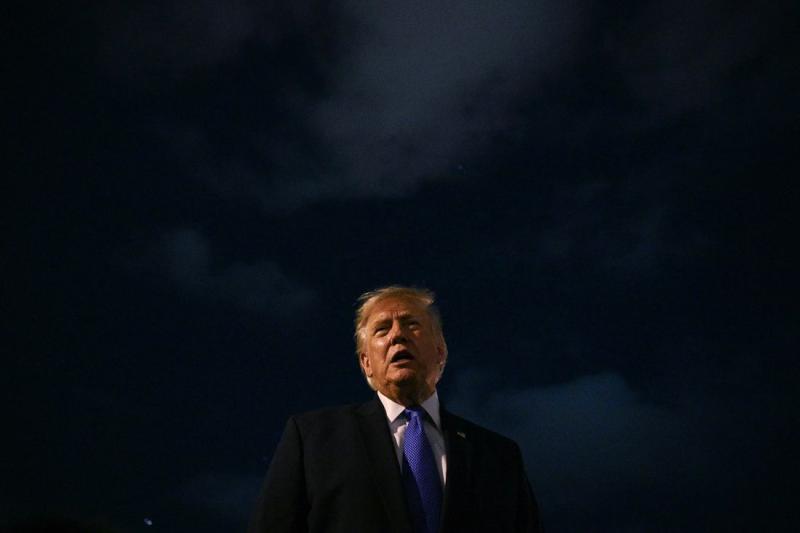

The mainstream elite's longing for a return to their foreign policy 'normalcy' may be far too complacent regarding President Trump. The constraints of election politics will be gone on November 4, 2026. Trump will still control a 'friendly' Republican lame-duck Congress until January 3, 2027. That seems like the perfect window to escalate and invade Iran to seek a decisive victory. Trump may be trying to stall for 90 more days before releasing the dogs of war.
President Trump's entire foreign statecraft hinges upon intimidation and unilateral American domination. Trump's geopolitical statecraft is intended to correct the perceived weakness of past Presidents, avoid costly and ineffectual multilateralism, and lead the world with American strength. Having rejected the JCPOA for perceived compromising weakness, it's unlikely that Trump will now make similar concessions just to end the war he started. For Trump there is more at stake than controlling the Strait of Hormuz.
 S E E D E D C O N T E N T

August 5, 2026 -- President Donald Trump called off his threatened escalation of the Iran war over the weekend, saying a deal was imminent to end the war, reopen the Strait of Hormuz, and begin Iran’s “denuclearization” — whatever that means. Iran has not confirmed that a broader agreement with the U.S. is in the offing, but talks early this week between Iran and Oman, with U.S. input and Qatari mediation, have reportedly made progress toward a deal to reopen the strait, which Iran blockaded in response to the American and Israeli bombing campaign in February.
The agreement, which U.S. officials reportedly hope to announce today, will set up a 60-day arrangement between Iran and Oman, which border the strait, to coordinate inbound and outbound traffic along prescribed lanes through their territorial waters. Whether Iran will be allowed to charge fees on shipping through the strait remains unclear: Axios reports that the deal stipulates no tolls or fees during the 60-day period, but the New York Times on Monday cited Iranian officials as saying a “service fee” would be charged, with revenues divided between Iran and Oman, while a U.S. official disputed this claim.
Questions of Iran’s control over the strait or charging fees for transit may prove a sticking point in getting the deal implemented — the same set of issues that doomed a previous cease-fire deal in June. Iranian officials have insisted the strait will not go back to its prewar status, and Tehran has no reason to give up the leverage it has acquired by closing the strait during this war or signing away its right to do so again in the future, at least not without major concessions and guarantees. Yet U.S. officials have said the strait must return to its previous status as an international waterway with full freedom of navigation. Allowing Iran or any other state to control such a vital shipping lane with tolls would create “a very dangerous precedent,” Secretary of State Marco Rubio said recently, and could not be allowed to happen. “I’m not going to let them charge,” Trump told reporters on Monday. “Anybody’s going to charge, we’ll charge” (which, of course, would also violate the same principles of international commerce Rubio is so keen to uphold, but never mind).
This pattern has become commonplace as the war continues into a sixth month with no U.S. objectives met and no clear solutions on the horizon to the new problems the war created: Trump threatens a massive bombing campaign, including strikes on bridges and power plants — a potential war crime — then backs off claiming an imminent breakthrough in talks, as if to suggest his threats had paid off by bringing the Iranians back to the negotiating table. This breakthrough, in Trump’s telling, is a tremendous deal for the U.S., but if and when the details come out, it turns out Iran is the one getting the good deal, while the nuclear-proliferation issues that supposedly were why we went to war in the first place are kicked further down the road. This is what happened in June, and at the moment, there’s no reason to believe it won’t happen again.
The bottom line is this: Trump wants and needs to end this war, but he can’t win it. The American public, his base, his party, the markets, the Persian Gulf states, and pretty much every other country (with the possible exception of Israel) all want the war to end and the strait to reopen as immediately as possible. There is still no reasonable path to the U.S. achieving its increasingly hazy strategic objectives against Iran, and Iran’s threats to global shipping are turning out to have more bite than Trump’s threats of continued bombing.
Trump was apparently persuaded to call off his latest escalation by Saudi crown prince and de facto ruler Mohammed bin Salman. Saudi Arabia is particularly keen to resolve the conflict, especially now that Iran’s Yemeni allies, the Houthis, have been attacking Saudi shipping through the Bab al-Mandeb Strait at the southern end of the Red Sea for nearly two weeks. Two gas tankers in the Egyptian port of Damietta, not far from the Suez Canal, caught fire last week after being attacked by unidentified drones — Iran disclaimed responsibility for this attack, but any number of Iranian proxies in the region might have carried it out.
With one of the world’s busiest shipping lanes closed by Iran, another at least partially blockaded by the Houthis, and a third now potentially coming under attack, Saudi Arabia finds its access to seaborne trade threatened on all sides, not to mention the havoc that endangering these seaways is wreaking on the global economy. Iran and its proxies don’t need to stop every single ship; they just need to make it dangerous enough to use these sea lanes that ship owners and insurers become hesitant.
All this shipping news is necessary to understand the trajectory of this war because disrupting global trade, especially in energy, is at the heart of Iran’s strategy — and that strategy is working.
Trump’s assumption going into this war was that America’s unmatched firepower would quickly overwhelm Iran’s defenses and force Tehran to capitulate to his demands. However, Trump can’t actually bring the full might of the U.S. armed forces to bear on Iran, because there is no political appetite for a ground invasion, his supporters won’t countenance it, and there is only so much he can accomplish through air power alone.
Also, the U.S. has used up an enormous amount of its munitions stockpile. CNN reports that the war has exhausted almost 80 percent of the U.S. supply of THAAD missile interceptors and about half of its Patriot missile interceptors. Some offensive weapons are running low as well. Reuters reports that, according to two sources, the U.S. has used “virtually all” of the Army’s long-range precision ATACMS and PrSM missiles. One source told Reuters that the U.S. has also used nearly half of its Tomahawk cruise missiles. These weapons, fired from land and sea, have allowed the U.S. to target Iran from a safer distance. The munition shortages put American servicemembers at even greater risk and are apparently at least part of the reason Trump hasn’t ordered further escalation.
Meanwhile, the Iranian regime is proving more resilient than Trump expected, prepared to fight to the last in what it sees as an existential war.
Trump apparently still thinks he can bomb his way to victory here. As he said on Friday: “We’ll be hitting them very hard, and you know at some point they’re going to say, ‘We just can’t take it anymore.’” The problem is that Iran is hitting back with every asymmetric weapon at its disposal, and while they can’t protect against U.S. bombs, the Iranians are betting they can do enough damage to U.S. military targets, as well as economic and political damage to the U.S. and its allies, that Trump will say he can’t take it anymore well before they do.
Characterologically, Trump has always been averse to acknowledging an error or a loss. He is frustrated at the setbacks, bewildered and angry about failure of negotiations, and impatient to salvage a win in Iran — or at least, something he can sell as a win. Yet the very notion of the U.S. winning anything here is belied by the fact that we are negotiating to end an Iranian blockade that did not exist before February and that has proven extremely difficult if not impossible to defeat. Forcing open the Strait of Hormuz is theoretically possible, but the resources it would require and the cost and risk it would entail are beyond what already war-weary Americans and allied leaders are willing to bear. The longer the blockade continues, especially as other shipping routes come under threat, the worse the economic consequences will be for the U.S. and the rest of the world.
If your objective in peace negotiations is to restore the status quo, at best, you probably have not won the war. The best U.S. negotiators can hope to get from Iran in these talks are a promise to keep the strait open (almost certainly for a price) and restrictions on uranium enrichment similar to what it had already agreed to in 2015. The U.S. may come out with some face-saving Iranian concessions, but nothing better than we could have gotten without going to war in the first place. Meanwhile, Trump likely will end up conceding to Iran a greater measure of control over the Strait of Hormuz, including the right to charge some kind of fees: a concession that is not really his to make, given that it impacts the entire world and will have permanent consequences for the global economy, but may be the only path to a workable peace deal.
In other words, while Iran has fought the U.S. to an effective stalemate militarily, it has defeated the U.S. strategically. Trump wants the war to end, and he has plenty of foreign heads of state in his ear who want it to end even more than he does. Iran wants the war to end, too, but has the leverage to end it on favorable terms. Perhaps the easiest solution, and one Trump should understand, is to throw some money at the problem and pay Iran off. He may not be comfortable losing, but he is certainly comfortable spending other people’s money. Either way, it’s not a matter of if he’ll lose this war, but how.
Be a good human. Grossly derogatory comments, blatantly inflammatory comments, excessive trolling, mean-spirited taunting and insults, scamming, spamming, and off topic comments may be removed in compliance with the site's Terms of Service and the Code of Conduct. The moderators have the final word.

Tags
Who is online
92 visitors
President Trump may be jerking everyone around to stall for time. The on again, off again TACO war fighting posture may be a ruse to distract from an invasion planned for after November 3th.