
13 Shocking Things Kids Are Learning in School That You Didn't

By: Elizabeth Yuko (Readers Digest)


What's shocking is not that the world has changed over the last 60+ years. The shock is how historical and social lessons have been revised so much that the meaning has been flipped on its head.
When I was in school the main focus of education was on the three Rs: reading, 'riting, and 'rithmatic. The 'current events' of that time were naturally different so we learned about polio, atomic bombs, the Great Depression, the New Madrid earthquake, the threat of Communism, and the new science of rocket ships.
But our history lessons highlighted the social, economic, and scientific progress made during the 19th and 20th centuries. We were taught the value and rewards of work and industry. Our lessons on civil rights taught us that the Civil War started in Kansas with abolitionists fighting for human rights and against the evils of chattel slavery. We learned about prominent, successful African-Americans in science, business, and government. We learned about President Eisenhower integrating the South. (Back then Democrats were on the wrong side of history.) We also learned about social responsibilities based on morality and enforced with corporal punishment. Our lessons did not teach us how we were different but, rather, what we had in common and what we could achieve as a nation.
It's a shock to see how far today's education has shifted away from the emphasis of my era on opportunity, progress, unity, and common patriotic identity. The description of what kids are taught today seems to foster segregation by differences, divisions based on identity, rote learning of social responsibility, and the airing of grievances.
 S E E D E D C O N T E N T
Remember when school just meant memorizing multiplication tables and hoping your teacher didn't call on you when you weren't paying attention? A lot has changed since then. The lessons kids are learning today go far beyond what many parents remember from their own classrooms, with updated approaches and topics that may feel completely unfamiliar. If you've ever wondered what kids are being taught in school , you might be surprised by just how much the school day has evolved.
We're sharing the things students are learning now that you probably didn't learn about—or maybe only brushed past—when you were growing up. From newer areas of study to subjects that reflect the world kids are growing up in today, these classroom changes show just how much education has shifted over the years. And no, it's not our (or your) imagination! We tapped professors, teachers and history experts for their perspective, including historian Michael Hart, PhD, and Joy Koratzanis, a teacher in Barnegat, New Jersey.
Read on to discover what kids are learning in school today and the surprising lessons that weren't part of your own school experience.
COVID-19
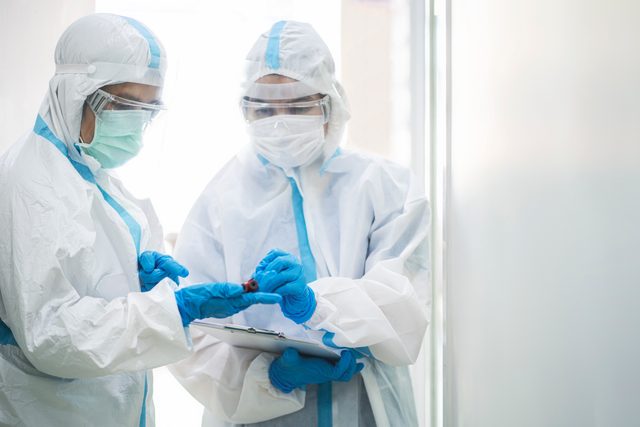
Past outbreaks like H1N1, SARS and MERS raised concerns about global health, but none reached the scale of COVID-19. When the virus began spreading in China in late 2019, many expected a limited outbreak. Instead, COVID-19 became a worldwide pandemic that affected daily life and health-care systems. Today, depending on the classroom level, schools may use the pandemic as a case study to teach students about public health, how viruses spread and the history of past outbreaks like the 1918 influenza pandemic.

9/11
For many adults, Sept. 11, 2001, remains a defining historical moment. However, current high school students were not born when the attacks occurred. Because 9/11 changed U.S. foreign policy and domestic security, it's often taught as a major turning point in modern history. "This lesson has a wide range of components to it, including border security, immigration, foreign policy, military and even the debates on religion and foreign dependence on oil," says Hart.

LGBTQ+ history
Schools continue to debate how LGBTQ+ history should be included in social studies classrooms. Some states require students to learn about LGBTQ+ heroes and their contributions to history, while others have placed restrictions on how LGBTQ+ topics can be discussed in schools. Lessons in classrooms today include figures such as Harvey Milk, LGBTQ+ involvement in civil rights movements and events like the Stonewall uprising. The approach varies widely depending on state standards and school districts.

Mass shootings
For many students today, school safety drills are as familiar as fire drills. Events like Sandy Hook, Parkland, Uvalde and other mass shootings have shaped how schools talk about safety and how communities respond after tragedy.
In classrooms today, students are learning about mass shootings as part of lessons on current events and civic responsibility. And with mass shootings steadily increasing, school safety itself has also become part of the everyday school experience. Many districts have added security measures, emergency response training and lockdown drills. Some schools even use programs like ALICE training, which teaches students and staff strategies for responding during an active shooter situation.

Character education
As technology and social media play a larger role in students' lives, schools are placing more emphasis on social-emotional skills. Cyberbullying, online pressure and the challenges of digital communication have made lessons on empathy and emotional management increasingly common. "My job is to help kids look at things from a better point of view and [give them] tools to deal with the hard stuff," Koratzanis explains. "Because they're so focused on what's online, face-to-face conversations are difficult for them."

Social media and podcasts
As problematic as certain aspects of social media have become, it is also an important teaching tool and subject of classroom lessons. According to Koratzanis, teachers at her school are encouraged to infuse social media into their lessons as a way of bringing them to life, whether it's having students weigh in on a weekly discussion question or a teacher posting photos of a visit to a historical site that the student may not have otherwise had a chance to visit. In addition, an English teacher at her school has also started having students create their own podcasts in order to get a better understanding of this increasingly important medium.

The Great Recession
Just as we learned about the Great Depression of the 1930s, students of today learn about the Great Recession of 2008, says Robert Kane, PhD, professor of history at Niagara University. "It simultaneously showed the strength of U.S. economic institutions in that tools were available to the federal government to keep the crisis from worsening, and also the wages of wealth inequality among Americans," he explains.
But why are students learning about something that happened less than two decades ago? The Great Recession helps explain issues young people see around them today, including expensive housing, economic inequality, inflation concerns, student debt and debates about the role of government in protecting the economy.

Introduction of the iPhone
When Apple released the iPhone in 2007, it changed far more than the way people made phone calls. It helped create the always-connected world students now live in. "The device fundamentally changed the way people communicate, interact with one another, perceive time, and remember and imagine events, which helped create a culture of immediacy and impersonality," Kane explains.
Today, students are learning about the iPhone as part of a bigger story: the rise of smartphones and how technology has transformed society. But classrooms are also examining the challenges that come with this technology. This includes discussions on screen time, Instagram and TikTok algorithms, and the effect of constant connectivity on mental health. Many schools have also added conversations about artificial intelligence, including how tools like AI chatbots can help with learning.

Environmental responsibility
Although we learned about topics like the greenhouse effect and acid rain in school, students today are going much deeper, looking at the myriad ways the environment impacts society. And according to Shel Horowitz, PhD, an educator who previously taught at the University of Massachusetts and author of Guerrilla Marketing to Heal the World , this includes the shift of both developed and developing countries to more environmental responsibility.
"While this often started through citizen action and spread into government, a big difference in the past 15 years or so is its emergence in the business sector, where, perhaps surprisingly, it's been strongly welcomed," he says. "We've seen environmental pioneers such as Ben & Jerry's, Interface, Patagonia and even Walmart imitated throughout the corporate world. For Millennials/Gen Z, this is the issue of their time."

Protests and civic engagement
Another facet of the proliferation of social media that's included in today's curriculum includes its impact on civic engagement, specifically, pushing back against governments and policies that are seen as harmful. "While many countries have shed pro-democratic, pro-environment, inclusionary governments in favor of repressive, anti-environment and openly racist leaders, this has not gone unchallenged," Horowitz explains. "Not since the 1960s has organized social protest been so much a part of daily life, in the United States, Europe, Latin America, Asia and elsewhere."

Extreme storms
For today's kids, extreme weather isn't just something they see on the news—it's something they're studying in school. Along with historic disasters like Hurricane Katrina and Superstorm Sandy, students are now learning about more recent storms that have reshaped communities, including Hurricanes Ian and Helene, as well as devastating floods and tornado outbreaks.
With the warming climate fueling heavier rainfall and making many hurricanes stronger, schools are spending more time teaching not only how these storms form but also why they're becoming more destructive.

Black Lives Matter and racial identity
The way schools teach about race has become one of the biggest education debates in America. Students still learn about topics such as slavery, segregation, the Civil Rights Movement and leaders like Martin Luther King Jr., but many classrooms are also examining more recent events connected to race and equality.
The Black Lives Matter movement, in particular, became a major national conversation after the deaths of George Floyd and Breonna Taylor in 2020. The protests that followed led many schools to discuss police-community relationships and racial inequality.
More recently, students have encountered debates over which books and perspectives should be included in classrooms and school libraries. Across the country, books dealing with racism and racial identity have been among those challenged in or removed from some schools, while other districts have worked to expand access to diverse authors and perspectives.

Consent and respecting physical boundaries
It's no longer enough to teach sex ed. Students also need to learn about consent and respecting physical boundaries. Given how deeply misunderstood the concept of consent has been—most recently illustrated through the #MeToo movement—this is something that is being addressed in schools with increasing frequency. You can see this with places like the Harvard Graduate School of Education, which provides strategies for educators on how to talk to students about respecting each other's boundaries, and Teach Consent, which offers resources and lessons on the topic for parents and educators.
About the experts
|
Sources:
- Michael Hart, PhD, historian, author of Unknown America
- Joy Koratzanis, teacher in Barnegat, New Jersey
- Robert Kane, PhD, professor of history at Niagara University
- Shel Horowitz, PhD, educator, author of Guerrilla Marketing to Heal the World
- Rockefeller Institute of Government: "Mass Shooting Factsheet"
- Pen America: "596 Books Banned by Department of Defense Schools Include Titles on Democracy, Feminism, Racism"
- National Education Association: "Social Media in Education"
Author Elizabeth Yuko Elizabeth is an award-winning journalist and bioethicist in New York City. In addition to covering knowledge, culture, politics and history for Reader's Digest, she writes for the New York Times, Rolling Stone, Architectural Digest, the Atlantic, Washington Post, Wall Street Journal, CNN, Teen Vogue, the History Channel and more. She's also an a djunct professor of ethics at Fordham University.
Be a good human. Grossly derogatory comments, blatantly inflammatory comments, excessive trolling, mean-spirited taunting and insults, scamming, spamming, and off topic comments may be removed in compliance with the site's Terms of Service and the Code of Conduct. The moderators have the final word.

Tags
Who is online
85 visitors
The article provides some insight into why education has become such a contentious issue today. The list of items being taught seems to contradict the core ideas of opportunity, progress, unity, and common patriotic identity that prevailed in mid-20th century America. Instead of strengthening our national unity to meet challenges, the current curriculum seems designed to highlight our imperfections and enforce our divisions. In some ways, the presented curriculum seems to be trying to turn back the clock so the nation relives its worst moments.
Obviously primary education should not serve a political purpose. But shouldn't we expect our children to be educated in ways that unite us rather than divide us?
It shouldn't, but unfortunately the teacher's unions have become very political due to the money and power involved. More and more money continues to flow to unions and superintendents rather than down the teachers and students. All while national test scores continue to drop.
Seems like Idiocracy isn't just a movie but a prediction for the future.
I think we've found our first patient Zero suspect.
But seriously, while I do think the import of some of our achievements as a nation have been seen more tarnished with perspective, overall, our public-school systems American history curriculum shows us in a very favorable light. But it's similar to how some today want to go back to the 1950's when they think life was great in America but are either completely oblivious to or simply uncaring for the fact that millions of minority Americans were forced to live a very different life that was far from a utopia. When we look at how history was taught you and I forty or fifty years ago, it did have a much brighter shine, but not because we were being told some more truthful version of history. The exact opposite was the case in fact. And sure, it was intentional and that's how you build national identity and pride, by telling our kids only the great things we did while barely admitting to the errors and even when we did it was with a mountain of excuses.
I don't think there is some inherent wrong in education serving broader political purposes such as investing in education with the intent of improving our nation's wealth and standard of living for our citizens which should be every government's objective. But obviously we should never allow partisan politics or any specific religious faith into our public-school curriculums. You simply can't teach world history without teaching about the victors and the victims and rarely are the two the same group. But we shouldn't shy away from telling the unvarnished truth for political expedience simply because some of the victors' descendants are still walking around with excessively thin skin. Likewise, we shouldn't simply cater to every whim of the victims' descendants simply because their ancestors had it tough creating a de facto victim class.