
Camera Traps | Missouri Department of Conservation

By: Tim Kjellesvik (Missouri Department of Conservation)

 S E E D E D C O N T E N T

Nature is full of mysterious happenings that we often only see evidence of after the fact. Like the bark that's suddenly rubbed off a sapling in your backyard in late October. Or the appearance of an odd burrow dug in the soft soil near your garden. What about that strange howl from the backwoods at night? What's happening out there when we're not around?
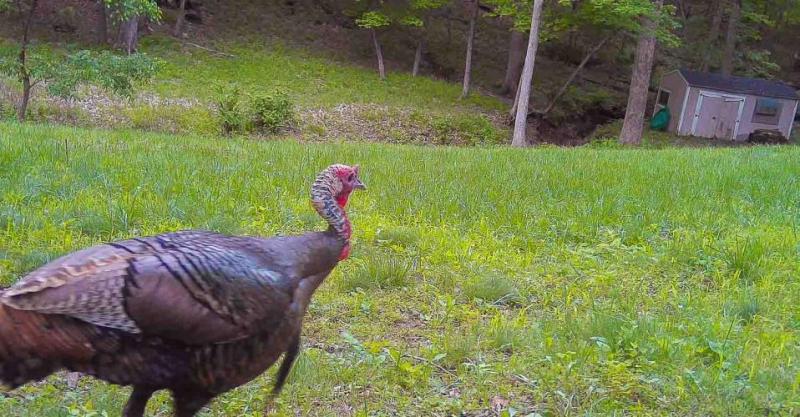
Long known as an effective observation tool for biologists, camera traps are an underused resource for wildlife enthusiasts. By using remote cameras to capture images and videos of activity, they open a window to the secretive side of nature. But they're not really "traps" at all. They're simply intentionally placed trail cameras set up to surveil wildlife.
The primary component of a camera trap is the trail camera, often referred to as a trail cam. Understanding how trail cams work helps you deploy them effectively, unlocking a whole new level of wildlife watching.
What Is a Trail Camera and How Does It Work?
A trail camera is a specialized camera designed for outdoor placement to remotely monitor activity. That movement gets recorded as photos and/or videos. Today's trail cams pack a lot of technology into a small, affordable package. Despite their internal complexity, most are comprised of the following, similar components:
- Lens: The camera's lens focuses light onto a sensor. What the lens sees is called the "frame" of the picture. Everything "in frame" will be in the photo or video. Keeping the lens clear from obstruction is important for getting the best pictures.
- Passive Infrared Sensor (PIR): The PIR sensor detects changes in heat in
the environment, like the warm body of an animal passing by. PIR sensors have a general detection range of 60-100 feet, depending on the model of trail camera. Avoiding things that heat up differently, like bare patches of dirt or metal surfaces, can reduce falsely triggered photos. - Flash: These can be infrared (IR) or a white flash, like a regular camera. The flash allows the device to take pictures and video at night and other low-light conditions. Typically, low-light media requiring flash will be in black and white. Removing reflective objects or even close-up obstructions allows
the flash to penetrate farther into the darkness, giving the camera better nighttime reach. - Power: The standard power source for trail cameras is the common AA battery, but many cameras are equipped with jacks to accept additional power from solar panels and larger, external batteries. These advanced power solutions are great for cameras in remote/distant locations, as they reduce the need to visit the device to replace dead batteries.
- Storage: Most trail cams record media to a removeable SD card. Newer models, however, are increasingly equipped with internal memory to negate the need for removeable memory cards, which tend to corrupt and cause issues with camera performance.
- Media: All trail cameras will take photos. Some will also shoot videos. It's up to you to decide what kind of evidence you want your camera trap to produce. Additionally, some cameras have a time-lapse mode that will take images at pre-determined increments of time, whether anything has triggered the PIR sensor or not. Time-lapse is great for monitoring larger areas, like yards or fields, where a critter may not come close enough to trigger the camera.
- Cellular or Non-Cellular: Another major distinction in trail cameras is how you get the media they've captured. Cellular trail cams, or cell cams, send photos and videos wirelessly to your mobile device. Non-cellular trail cameras record media to memory within the device. They also require physically visiting the camera to retrieve media. Cell cams are convenient but require a monthly or yearly data plan to send media wirelessly to your phone.
- Which is best for your situation? If you want a low-intrusion camera trap, especially one at a distance that you don't want to frequently visit, the additional cost of a cell cam is well worth it. If your camera trap is nearby and easily accessible, a non-cell cam is probably best.
Tricks of the Trade
- Despite all the tech packed into today's trail cameras, they're only as good as the way you use them. Here are some general principles of good camera setup:
- Avoid southerly orientations where sunlight could cause glare on the lens.
- Mount the camera on something solid that doesn't sway with the wind to avoid false triggers.
- Clear away things that move (tall weeds, branches, etc.) from the camera's frame to reduce false triggers.
- Preview a test photo before you leave the setup to ensure the framing captures everything you want.
- In most cases in Missouri, mounting the camera at about belly button height on an adult will capture all but our tallest wildlife, which is elk. If you happen to be seeking elk, chest height is a good rule of thumb.
- Know the laws of the land where you're setting up the camera trap. Some publicly managed ground, like conservation areas and MDC-managed lands, prohibit the use of trail cameras.
Location, Location, Location
Chances are, you already have a few places in mind where you're thinking about setting up your camera. Before heading out, here are few more things to consider:
Game Trails
Ever notice the subtle paths through a grassy field? Perhaps the grass is worn thin or laid down in one direction. Or maybe there's a path in the timber where the soil is compacted. These are great places for a camera trap to capture what critters are passing through.
To allow your camera enough time to recognize the movement, wake up, and capture the photo before the subject scurries through, bump the camera back about 10 feet off the trail, and orient it at a 45-degree angle. This widens the view the camera has of the trail, giving it more time to react.
Edge Habitat
Many animals use transition zones, like field edges and fence lines, for travel. Catch them on their commute along these routes. If you find you're ending up with empty photos, it could be the critters are moving too quickly through the frame. Bump the camera back a bit to give the PIR trigger more time to detect the animal and take the photo.
Water Sources
Water is a universal need for wildlife, which often means you see a good cross-section of biodiversity congregating there. Creeks, ponds, springs, seeps, bird baths, and even puddles can be a draw. Boost your odds by pointing your camera in a manner that covers animal tracks in the wet soil.
Downed Trees
Whether they're hunting or trying to avoid being hunted, many critters opt to use natural bridges in the forest to avoid making noise in the leaf litter. Downed trees are great camera traps, targeting animals taking a more silent path through the woods.
In the Canopy
Ever find a vacant bird nest and wonder what occupied it? Satisfy your curiosity with a well-placed camera trap. If the nest happens to be in a tree, you might need to lower the PIR sensitivity to reduce unwanted, empty images from false triggers caused by moving branches.
Human Attractions
Many animals have adapted to human encroachment and make their homes among us. Secretive as they may be perusing our trash cans or snacking through our gardens, they're not immune from detection with a camera trap.
Dens and Burrows
Finally, let's not forget our ground-dwelling friends. A wide variety of Missouri's wildlife, like foxes, ground squirrels, and even the rare American badger, make their homes underground. Point your camera trap at a mysterious opening in the soil and finally reveal who's making a home there.
Get Creative
The more you use camera traps, the better you'll become at understanding wildlife behavior and patterns. Leverage that understanding to expand your sets. The variables are endless and the photos captured could be incredible.
There's no substitute for being outdoors, but camera traps offer a rare glimpse into the hidden, more secretive side of nature that happens when we're not there. Instead of wondering what stripped the bark off your sapling or dug the burrow near your garden, you're now equipped to do your own sleuthing. Who knows what wildlife you'll catch in the act?
<< The images are available at the bottom of the seed article. >>
This Issue's Staff
Magazine Manager - Stephanie Thurber Editor - Angie Daly Morfeld Associate Editor - Larry Archer Photography Editor - Ben Nickelson Staff Writer - Kristie Hilgedick Staff Writer - Joe Jerek Staff Writer - Dianne Van Dien Designer - Marci Porter Designer - Kate Morrow Photographer - Noppadol Paothong Photographer - David Stonner Circulation - Marcia Hale
Remember the Golden Rule, be a good human. We're here to relax and chat, so let's keep it civil and fun. Please, remember to quote the person(s) you are replying to as a courtesy so everyone can follow the conversation. Grossly derogatory comments, blatantly inflammatory comments, excessive trolling, mean-spirited taunting and insults, scamming, spamming, and off topic comments may be removed in compliance with the site's Terms of Service and the Code of Conduct. The moderators have the final word and may remove comments at their judgement (or lack thereof).
Past performance does not guarantee future results. Comment at your own discretion. The owners of the site, the owner of this group, and the moderators are not responsible or liable for any stupid thing you do. You break it, you buy it. No shirt, no shoes, no service. Don't poke the bear. Mind the gap.

Tags
Who is online
74 visitors
I've tried setting up a pocket camera as a trap with mixed results. Of course, some may remember placing film cameras in a hide with a trip wire for the shutter. Today's dedicated trail cameras have become rather sophisticated - and - convenient. Some are available with cellphone capability so the camera can phone home with the images. And they're inexpensive, to boot.
Trail cams are getting quite prolific around here. While getting firewood, my nephew called and said he just got an image on his phone of me walking by his camera. Now you have to think twice and closely check all directions if you need to take a wiz in the woods.