
Mount Vesuvius erupts | August 24, 79

By: HISTORY


 S E E D E D C O N T E N T
Universal Images Group via Getty Published: November 24, 2009Last Updated: August 21, 2026
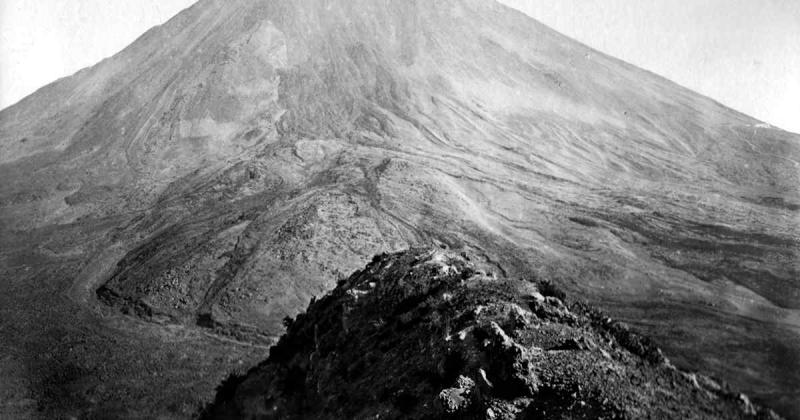
After centuries of dormancy, Mount Vesuvius erupts in southern Italy, devastating the prosperous Roman cities of Pompeii and Herculaneum and killing thousands. The cities, buried under a thick layer of volcanic material and mud, were never rebuilt and largely forgotten in the course of history. In the 18th century, Pompeii and Herculaneum were rediscovered and excavated, providing an unprecedented archaeological record of the everyday life of an ancient civilization, startlingly preserved in sudden death.
The eruption is traditionally dated to A.D. August 24, 79, but archaeological discoveries have led some researchers to argue the disaster might have occurred in the autumn, possibly in October 79.
The ancient cities of Pompeii and Herculaneum thrived near the base of Mount Vesuvius at the Bay of Naples. In the time of the early Roman Empire, 20,000 people lived in Pompeii, including merchants, manufacturers and farmers who exploited the rich soil of the region with numerous vineyards and orchards. None suspected that the black fertile earth was the legacy of earlier eruptions of Mount Vesuvius. Herculaneum was a city of 5,000 and a favorite summer destination for rich Romans. Named for the mythic hero Hercules, Herculaneum housed opulent villas and grand Roman baths. Gambling artifacts found in Herculaneum and a brothel unearthed in Pompeii attest to the decadent nature of the cities. There were smaller resort communities in the area as well, such as the quiet little town of Stabiae.
Pompeii
It was nearly wiped out during the eruption of Mount Vesuvius in 79 A.D. What is left of this ancient city and will Vesuvius erupt again? Uncover the lost city of Pompeii.
2:17m watch
This pleasure and prosperity came to an end when, at noon on eruption day, the peak of Mount Vesuvius exploded, propelling a 10-mile mushroom cloud of ash and pumice into the stratosphere. For the next 12 hours, volcanic ash and a hail of pumice stones up to 3 inches in diameter showered Pompeii, forcing the city's occupants to flee in terror. Some 2,000 people stayed in Pompeii, holed up in cellars or stone structures, hoping to wait out the eruption.
A westerly wind protected Herculaneum from the initial stage of the eruption, but then a giant cloud of hot ash and gas surged down the western flank of Vesuvius, engulfing the city and burning or asphyxiating all who remained. This lethal cloud was followed by a flood of volcanic mud and rock, burying the city.
The people who stayed in Pompeii were killed the following morning when a cloud of toxic gas poured into the city, suffocating all who remained. A flow of rock and ash followed, collapsing roofs and walls and burying the dead.
Much of what we know about the eruption comes from an account by Pliny the Younger, who was staying west along the Bay of Naples when Vesuvius exploded. In two letters to the historian Tacitus, he told of how "people covered their heads with pillows, the only defense against a shower of stones," and of how "a dark and horrible cloud charged with combustible matter suddenly broke and set forth. Some bewailed their own fate. Others prayed to die." Pliny, only 17 at the time, escaped the catastrophe and later became a noted Roman writer and administrator.
His uncle, Pliny the Elder, was less lucky. At the time of the eruption, the celebrated naturalist was the commander of the Roman fleet in the Bay of Naples. After Vesuvius exploded, Pliny the Elder took his boats across the bay to Stabiae to investigate the eruption and reassure terrified citizens. After going ashore, he was overcome by toxic gas and died.
According to Pliny the Younger's account, the eruption lasted 18 hours. Pompeii was buried under 14 to 17 feet of ash and pumice, and the nearby seacoast was drastically changed. Herculaneum was buried under more than 60 feet of mud and volcanic material. Some residents of Pompeii later returned to dig out their destroyed homes and salvage their valuables, but many treasures were left then forgotten.
The long-standing debate over when exactly Mount Vesuvius erupted stems, in part, from Pliny the Younger's account. The original manuscript has been lost, and scholars debate variations found in later copies. Archaeological evidence has added to the uncertainty. Excavations have uncovered autumn produce, braziers and other clues suggesting the disaster might have occurred later in the year. In 2018, archaeologists announced the discovery of a charcoal inscription apparently dated October 17, 79. The timing remains unsettled.
Coroner's Report: Pompeii
The eruption of Mount Vesuvius in 79 A.D. obliterated the Roman city of Pompeii, burying it under tons of volcanic ash. While many of its resident fled to safety, what happened to those who dared to stay behind?
2:14m watch
In the 18th century, a well digger unearthed a marble statue on the site of Herculaneum. The local government excavated some other valuable art objects, but the project was abandoned. In 1748, a farmer found traces of Pompeii beneath his vineyard. Since then, excavations have gone on nearly without interruption until the present. In 1927, the Italian government resumed the excavation of Herculaneum, retrieving numerous art treasures, including bronze and marble statues and paintings.
The remains of 2,000 men, women and children were found at Pompeii. After perishing from asphyxiation, their bodies were covered with ash that hardened and preserved the outline of their bodies. Later, their bodies decomposed to skeletal remains, leaving a kind of plaster mold behind. Archaeologists who found these molds filled the hollows with plaster, revealing in grim detail the death pose of the victims of Vesuvius. The rest of the city is likewise frozen in time, and ordinary objects that tell the story of everyday life in Pompeii are as valuable to archaeologists as the great unearthed statues and frescoes. It was not until 1982 that the first human remains were found at Herculaneum, and these hundreds of skeletons bear ghastly burn marks that testifies to horrifying deaths.
Today, Mount Vesuvius is the only active volcano on the European mainland. Its last eruption was in 1944, and its last major eruption was in 1631. Another eruption is expected in the near future, which could be devastating for the 700,000 people who live in the "death zones" around Vesuvius.
Also on This Day in History
Discover more of the major events, famous births, notable deaths and everything else history-making that happened on August 24th
1572 -- Saint Bartholomew's Day Massacre
King Charles IX of France, under the sway of his mother, Catherine de Medici, orders the assassination of Huguenot Protestant leaders in Paris, setting off an orgy of killing that results in the massacre of tens of thousands of Huguenots all across France. Two days earlier, Catherine had ordered the murder of Admiral Gaspard de […]
1814 -- British troops set fire to the White House
On August 24, 1814, during the War of 1812 between the United States and England, British troops enter Washington, D.C. and burn the White House in retaliation for the American attack on the city of York in Ontario, Canada, in June 1813. When the British arrived at the White House, they found that President James […]

1814 -- George Washington's portrait saved from British looters
On August 24, 1814, an iconic portrait of George Washington is removed from the White House walls, to prevent it being looted by British troops during the War of 1812. Later, first lady Dolley Madison takes credit for the save. According to the White House Historical Society and Dolley's personal letters, President James Madison left […]
1821 -- Spain accepts Mexican independence
Eleven years after the outbreak of the Mexican War of Independence, Spanish Viceroy Juan de O'Donoju signs the Treaty of Cordoba, which approves a plan to make Mexico an independent constitutional monarchy. In the early 19th century, Napoleon's occupation of Spain led to the outbreak of revolts all across Spanish America. On September 16, 1810, […]
1873 -- Elusive Mount of the Holy Cross photographed
William Henry Jackson becomes the first person to photograph Colorado's elusive Mount of the Holy Cross, providing reliable proof of its existence. Rumors had abounded for years that a natural cross of snow lay hidden high in the rugged mountains of Colorado. Many claimed to have seen the cross, but others were unable to find […]

1914 -- Poet Alan Seeger volunteers in French army
On August 24, 1914, the American poet Alan Seeger volunteers for service in the French Foreign Legion during the First World War. Born in New York City in 1888, Seeger attended Harvard University, where his illustrious classmates in the Class of 1910 included the poet John Reed and the journalist Walter Lippmann. After living in […]

1941 -- Hitler suspends euthanasia program
On August 24, 1941, Adolf Hitler orders that the systematic murder of the mentally ill and handicapped be brought to an end because of protests within Germany. In 1939, Dr. Viktor Brack, head of Hitler's Euthanasia Department, oversaw the creation of the T.4 program, which began as the systematic killing of children deemed "mentally defective." […]
1954 -- Congress passes Communist Control Act
Congress passes the Communist Control Act in response to the growing anticommunist hysteria in the United States. Though full of ominous language, many found the purpose of the act unclear. In 1954, the Red Scare still raged in the United States. Although Senator Joseph McCarthy, the most famous of the "red hunters" in America, had […]
1969 -- U.S. unit refuses commander's order
Company A of the Third Battalion, 196th Light Infantry Brigade refuses the order of its commander, Lieutenant Eugene Schurtz, Jr., to continue an attack that had been launched to reach a downed helicopter shot down in the Que Son valley, 30 miles south of Da Nang. The unit had been in fierce combat for five […]
1981 -- John Lennon's killer sentenced
Mark David Chapman is sentenced for the murder of John Lennon.

2006 -- Pluto is demoted
In Prague on August 24, 2006, the International Astronomical Union votes to demote Pluto from the ninth planet from the Sun to one of dozens of known dwarf planets. The vote followed a week of debate by the IAU, who voted on multiple proposals including one that kept not just Pluto as a planet but added two […]

2012 -- Killer in Norway massacre is sentenced
On August 24, 2012, the man who killed 77 people in a July 22, 2011, bombing and shooting attack in Norway is sentenced to 21 years in prison, the maximum allowed under Norwegian law. Anders Behring Breivik, a 33-year-old right-wing extremist with anti-Muslim views, carried out attacks in Oslo, the nation's capital, and at a […]
Remember the Golden Rule, be a good human. We're here to relax and chat, so let's keep it civil and fun. Please, remember to quote the person(s) you are replying to as a courtesy so everyone can follow the conversation. Grossly derogatory comments, blatantly inflammatory comments, excessive trolling, mean-spirited taunting and insults, scamming, spamming, and off topic comments may be removed in compliance with the site's Terms of Service and the Code of Conduct. The moderators have the final word and may remove comments at their judgement (or lack thereof).
Past performance does not guarantee future results. Comment at your own discretion. The owners of the site, the owner of this group, and the moderators are not responsible or liable for any stupid thing you do. You break it, you buy it. No shirt, no shoes, no service. Don't poke the bear. Mind the gap.

Tags
Who is online


126 visitors
Not quite breaking news. But Pompeii still makes headlines occasionally.