
The end of marriage? Why financial independence changes everything

By: John Mac Ghlionn (The Hill)
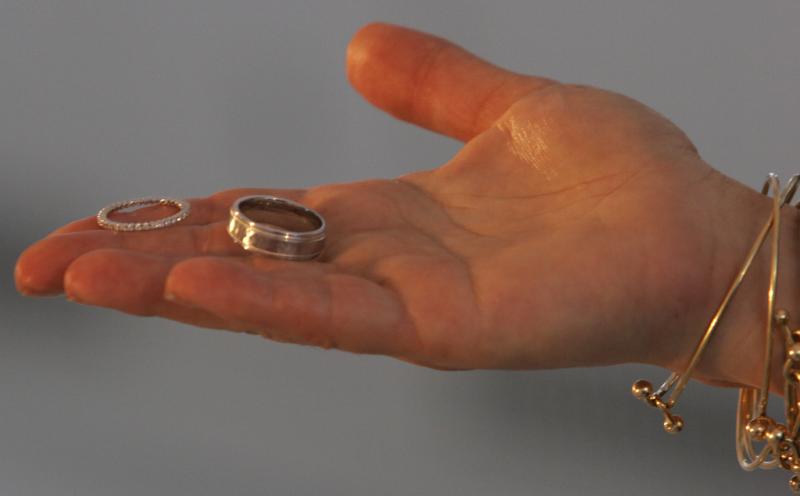


Focusing on gender roles and the economic aspects of a partnership does a disservice to the idea of marriage. What is the purpose of marriage? For many centuries the idea of marriage - and family - was rooted in heritage, legacy, and a duty to the future. Familial lineage and inheritance were of greater importance in considerations of marriage than instant gratification of material desires. Marriage was a social contract to maintain cultural continuity rather than some sort of money motivated merger.
 S E E D E D C O N T E N T
August 22, 2026 -- Across the U.S., an increasing number of young adults are treating the traditional wedding altar like a hazardous waste site. Their mass refusal to pair up fuels a predictable spiral. Fewer marriages produce fewer babies, and a society without babies eventually ceases to exist.
Part of this transformation is being driven by a massive demographic shift in higher education. Women now earn roughly 60 percent of bachelor's degrees. This educational imbalance directly feeds into the white-collar economy. A large cadre of corporate women now routinely out-earn their male romantic partners, creating a dynamic the old domestic playbooks never anticipated.
To be clear, nobody is asking Congress to subsidize bonnets or sourdough starter kits. But the harsh reality is that the legacy model of holy matrimony has run face-first into an economy that renders it functionally useless. The nuclear family structure was built for an agrarian or industrial landscape, leaving it ill-suited to a service economy driven by laptop-wielding professionals.
A research team at the University of Pennsylvania recently attempted to calculate the exact structural toll of this financial shift. The sociologists tracked 544,911 opposite-sex couples across 29 affluent nations over a 16-year period, analyzing a dataset comprising 437,102 married pairings and 107,809 cohabiting couples. The findings were sobering. Couples where the woman holds higher economic or social status are 36 percent more likely to split than those built on a more traditional division of labor.
For the last 40 years, mainstream psychological orthodoxy pinned the blame for these breakups entirely on the fragile male ego. The academic establishment insisted that men, socialized under the "Me Tarzan, You Jane" school of thought, suffered deep psychological trauma whenever a woman brought home the larger paycheck.
But Penn's data completely demolishes this theory. The researchers compared deeply conservative cultures with hyper-progressive Nordic societies and found the exact same 36 percent spike in separation rates everywhere when women out-earn their male partners. The pattern holds firm in egalitarian Sweden and traditional southern Europe alike; the husband's internal narrative of masculine dominance is not the main issue here. The breakdown crosses cultural lines with perfect indifference.
The math gets even more miserable where children enter the equation. Among childless couples where the female partner earns more than the male, the risk of separation sits at a 23 percent premium. The moment a child arrives, that separation risk jumps to 49 percent.
One possible explanation: High-paying corporate roles demand absolute availability and long hours in the office, yet the exhausting reality of childcare rarely adjusts to accommodate the new corporate hierarchy. Toddlers do not respect corporate board meetings, and corporate board meetings show no mercy to parents managing an infant's ear infection.
Even when a woman funds the majority of the household budget, she typically continues to handle the lion's share of the domestic labor. The modern high-earning female executive finds herself working a grueling corporate shift, only to clock into a second, unpaid shift at home. This specific double-duty arrangement guarantees an explosive mix of chronic exhaustion and deep resentment, which serves as an excellent accelerant for divorce proceedings.
This tension is the logical endpoint of an evolution that began more than a century ago. For most of the 19th century, marriage functioned primarily as a strict economic syndicate rather than a romantic oasis. The passage of Britain's Married Women's Property Act of 1870 marked the start of a multi-generational expansion of women's legal rights, but the fundamental economic reliance on a male breadwinner persisted for decades. By the late 20th century, the combination of civil rights reforms and a booming service economy ended that financial dependence for good, transforming marriage into a purely optional partnership based on mutual affection.
When a woman achieves complete financial self-sufficiency, the economic penalty for walking away from a mediocre relationship nears zero. A high-earning professional requires no male capital to secure a mortgage, build an investment portfolio, or raise a child alone. She has no financial incentive to tolerate a partner who refuses to scrub a toilet or pack a school lunch. Alimony threats and custody battles lose their terrifying financial leverage when the wife holds the stronger financial position and controls the primary accounts.
As female economic power grows, this dynamic will become a defining feature of American dating. When you combine this reality with the statistical fact that high-earning women still prefer partners who match or exceed their own economic status, you have a recipe for a world in which marriage becomes obsolete for an increasing number of people.
John Mac Ghlionn is a writer and researcher who explores culture, society and the impact of technology on daily life.
Be a good human. Grossly derogatory comments, blatantly inflammatory comments, excessive trolling, mean-spirited taunting and insults, scamming, spamming, and off topic comments may be removed in compliance with the site's Terms of Service and the Code of Conduct. The moderators have the final word.

Tags
Who is online
68 visitors
The weakening and decline of marriage isn't anecdotal; the numbers are real and the facts are stark. What are we gaining and what are we losing? Some will inevitably use the data to celebrate advances for women's rights and independence. Are women entering the competition to 'die with the most toys' really strengthening our social cohesion and providing a legacy for the future?
No. It's not. What I'm reading and hearing online are younger women do not want to take on the role of wife and mother to men who were never taught emotional maturity.
It's not about dying with the most toys. It's about finding a good life balance and not carrying other's weight. This also extends into their familial dynamic going low, or no, contact with toxic family members. It even extends to friend groups. If it's not a healthily relationship they are quicker to cut ties and perfectly capable to do things by themselves.
There's no way to know if it's ultimately detrimental, or beneficial, to society. I am certain that trends will change again.
The fact is 'nobody' wishes to exist in and as a suppressed group. Because when a group is suppressed - it obviously is not operating at its best (vertical growth is limited), and Instead the 'stunted' group operates within boundaries another has set for it (horizontal growth only is possible).