
The U.S. Venezuela oil deal won't lower your gas prices. Here's what you need to know

By: Julia Simon (NPR)


President Trump's public relations coup will likely blow up in our faces. The 'deal' may be unprecedented but the US has tried this before -- with Iran. The technicalities may differ but in 1954 the US obtained a 40% share of the consortium controlling Iranian oil. How'd that turn out?
As has been posted elsewhere , Venezuelan oil is heavy sour crude that must be processed to remove sulfur and heavy metals before refining. Using unprocessed Venezuelan oil to replenish our Strategic Petroleum Reserve would permanently damage the caverns used to store oil. The US has very limited refinery capacity that can process Venezuelan oil; certainly not enough refinery capacity to handle the amounts President Trump has boasted about.
 S E E D E D C O N T E N T
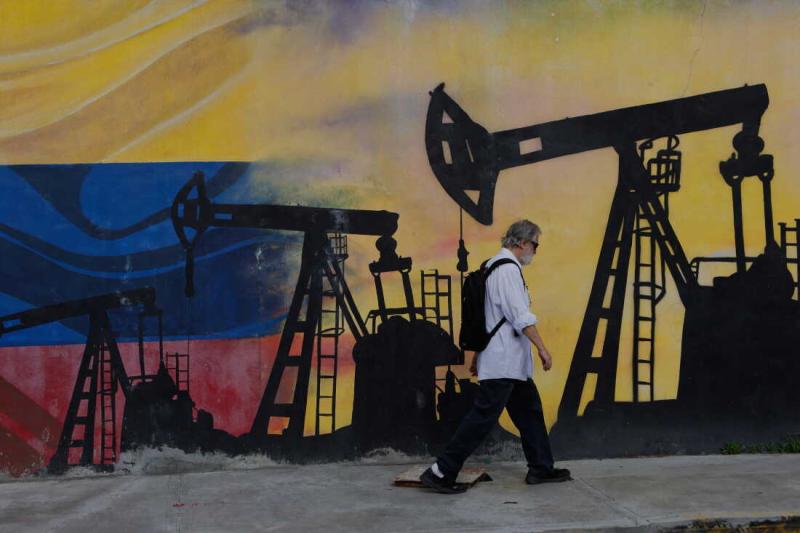
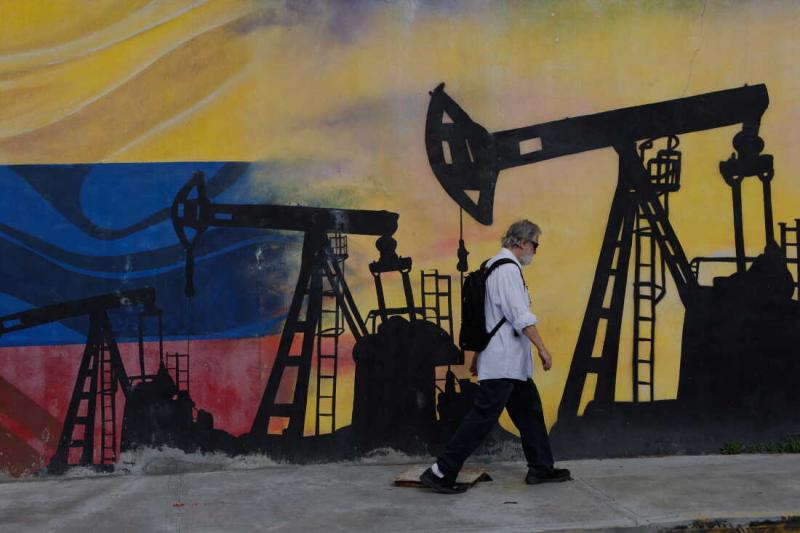
A pedestrian walks past a mural featuring oil wells in Caracas, Venezuela, on Saturday, a day after President Trump announced a deal giving the United States a stake in Venezuela's oil reserves. Pedro Mattey/AP hide caption
August 31, 2026 -- The Trump administration announced an agreement with the Venezuelan government on Friday to develop a vast amount of Venezuela's oil reserves.
The U.S. government says it is entering into a joint venture with a private Venezuelan company, according to an official who spoke to NPR on the condition of anonymity because they are not authorized to speak publicly about the deal. The Trump administration says the U.S. would get 55% of the oil from the joint venture. That's equivalent to about 65 billion barrels of oil that's under the ground.
On Truth Social, President Trump called it the "biggest oil deal in the world." But energy experts say there are many reasons to be skeptical.
"So the initial reaction is, 'wow, this is crazy,'" says Paasha Mahdavi, associate professor of political science at UC Santa Barbara who studies the oil industry. "But then you look into it, and you're like, 'well, this may not actually do anything.'"
Here's what you should know about the agreement.
The U.S. doesn't have a national oil company, which raises questions about how this will work
The idea that the U.S. government becomes a shareholder of this joint venture is "extremely unusual," says Francisco Monaldi, director of the Latin America Energy Program at the Center for Energy Studies at Rice University.
Unlike Saudi Arabia's Saudi Aramco, or Mexico's Pemex, the U.S. doesn't own a national oil company.
"We have no government-owned operational capability per se in the oil and gas sector," says Gerald Kepes, president of Competitive Energy Strategies, an energy consultancy in Washington, D.C. "The question is, who's going to operate on the ground?"
There's a private Venezuelan company involved in the deal, according to the U.S. official who was not authorized to speak publicly. It's still unclear how this partnership will work.
U.S. oil companies may not want to get involved
Other American oil company investors might want to take a portion of the U.S. government's stake in this joint venture. But the deal may not appeal to international investors.
"It's not clear who will rush in for that opportunity," Mahdavi says.
Trump has announced that the U.S. would take its stake of Venezuela's oil "at cost," which means that the U.S. would get that oil at whatever it costs to produce plus some set margin. But there can be a lot of volatility in oil markets. When oil prices are really high, oil companies can make a lot of excess profits.
This kind of "at-cost" deal can take away oil companies' ability to make those extra big bucks, Mahdavi says.
"'At cost' is not attractive in this industry," Mahdavi says. "So you would want to have some ability to capture on whatever premium exists between cost and the actual price of oil."
There are questions over the legitimacy of the current Venezuelan government
Another issue with this deal, Kepes says, is that it's made with the government of acting President Delcy Rodriguez. Rodriguez wasn't elected, as she came into office after the U.S. seized and arrested former President Nicolas Maduro in January.
In a televised address to the nation on Saturday night, Rodriguez said this deal is good for the Venezuelan people. But some Venezuelans are questioning if the deal's terms are fair.
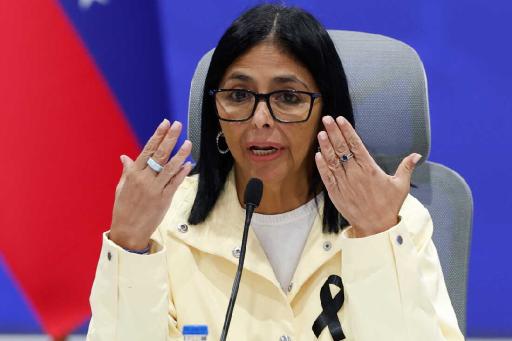
The U.S. deal was made with the Venezuelan government and acting President Delcy Rodriguez. Energy experts say that raises questions about the deal's legitimacy. In this photo, Rodriguez spoke at a press conference addressing the government's response to earthquakes in Caracas, Venezuela, on July 2. Pedro Mattey/AP hide caption
Kepes says he expects oil companies will also have questions.
"At the end of the day, they're still signing a deal with the Delcy Rodriguez government," he says. "How legitimate is that government, and what's that going to look like in three to five years?"
This won't have an immediate impact on gas prices
In a post on Truth Social, President Trump wrote that this deal will "substantially lower gas prices" for American taxpayers.
Kepes says that the idea of this deal affecting gas prices now is "absurd."
Many of the larger oil fields being discussed in the deal are still largely undeveloped. That means it will take a minimum of a few years for those fields to produce anything, Monaldi says.
"A significant increase in production is highly unlikely," Monaldi says. "So this is not something that will have any relevant impact on the world oil market in the short term."
If this deal does have an impact on gas prices, Kepes says, it will be far on the horizon.
Be a good human. Grossly derogatory comments, blatantly inflammatory comments, excessive trolling, mean-spirited taunting and insults, scamming, spamming, and off topic comments may be removed in compliance with the site's Terms of Service and the Code of Conduct. The moderators have the final word.

Tags
Who is online
77 visitors
President Trump still sees the US quasi-annexation of Venezuela as a major victory that hasn't gotten enough praise. So, what does Trump do? Screw it up, that's what.
The US will likely be stuck pumping money into the country and receiving little of value in return. Venezuela will likely reclaim independence in two years when Trump is gone. This will end up like a Kamala Harris 'create opportunities there so they won't come here' boondoggle.
Venezuela is,of course, independent. If the next President screws this up than the fault will be on them. It would be incredibly stupid to not take this opportunity because you assume the next president will be a spineless fool.