
Trump’s bogus narrative about the GOP losing in the 2026 midterms

By: Aaron Blake (CNN)
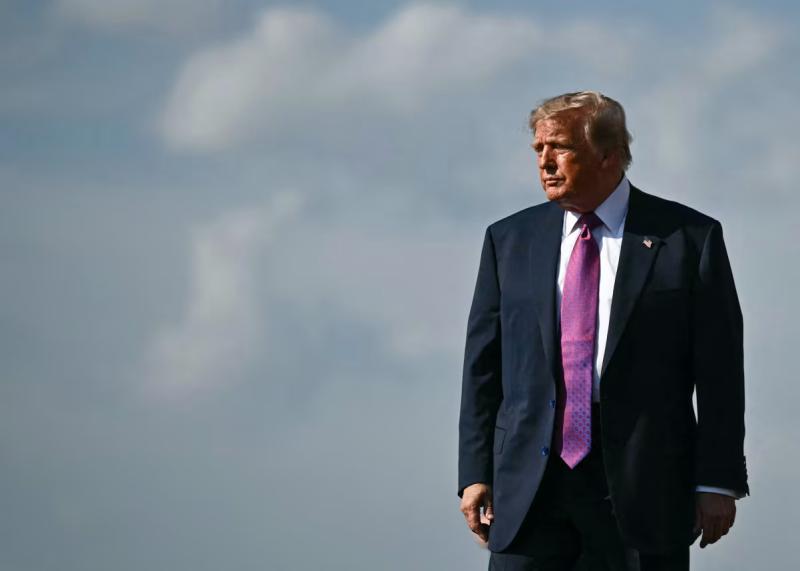

Election post-mortems are an inevitable political tradition. Both parties search for scapegoats to explain both failure and success. President Trump has volunteered to be that scapegoat by demonstrating he is a fickle and feckless political leader. Apparently Trump is becoming aware that he will receive credit of Democratic wins and blame for Republican losses. And there's nothing Trump can do about it.
 S E E D E D C O N T E N T

August 31, 2026 -- President Donald Trump keeps trying to preemptively blame congressional Republicans if they lose big in the 2026 midterms — but he’s now making an argument that’s flat-out wrong.
His talking point in a recent interview underscored how culpable he would be if his party loses this fall.
In the interview with Fox News host Trey Gowdy that aired Sunday, Trump appeared to confirm reports that his midterm efforts will largely focus on touting his own record. “I’m going to go out, and I’m going to campaign like I did for myself,” he said.
Then Trump slipped in his latest effort to suggest it’s congressional Republicans — not him — whom people dislike.
“But some people like me more than they like the party,” Trump said. “I mean, you can’t be insulted by it. There’s nothing you can do about it.”
This echoes the president’s prior commentary, including telling Punchbowl News this month that voters are “angry at Republicans, but they’re not angry at me.”
Spending time months before the election pre-blaming your fellow Republicans is remarkable.
But it’s also just wrong. Not only is there evidence that Trump is to blame for his party’s midterm woes, but it’s not true that there are a bunch of people who like Trump but not his party.
The most recent CNN polling on this is from last month. It showed the Republican Party’s image was 21 points underwater; 52% viewed it unfavorably, compared with 31% who viewed it favorably. (The rest offered no opinion.)
But Trump’s approval rating was 32 points underwater; 66% of Americans disapproved of him, while 34% approved.
(Approval is generally a measure of job performance, while favorability is a measure of personal appeal. But the numbers are often correlated.)
CBS News polling this month showed Americans viewed the GOP unfavorably 60%-40%. Its July poll showed Americans disapproved of Trump 61%-39%.
Polling from Marquette University Law School in July specifically tested Republicans in Congress, and it also showed little difference in perceptions between them and Trump.
While Americans disapproved of congressional Republicans 63%-37%, they disapproved of Trump 60%-40%.
The poll also tested the broader party’s image and found little difference between the GOP and Trump. While Americans viewed Trump unfavorably 60%-38%, they viewed the party unfavorably 58%-39%.
So Trump is about as unpopular as the GOP — despite his claims that people like him but not other Republicans. And that’s actually unusual.
Politicians these days are usually more popular than their parties and their broader congressional contingents because clear majorities generally dislike political parties. In fact, in CNN polling dating to 2006, at least 50% of Americans have disliked the GOP in 49 out of 67 polls.
Beyond that, there is little reason to believe the GOP’s midterm problems are predominantly because of congressional Republicans, and all kinds of reason to believe they’re about Trump.
Polling has shown independents turning overwhelmingly against Trump. And it also increasingly shows large numbers of Republican-leaning voters growing disillusioned with Trump on a series of issues — often 30%, 40% or even 50%-plus.
When presidents’ approval ratings are as low as Trump’s (which is generally in the 30s), their party almost always suffers large losses in the midterms.
The July CNN poll also showed that twice as many registered voters said their midterm vote was intended to send a message of opposition to Trump (40%) rather than a message of support for him (18%). We haven’t seen a gap like that on this question since George W. Bush and the 2006 midterms (41%-16%). And the Pew Research Center’s polling echoes CNN’s finding.
If anything, congressional Republicans might be doing a little better than one might expect, given how bad Trump’s numbers are. Some on the left are a little concerned that their party hasn’t opened up a wider lead on the “generic ballot,” in which pollsters ask people whether they would vote for a generic Democrat or a generic Republican.
And even on Monday, a day after Trump’s Fox interview aired, there was yet more data showing how Trump has depressed his base.
The percentage of Trump voters who said they were “very confident” about their 2024 vote dropped all the way to 58% — from 74% when the University of Massachusetts Amherst asked the question in April 2025.
Midterms are almost always a referendum on the president. That referendum doesn’t appear to be going well for Trump, so he’s trying to shift the narrative. But the data doesn’t back him up.
Be a good human. Grossly derogatory comments, blatantly inflammatory comments, excessive trolling, mean-spirited taunting and insults, scamming, spamming, and off topic comments may be removed in compliance with the site's Terms of Service and the Code of Conduct. The moderators have the final word.

Tags
Who is online
77 visitors
Unfortunately there will be a two month window between the election and the seating of the next Congress. The country may be in grave danger during those two months. At the very least, we should expect a lot of chaos from Trump to divert attention away from himself.