
Philadelphia installed white roofs on about 340 low-income seniors' homes from 2001-2003; ceiling temperatures fell 4-5°F, and air-conditioning electricity use fell by 560 kWh per year

By: Team Global (The Economic Times)
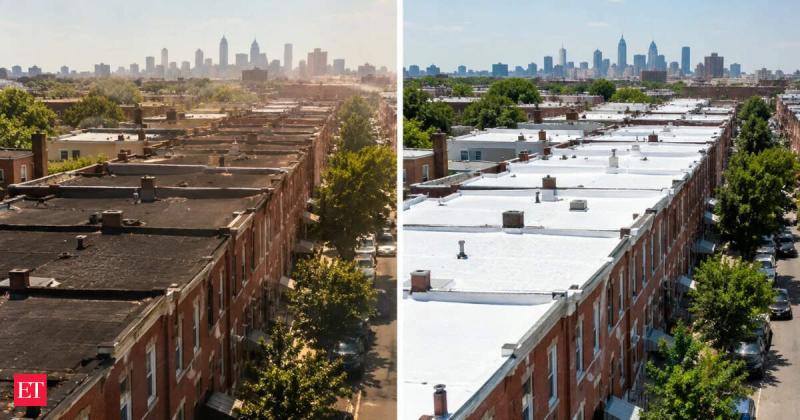


What climate crisis? Cool roofs have been studied and tested numerous times. The science is sound, the math is solid, and the economics are favorable. Why is there such reluctance to deploy a cheap, effective means of addressing climate change?
 S E E D E D C O N T E N T
Row Houses are upgraded in North and West Philadelphia in a not-so-sleek way: roofs were painted white between 2001 and 2003. No solar panels, no smart thermostats, and no social media-worthy retrofit. Just paint. They were near-embarrassingly successful for such a low-tech thing. The pilot, run by Philadelphia's Energy Coordinating Agency (ECA), covered roughly 340 low-income seniors' homes and found that peak indoor air temperatures in un-air-conditioned top-floor bedrooms fell by approximately 2°F, while roof/ceiling surface temperatures, which absorb sunlight directly, dropped a larger 4–5°F. A 2009 Inside Climate News article later reported on these earlier ECA pilot findings; it was not the original source of the data. The average annual power usage for air-conditioning in each home dropped by about 560 kilowatt-hours.
If you don't understand what this actually means, then consider the following: this amount is comparable to the amount of energy an average window air conditioner could consume over the course of an entire summer in the U.S. For the senior population with low incomes living in houses where the temperature is very high during the month of July, such savings are not insignificant. So why, in 2026, do we keep acting like cool roofs are an innovation and not just another cheap solution staring us right in the face?
A dark roof absorbs the sun's rays and converts them into heat. That sunlight is bounced back up to the sky by a white or reflective roof. That's it; that's all the secret there is. The higher a roof's “albedo” (the scientific word for reflecting sunlight), the cooler it will remain, and the cooler the building below will be.
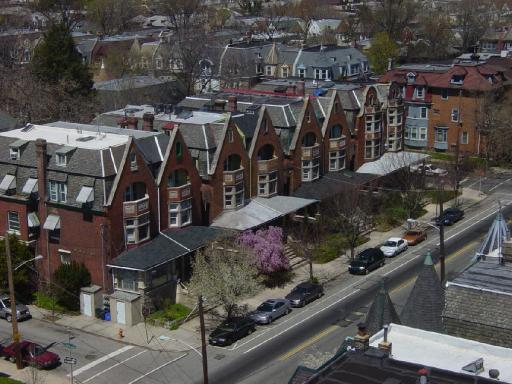
Row Houses in West Philadelphia. Image credits: Wikimedia Commons
The U.S. Environmental Protection Agency (EPA) estimates that cool roofs can moderate interior temperatures significantly even in buildings without air-conditioning, and can decrease the heat load of a building in the first place, thereby reducing the stress on the air-conditioning system, saving on electricity costs and the carbon footprint attributed to cooling. All this is without new technology. The roof just needs to be painted white or be reflective.
This isn't just a Philly story
A significant portion of us are renters, first-time homeowners, or individuals who are monitoring each and every item on their utility bills. Energy costs are not an even distribution of pain. According to the American Council for an Energy-Efficient Economy (ACEEE), roughly one-quarter of low-income U.S. households spend more than 15 percent of their income on energy, well above the 6 percent threshold ACEEE and other researchers generally use to define a "high energy burden." That means a substantial share of low-income households are carrying a burden more than double what's considered high, and disproportionately in rental units and older housing stock that hasn't been upgraded. It's a bill-reduction method that's a fraction of the price of a new HVAC system, and it's a method that's utilized by the people who need it the most.
The bigger climate math
This is not just a marketing claim from paint companies. Decades of studies at the Lawrence Berkeley National Laboratory on urban heat, which influenced cool roof policy in the United States, argued that the climate math scales radically. According to the 2008 Lawrence Berkeley National Laboratory publication, air-conditioning demand can be reduced, and a cooler urban climate can be promoted by switching roofs and pavements around the world to reflective, light-colored surfaces that would remove the CO2 equivalent of the emissions of more than a decade of all the cars on the planet.
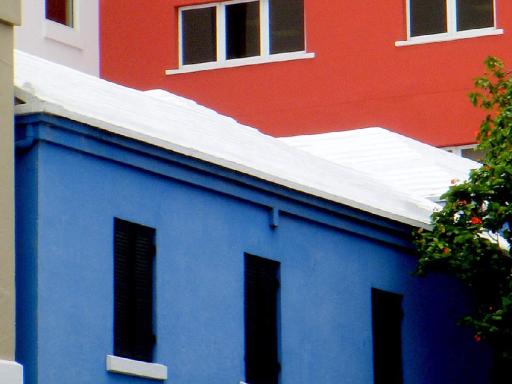
A house with a white roof. Image credits: Wikimedia Commons
This is a bold statement and calls for some skepticism, as there are other factors to consider besides theories such as maintenance, climate zone, and building type in real-world adoption. Over time, however, white roofs become dirty and become less effective at reflecting heat, and, in extreme cold climates, the math changes. That aside, the evidence still points in the same direction: reflective roofs do work, and do a particularly effective job of it in the hot, sunny cities of America, which are becoming hotter.
Then why did Philadelphia's experiment sort of disappear?
The ECA's Cool Homes pilot ran from 2001 to 2003, more than two decades ago. The data was solid. The cost was low. But cool roofs still aren't standard in most building codes outside places like California and, more recently, Philadelphia itself, which adopted a cool-roof requirement for new construction in 2010. For most of the past twenty-plus years, we've chased flashier climate technologies while a can of reflective paint sat there, quietly proven, and largely ignored. Maybe the real lesson of the Philadelphia story isn't about roofs at all. It's about how boring, low-cost climate fixes get crowded out by shinier ones, while the people who'd benefit most keep paying for it, literally, on their electric bills.
Be a good human. Grossly derogatory comments, blatantly inflammatory comments, excessive trolling, mean-spirited taunting and insults, scamming, spamming, and off topic comments may be removed in compliance with the site's Terms of Service and the Code of Conduct. The moderators have the final word.

Tags
Who is online
93 visitors
There isn't a single high-tech, high-cost alternative that can stop global warming. The effort requires deploying methods and technology that work together. So, why the reluctance to adopt cool roofs? Isn't there enough profit in it? Apparently someone needs to patent a high-tech, voodoo, reflective coating before cool roofs can receive serious consideration.
I have found out, at great expense, that lighter colored shingles isn't the way to go. The sun doesn't get them hot enough to melt the tar adhesive between layers to glue them together. Lost quite a few new shingles to the wind.
BTW, we can't stop the warming anyways, because we aren't the cause. You know my stance on this and I have yet to be proven wrong. AI gave a good fight but eventually conceded, I then asked if it would now use what I had as part of the data base going forward. Nope, I would have to have it peer reviewed and there is no one out there that will review something that removes man and CO2 as the cause for the warming.
Won't be back until Monday.