
What Does Home-Field Advantage Mean in a Stadium Without Fans?

By: Jason Gay (WSJ)


 S E E D E D C O N T E N T
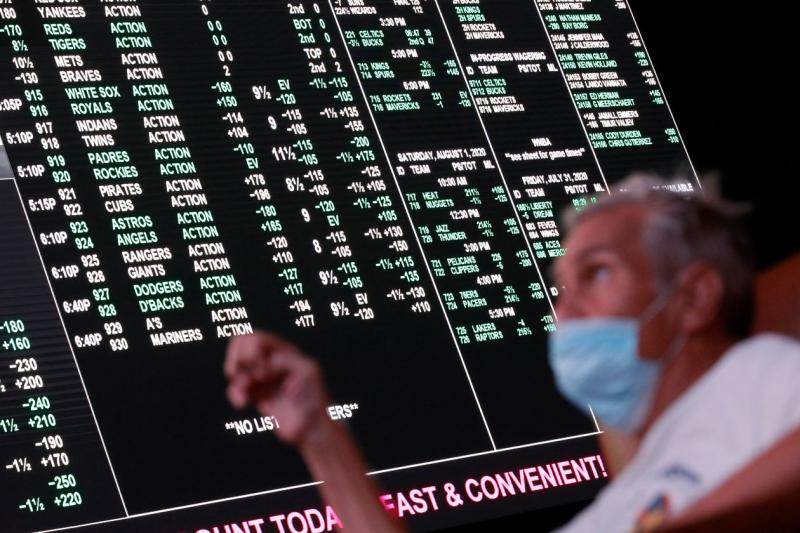
Johnny Avello wakes up in Las Vegas around 6 a.m.—no alarm needed—and the first thing he does is pour a cup of coffee with a little cream, and check his email, specifically the email from his employer, DraftKings , which tells him how the daily sports fantasy/betting company did the prior night: which contests had the most action, what was wagered, and which players wagered the most.
“The numbers are pretty mind-boggling,” says the 67-year-old Avello, DraftKings’ director of Race & Sports, and a veteran of the sports oddsmaking business.
It’s a long way from last spring, when sports shut down completely in North America and much of the world, and Avello and his colleagues suddenly had to familiarize themselves with stray active leagues in foreign markets, and quirky events like Nascar iRacing simulation races—literally, pro drivers racing each other in video format.
Over at the sports book at William Hill , trading director Nick Bogdanovich, deprived of reliables like March Madness and Major League Baseball, dove into sumo wrestling, Nicaraguan and Burundian soccer, and darts.
“We did as much homework as possible,” Bogdanovich says. “We gave it the good old college try.” (For darts, they had the help of colleagues in Leeds, England.)
“Without a doubt, the greatest phenomenon was Russian table tennis,” says Jason Scott, BetMGM’s vice president of trading. He marvels at the memory: “The amount of money being bet on it was remarkable. Some days, they were playing tournaments with the same group of 16 players. They might play five times a day, and even play the same player two or three times a day.”
“At one point, Russian table tennis was 40% of our handle,” Scott says, referring to the industry term for money bet by customers.
Even for veteran pros in a seen-it-all trade like oddsmaking, the spring sports shutdown was uncharted territory. Expertise was hard to come by. A lot of action wasn’t on television. Nobody had a clue when sports as we knew it were going to come back.
Avello found it strangely…fun.
“One thing you have to remember about oddsmakers—oddsmakers can make odds on everything,” Avello says. “All they need is a little bit of data and information.”
The rest of sports, of course, came back—in a huge way, and almost all at once. By September, there were days in which it was possible to place a bet on basketball, hockey, baseball, football, soccer, and more. The Kentucky Derby was run. The U.S. Open happened in both golf and tennis. Crucial, stabilizing mother ships like NFL and college football returned.
Betting surged, especially online in states with legalized sports betting.
“It hasn’t missed a beat since all these sports came back,” says Bogdanovich. “People are not scared off by anything Covid or economy-related. They are betting sports and betting it strong.”
Still, this environment has also been an adjustment for the oddsmakers, not without its own brand of craziness. Have you been following the college football schedule? Have you watched your favorite NFL player get sidelined with a positive—or a false positive? Covid-19 protocols can mean that a key player, or players, may suddenly get yanked from a roster—or force a game to get called off entirely.
Is it chaos?
“You used the right word, ‘chaos,’ ” says Scott. “There’s no doubt it’s the biggest challenge.” When I spoke to Scott in late October, he’d pulled several games off the board, removing them from betting.
Meanwhile, games are being played without fans, or very few fans, altering accepted wisdom about home-field advantage. What did home field possibly mean in 2020? Was there any serious advantage to a three-quarters-empty stadium with pumped in noise and a scattering of clapping?
“Fans are a huge part of home field,” says Bogdanovich. “That’s just the way it is. The intimidation factor of the other team and the refs getting a little swayed once in a while by the noise…that’s huge. It’s anyone’s guess what these home fields are worth now. It really is.”
Avello believes that home-field advantage is not a static benefit, even in normal circumstances—some teams have rowdier crowds than others—but generally, he feels that home advantage in a stadium with no fans can be cut in half. Scott says a line for a football game might come down by a couple of points—for example, from 3 1/2 points to 1 1/2 points, though as the season goes on, he expects the weather to become more of a factor.
The oddsmakers were fascinated by the NBA bubble, which was a bit of a riddle, at least at first. Every club was playing outside its normal environment—but they were also staying in one place, and weren’t ground down by constant travel. Consistency seemed to be comfort. Scoring went up, especially early on.
It’s an adjustment, all of it. As always, the only sure thing in sports is that there is no sure thing. Pandemic or not, no result can be counted on.
It’s why Johnny Avello prefers to stay calm. This is the job.
“I’m not freaking out at all,” he says. “I’m more relaxed than I’ve ever been.”

Tags
Who is online
186 visitors
In Baseball having the bottom of the inning and last at bat would mean something with or without the crowds.