
Exhibition honors photographer's lifetime dedication to Huangshan Mountain

By: By Yang Xiaoyu

 S E E D E D C O N T E N T

Exhibition honors photographer's lifetime dedication to Huangshan Mountain

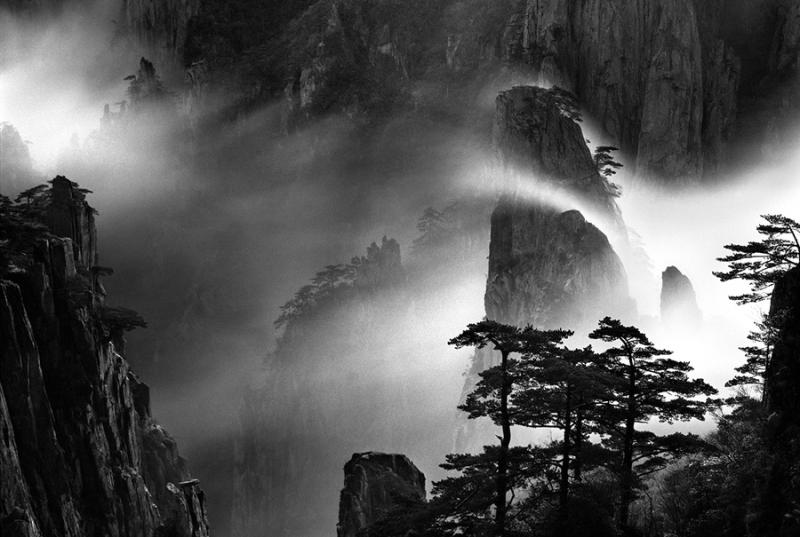
Wang Wusheng, Mt. Huangshan W50 , 1991. [All photos, including all those following, provided to chinadaily.com.cn]
Late photographer Wang Wusheng (1945-2018) is best known for his three-decade photographic exploration of Huangshan Mountain in East China's Anhui province.
A Life with the Mountain: Wang Wusheng's Vintage Photographs , a new exhibition that opened on Saturday at the Three Shadows Photography Art Centre in Beijing, brings together 60 silver gelatin prints from the artist's oeuvre, inviting viewers to experience the famed mountain through his lens.
Wang's stark black-and-white compositions of Huangshan — celebrated for its unique granite peaks, twisted pine trees, and seas of sweeping clouds — appear solemn, mysterious, and ethereal. To many Chinese viewers, they also readily evoke the millennia-old tradition of Chinese ink-wash landscape painting.

An installation view of Wang Wusheng’s photography exhibition.
Exhibition curator Wu Hung, a renowned Chinese-American art historian and critic, argues that Wang's lens-based practice continues the lineage of Chinese landscape art, in which Huangshan became a significant motif from the 17th century onward.
"Hongren (1610-1663), Mei Qing (1623-1697), and Shitao (1642-1707) imbued their paintings with personal experience, associating the Huangshan tradition with their individual styles," Wu writes.
The introduction of photography to China in the second half of the 19th century raised new conceptual questions about the "art of Huangshan". This long-standing artistic tradition reaches a contemporary culmination in Wang's alluring images, Wu notes.
Wang's mountain peaks are often densely dark — what many critics call "Vajra Black". In Wu's words, it's "a kind of velvet darkness that seems full of color".
Wang's images embody the same idea expressed by the Tang Dynasty (618-907) art historian Zhang Yanyuan in his Record of Famous Painters of All the Dynasties ( Lidai Minghua Ji ): that in a great painting "ink encompasses all the five colors" ( mo fen wu se ). Here, black-and-white photography takes the place of ink painting.

Wang Wusheng, Mt. Huangshan W37 , 1991.
"His dark mountain peaks are not static, two-dimensional silhouettes, but dynamic substances that interact with other natural phenomena — clouds and mist, wind and rain, light and shadow — in ceaseless movement," Wu observes.
Wang claimed that these images reflected his inner vision of the mountain and believed that "the art of the East essentially expresses the artist's mind ( xie yi )".
"Different cultural backgrounds, education, life experiences, personalities, and personal interests lead to different responses to the world," Wang once wrote. "Therefore, each person forms his or her own unique, subjective 'Huangshan Mountain'. The Huangshan I have tried to capture over the past 30 years is such a subjective entity in my own mind."
This does not mean his images are artificial inventions, Wu emphasizes. "To him, although a good photograph must express the artist's vision and personality, it should never violate the nature of photography as a means of spontaneous recording."

Visitors read about the life experiences of photographer Wang Wusheng at this solo exhibition in Beijing.
Wang's method of producing an ideal image required prolonged experimentation. From selecting a suitable negative to determining the best composition and tonal variation, creating a satisfactory image often takes several weeks or even months.
Born in Wuhu, Anhui province, roughly 180 kilometers from Huangshan, Wang first visited the mountain at 29 in 1974, a year after beginning his job as a photojournalist at Anhui Newsphoto and Pictorial . Captivated by its beauty, he returned to the mountain some 100 times throughout his life, even while living abroad for three decades.
Wang moved to Japan in 1981, where he worked as a research fellow at the Japan Foundation and undertook further studies at the Art Institute of Nihon University and Tokyo University of the Arts. He relocated to the United States in 1990 and returned to China in 2010, settling in Shanghai.

Wang Wusheng, Mt. Huangshan W52 , 1979.
From the 1990s onward, Wang gained international acclaim. In 1994, his signature piece Mount Huangshan became the first photographic work acquired by the National Art Museum of China. His photographs were later shown at leading institutions, including the Shanghai Art Museum, Tokyo Photographic Art Museum, and Kunsthalle Krems-Stein in Austria.
In 1998, he held a solo exhibition, Himmelsberge ( Celestial Mountains ), at the Kunsthistorisches Museum in Vienna. This was the museum's first exhibition devoted to photography and its first solo show of a living artist. In 2005, his photographs appeared alongside Japanese artist Kaii Higashiyama's paintings in Spirit of the East , a two-person exhibition in the Visitors' Lobby at the United Nations Headquarters to commemorate the UN's 60th anniversary.
A Life with the Mountain: Wang Wusheng's Vintage Photographs is co-presented by the Three Shadows +3 Gallery and runs until Nov 8.

A Life with the Mountain: Wang Wusheng’s Vintage Photographs , is on view at the Three Shadows Photography Art Centre in Beijing until Nov 8, 2026.
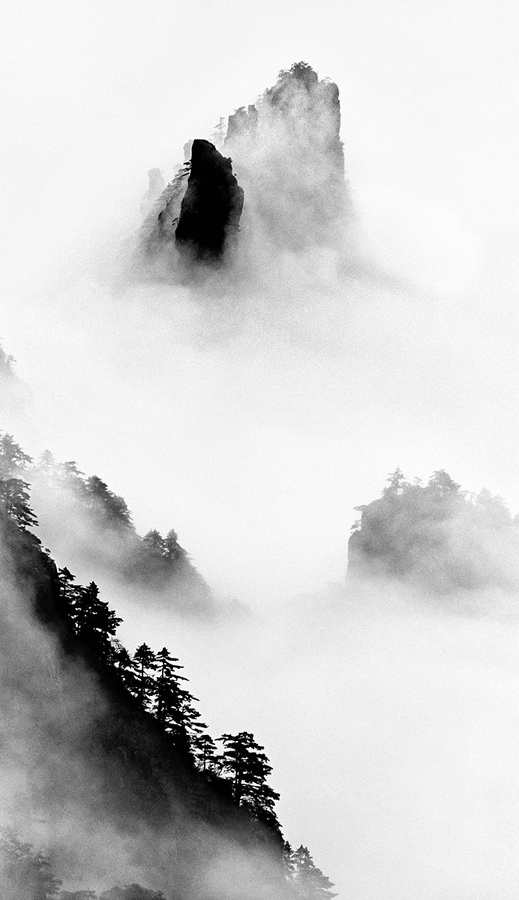
Wang Wusheng, Mt. Huangshan W01 , 1984.
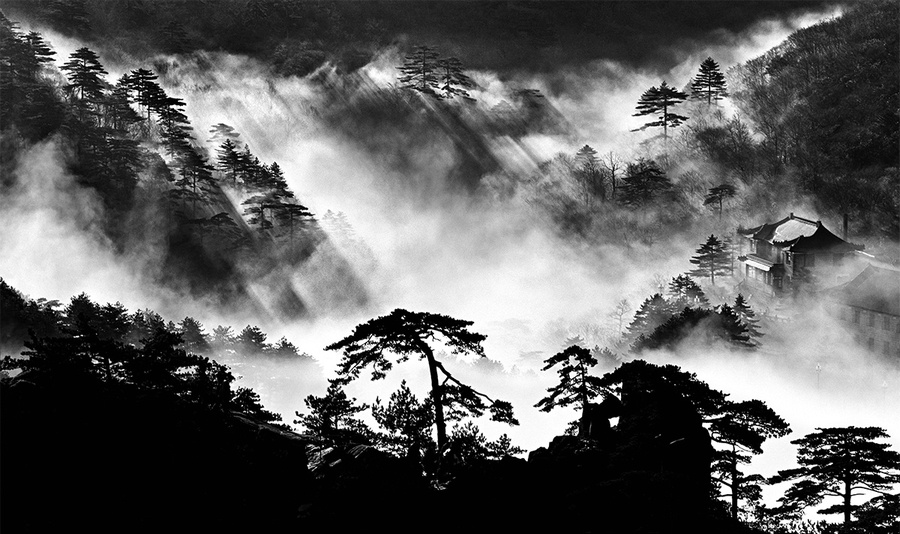
Wang Wusheng, Mt. Huangshan W49 , 1984
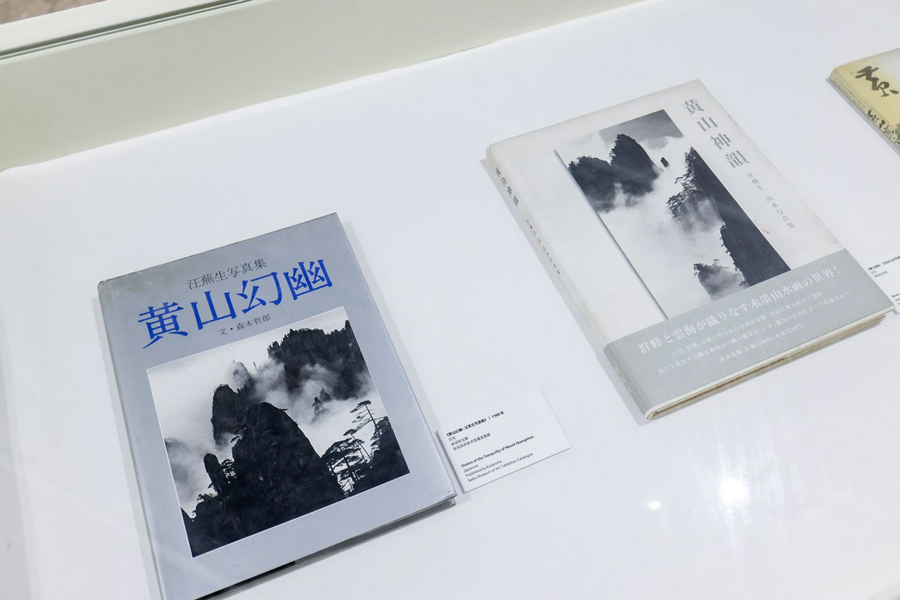
Photography books by Wang Wusheng.
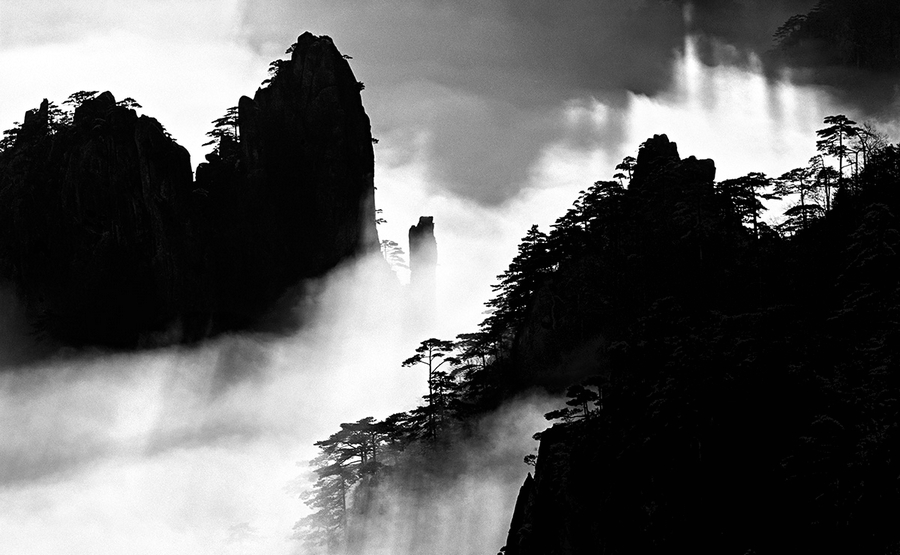
Wang Wusheng, Mt. Huangshan W02 , 1984.
The administrator of this group reserves the right, along with the site moderators, to moderate all and any postings to this group, including the right to enforce the ToS, the CoC, and also including anything that the administrator deems within his sole discretion to be offensive, including and not limited to off topic or 'no value' comments, with the power to delete in exercising those rights.
It would be best, therefore, to be civil in posting on this group.
By now it should be well known that I am unable to open certain sources, videos and pictures. If I cannot, I will ask that they be described and explained. If the poster refuses to comply, their comment will be deleted. Instagrams are banned.

Tags
Who is online
87 visitors
B&W photography cam add so much drama to photos.