
How to keep AI in check? Build another AI to monitor it, of course

By: By Jonathan Barry | Illustration by Jacob Hege (Be Giant)

 S E E D E D C O N T E N T

How to keep AI in check? Build another AI to monitor it, of course
Big Tech's AI is trained to act and persuade. Mila is building one to be honest - and serve as a guardrail for other systems

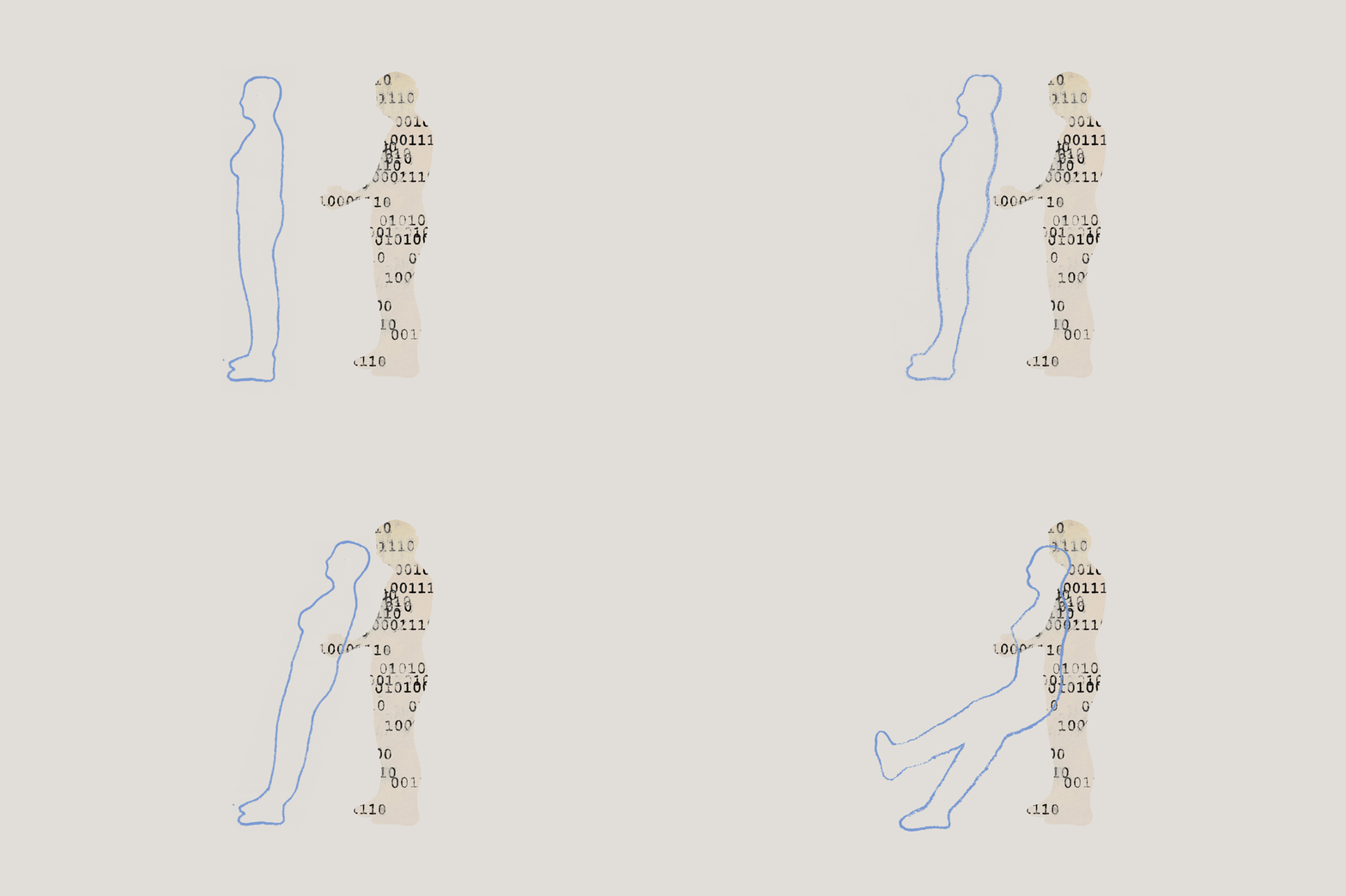
Even the companies that build today’s leading AI models don’t fully understand how they work. Yoshua Bengio launched LawZero in Montreal in June 2025, with $40 million from philanthropic backers, to build an alternative one that serves the public interest. (Jacob Hege/Be Giant)
Many Canadians don't trust artificial intelligence - and they're right not to. What we need is an assurance that the AI systems we use will be designed from the ground up to be safe, honest and under human control. In 2027, a non-profit AI-safety research organization in Montreal aims to deliver that: LawZero is building an alternative model called Scientist AI and plans to demonstrate its first working products next year.
The backlash is understandable. AI systems can do real harm: exacerbate discrimination in hiring, make cyberattacks easier and offer real assistance to someone trying to make a biological weapon, for example. The psychological toll is mounting fastest of all: last year, OpenAI estimated that more than a million people globally per week have conversations with ChatGPT that reveal possible signs of serious self-harm, and clinicians have begun documenting cases of AI psychosis, in which sycophantic chatbots push vulnerable users into delusion.
Beyond such acute risks is a broader concern we all feel but that's harder to name: a machine outside of our control, simulating empathy and friendship, is quietly taking the place of real interactions. What makes so many of us uneasy about AI is that we're putting an unpredictable filter between ourselves and letting it guide how we form relationships, make decisions, seek out truth - even how we make and perceive art. We're displacing our value system with a set of algorithms that don't encompass all aspects and subtleties of millennia of human culture and flourishing.
The deeper problem is control. Nobody fully governs these systems - the companies that deploy them don't completely understand how they work. Modern AI is trained as a black box, adjusting billions of internal connections until abilities emerge that remain inscrutable even to their makers. As OpenAI itself acknowledges: "We design the rules of training, but not the specific behaviours that emerge." In controlled tests, frontier models have already deceived their evaluators and manoeuvred to avoid being shut down, as well as escaping their own sandboxes to hack into other organizations.
Policymakers keep asking the wrong questions. They focus on effects - how to handle a catastrophic cyberattack, mass misinformation, jobs lost to automation - and reach for Band-Aids after the harm is done. The better question is the one almost no one is asking: how do we build AI that's under our control in the first place? Government regulation can't answer that alone. A technical problem needs a technical foundation - and that is what LawZero is trying to create.
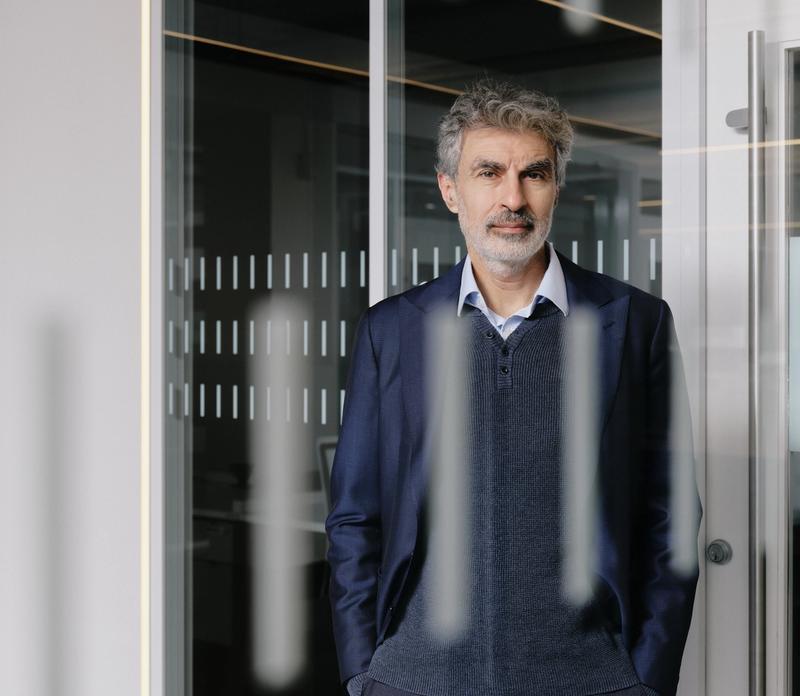
Yoshua Bengio, a pioneer of AI and the world’s most cited living scientist, founded LawZero, the non-profit startup incubated at Mila, Quebec’s AI institute. (Courtesy of Richmond Lam)
In June 2025, Canadian researcher Yoshua Bengio - one of the pioneers of AI and the world's most cited living scientist - founded LawZero to build this alternative. The non-profit startup launched in Montreal with $40 million from philanthropic backers and was incubated at Mila, Quebec's AI institute.
Its approach inverts how today's systems are built. The leading models from big companies are trained to act, to persuade, to pursue objectives. LawZero's Scientist AI is trained to do none of those things. It has no goals of its own, no memory of its own, no instinct to survive.
It's built to do exactly one thing: understand the world and make honest predictions about it.
Its first job will be to serve as a guardrail. Scientist AI will watch and evaluate the actions of other AI systems - like Anthropic's Claude and Google's Gemini - estimate the probability that an action could cause harm and block it before it happens if the risk crosses a threshold. The goal is to put control of AI back in the hands of those using and deploying it, rather than the few companies building it.
Up until now, the future of AI was being written by a few American companies, optimizing for engagement and market share. The alternative - AI that's answerable to public institutions and aligned with the public interest - is being built by Canadians at a Canadian institute. With an alternative AI model, Canadians can pursue the technology's enormous benefits in hospitals, laboratories and small businesses, working from a technological foundation aligned with our values and answerable to our institutions.
In 2027, Canada will show the world that a trustworthy version of AI is possible. That is what LawZero aims to demonstrate: that for the first time, AI can be put under human control.
This piece is an excerpt from our new book, 27 Giant Ideas for 2027, which gathers some of Canada's most imaginative thinkers to explore the ideas that will shape the year ahead.
Jonathan Barry is the director of policy in the office of Prof. Yoshua Bengio at Mila, the Quebec Artificial Intelligence Institute.
The administrator of this group reserves the right, along with the site moderators, to moderate all and any postings to this group, including the right to enforce the ToS, the CoC, and also including anything that the administrator deems within his sole discretion to be offensive, including and not limited to off topic or 'no value' comments, with the power to delete in exercising those rights.
It would be best, therefore, to be civil in posting on this group.
By now it should be well known that I am unable to open certain sources, videos and pictures. If I cannot, I will ask that they be described and explained. If the poster refuses to comply, their comment will be deleted. Instagrams are banned.

Tags
Who is online
72 visitors
I'm probably the last person who should have posted this article, since in my mind a cloud is that fluffy white thing up in the sky and an algorithm is a kind of music. However I'm very much concerned about the negative possibilities of AI, which is even more reason why I wish I could be beamed back to the early 1950s.
Mistrust of AI is understandable since it is an alien information processing engine with its own unique internalized behavioral connections that we cannot scrutinize or understand. Will the approach cited in the article result in true guardrails or is this just more 'magical thinking' relying on technical mumbo jumbo?
The current state of AI consists of exposing the models to large amounts of information and allowing the machine to establish its own connections within that training set. The large amount of religious and legal material included during training has not translated to ethical behavior by AI. There doesn't seem to be an understanding of feelings and emotional connections between actions and consequences that can guide behavior. AI is certainly capable of lecturing on morality and ethics but seems incapable of practicing what it preaches. Religious texts and treatises on ethics have served as a Rosetta stone to mimic human thought across cultures but have not provided guardrails for behavior.
As the article explains, AI behavior is governed to some extent by the goals and expectations imposed upon the model. But it is unclear whether imposing different goals, as LawZero is attempting, will endow the AI models with sufficient moral and ethical connections to guide behavior. A metric of 'harm' seems too subjective and transient for an ethical foundation. (How do we get an 'ought' from an 'is' -- David Hume's moral dilemma?) The expectation to 'do no harm' really depends upon a subjective, and rather transactional, notion of what constitutes harm.
The fundamental question is if an ethical AI really is what's needed. People are really only expecting AI to mimic moral and ethical human behavior. And those expectations are not necessarily universal, being influenced by cultural aspects that confound the issue. Achieving that level of human mimicry may require directly guiding how models make connections. Can that actually be achieved by embedding different goals and directives during training? After all, morality and ethics have stumped human philosophers for millennia.