
Debate on Worker Wealth and Corporate Equity

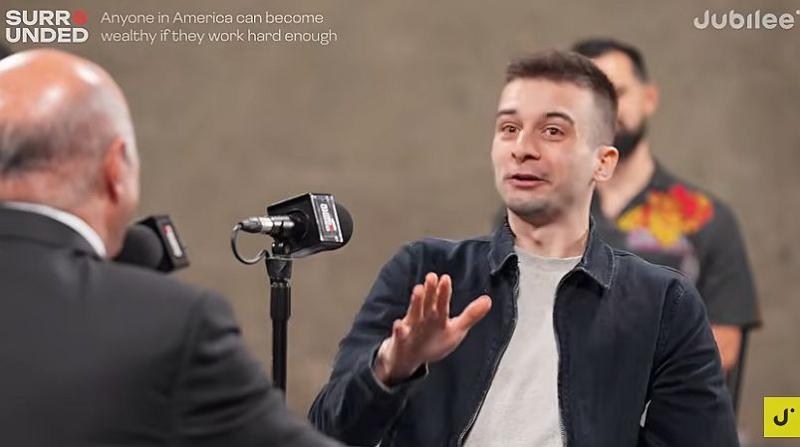


This is the YouTube video , start at 41:50.
 S E E D E D C O N T E N T
Debate on Worker Wealth and Corporate Equity
The transcript features a heated debate between a young economic advocate and Kevin O’Leary (Mr. Wonderful) about whether American workers should share more directly in corporate wealth.
1. The Central Argument
The younger speaker argues that workers generate corporate value but receive disproportionately little of the wealth they create, while investors and executives capture most of the financial benefits.
He proposes:
-
Giving employees company stock or equity compensation.
-
Sharing corporate profits and dividends with workers.
-
Expanding opportunities for ordinary workers to accumulate investments.
-
Creating alternative financing systems that reduce dependence on wealthy investors.
2. Kevin O’Leary’s Position
O’Leary argues that:
-
Investors risk their capital and deserve returns.
-
Businesses must balance obligations to employees, investors, and lenders.
-
Workers can improve their financial situations through saving and investing.
-
Raising wages excessively can make businesses economically unsustainable.
-
Not every company can practically distribute equity.
3. The Amazon and Starbucks Examples
The younger speaker highlights disparities:
-
Starbucks reportedly distributed approximately $2 billion in dividends to shareholders while hourly workers received no comparable ownership benefit.
-
Amazon software engineers can receive substantial equity compensation, while warehouse workers generally do not receive equivalent stock compensation.
-
Warehouse workers may perform physically demanding jobs without accumulating ownership in the companies they help build.
4. Historical and Economic Arguments
The speaker references:
-
General Motors' historical profit-sharing arrangements.
-
The prosperity associated with mid-20th-century American working-class employment.
-
Mark Cuban's support for providing equity to employees.
-
The possibility of workers becoming millionaires through company ownership, as illustrated by certain SpaceX employees.
O'Leary counters that businesses must remain financially viable and that increased compensation requirements can create economic difficulties.
5. The Underlying Disagreement
The fundamental disagreement is about who should receive the wealth generated by businesses.
|
Kevin O'Leary |
Younger Advocate |
|---|---|
|
Investors deserve returns for risking capital. |
Workers deserve ownership for creating value. |
|
Employees should save and invest independently. |
Companies should directly provide workers equity. |
|
Business profitability requires financial discipline. |
Corporate wealth distribution is structurally unfair. |
|
Existing investment systems are necessary. |
Alternative investment and ownership systems are needed. |
Bottom Line
The debate is not simply about increasing wages. It is about economic ownership.
The younger speaker's central message is that workers should not merely earn wages while investors accumulate wealth through rising company valuations. Employees should also participate in the ownership, profits, and long-term financial growth of the businesses they help build.
O'Leary defends the traditional investor-driven model, while his opponent argues for a more broadly shared system of corporate ownership and wealth creation.
Tags
Who is online
122 visitors
In my opinion this is the argument that is beginning , otherwise known as economic populism.