
TWOFER: Politics as Usual



One party tries to think ahead.
The other thinks behind.


The difference is significant.
The Democrats are working to make tomorrow's operations smoother.
The Republicans are working to make tomorrow
not work at all.
A new challenge for transition planners: Building a government over Zoom
The coronavirus pandemic has already complicated Joe Biden's preparations for a possible transfer of power
High-level meetings interrupted by crying children. A presidential nominee taking diligent notes as he receives a virtual policy briefing at home. Advisers who have never met in person working to put together a federal government.
This is what presidential transition planning looks like in the age of Zoom.
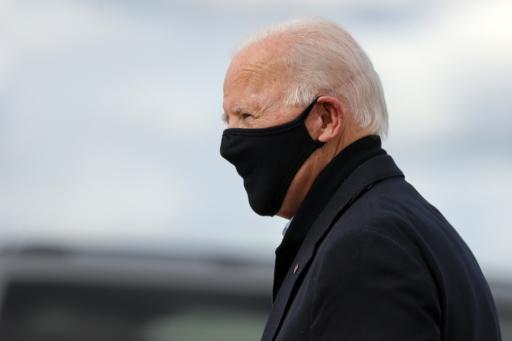
Democratic presidential nominee Joe Biden walks across the tarmac after arriving in Grand Rapids, Mich.
Chip Somodevilla/Getty Images
Scattered across the country and working from home, Biden’s transition team has been quietly preparing for months for a possible transfer of power — hiring staff and advisers, mapping out policy priorities and implementation plans, and compiling lists of names for some of the more than 4,000 political positions they will get to fill in the federal bureaucracy. But the team has yet to set foot in the office space carved out for them in the Commerce Department, and says they have no plans to do so with the coronavirus pandemic still rampant.
The Trump administration's transition team, which has also begun preparing for a potential transfer of power should they lose in November, did not respond to multiple inquiries from POLITICO on how they are navigating the remote work environment.
Forming a new government is hard enough in the best of circumstances. During a global pandemic, when it’s potentially lethal for staffers to huddle in government offices to vet candidates and plot out an agenda for the first 100 days of the new administration, it would present an unprecedented challenge for Biden should he win in November.
Transition team veterans say the amount of planning that gets done before Inauguration Day can determine how much a president accomplishes across his or her entire term, and especially during the first 100 days in office. The already tight window of roughly 70 days between the election and inauguration could also be cut shorter this year if the results are not final for days — or even weeks — after polls close on Nov. 3, as some analysts anticipate.
The remote setup has already upended one defining characteristic of past transitions, in which eager would-be appointees angle for a position by tracking down transition officials around town or hanging out in coffee shops near the transition offices.
One aide for a previous transition team said he would often run into people downtown who were interested in getting involved.
“If I went to a Hill meeting or a social gathering on Capitol Hill, I would see a lot of people there, and they’d say, ‘Hey, you’re working on the transition — what’s it like? Can we grab coffee? Here’s my résumé. A friend of mine is looking to work in Commerce or in Treasury.’ Something like that,” the aide said. “You’d see that a lot.”
That sort of inside-the-Beltway networking is now a lot harder to come by.
Biden transition team members, meanwhile, are already facing the same challenges as much of the country in the pandemic era — juggling work and family while schools are closed, trying to build team camaraderie online, and dealing with the fatigue that comes from back-to-back video calls.
Some of the starkest logistical challenges, however, will come after the election, should Biden win, when transition teams typically balloon in size. Members of the team will have to go in person to secure rooms in government buildings to review sensitive national security information — a situation where it's difficult to maintain social distance, and one that can't be replicated remotely.
"You're not doing classified briefings on Zoom," said John Podesta, who helped lead transition efforts for both Barack Obama and Hillary Clinton. Speaking at an event Friday hosted by the Center for Presidential Transition at the Partnership for Public Service, Podesta added, "That gives a whole other layer and dimension of difficulty to operate in a classified environment when homes haven't been built for that."
In the past, hundreds of transition officials have also begun visiting federal agencies and meeting with employees as soon as a few days after the election. But those so-called "beachhead teams" will have to be re-imagined, as vast swathes of the federal government continue working remotely.
“It will be hard to develop a relationship and trust with people over phone or Zoom,” warned one adviser to Biden, who has assisted on multiple previous presidential transitions. “It really underscores the need to have people in the transition who have already been in the buildings and have preexisting relationships with the career people — otherwise it will be less productive a process.”
Similar difficulties could arise as the team moves through the vetting process for political appointees and starts to conduct interviews.
“When you’re trying to evaluate personnel, there’s no substitute for sitting across the table from somebody,” said Chris Lu, executive director of Barack Obama’s 2008 transition. He noted, however, that the Biden team already has experience hiring staff during the pandemic, having recently been through it during the vice presidential selection process.
Others worry about the team’s ability to learn how to work together in the few short months of the transition if people have to remain socially distant.
Robert Rizzi, an attorney who represented people in both parties navigating the appointment process during past transitions, cited the Obama team’s 2008 office in downtown D.C. helping shape the culture of the administration to come.
“They were all together in one building. There were no corner offices. Everyone was in the same modest space with government furniture and their names on yellow sticky notes on their door — even Rahm Emanuel,” he recalled. “They were all walking around the halls talking to each other just like a freshman dorm. It was wonderful. So the unity or collegiality that comes from 70-some days in the trenches together — that won’t be as intense now.”
Rizzi also noted that the remote setup opens up opportunities for information to slip out — either intentionally or accidentally.
“I worry a little bit about communication security,” he said. “Anytime you have stuff uploaded online or sent around by email, there’s always a risk that someone won’t be careful — though I think people are much more cautious now after the Wikileaks scandal.”
And with everyone stuck at home right now, digital security is not the only concern.
“If there are 10 people on a Zoom call, and just one of them lives in an apartment in Adams Morgan where their roommate can listen in, that’s not good,” Rizzi noted, referring to a D.C. neighborhood popular with 20-something staffers.
A Biden transition official said the team is working with the General Services Administration and other partners "to ensure transition staff have access to a secure IT environment utilizing best-in-class practices."
Despite the logistical challenges, people working on the current transition and those who have worked on past teams say being forced to go remote also has major advantages — allowing people to participate no matter where they live, for example, and shifting away from a culture where well-connected people who go to the right parties have an edge in getting hired in the new administration.
“You want to find the most qualified people,” said Neera Tanden, president of the Center for American Progress and co-chair of Hillary Clinton’s transition team in 2016. “Not people who are already in D.C. and who know somebody and happen to be in the right place at the right time.”
Those involved in current transition planning and those involved in past transitions say Biden’s team has several advantages that will mitigate the challenges ahead. The former vice president and his closest advisers have decades of government experience in Washington. Technology has evolved enough to allow for staffers to video-conference, sign documents and research potential nominees from their couches. And, perhaps most crucially, the pandemic began more than six months ago, giving everyone time to adjust to working from home.
"Like many organizations around the country, the Biden transition team will continue to do our work remotely,” a transition official told POLITICO. “Our team is following the direction of public health experts and medical professionals to develop a plan to keep our staff and their families safe.”
For now, transition team staffers and advisers have settled into remote routines: long days stacked with video calls, which give team members a peek inside each other’s homes. Some advisers see a benefit to the virtual policy briefings, in which Biden sometimes participates from home.
“He’s taking notes, and then he glares at you, and he asks tough questions,” one person close to the transition said of the former vice president. “It’s great.”
And as with any remote work set-up, calls have been peppered at times with various family interruptions.
“People will think they’re in a secluded room in their house, and then their kid will run right in and say, ‘Get off the TV!’ and they’ll say, ‘I’ll be there in a minute’ and the kid will say, ‘No, now!’ or ‘You don’t care about me!’ or something really painful,” the transition adviser said.
“But Biden is a very family-friendly guy, and everyone’s very understanding,” he continued. “We all get that everyone is doing their best.”
Republicans gripped by dread as multiple crises swirl
The presidency, control of the Senate and even a quick confirmation of Amy Coney Barrett are all in doubt less than a month from the election
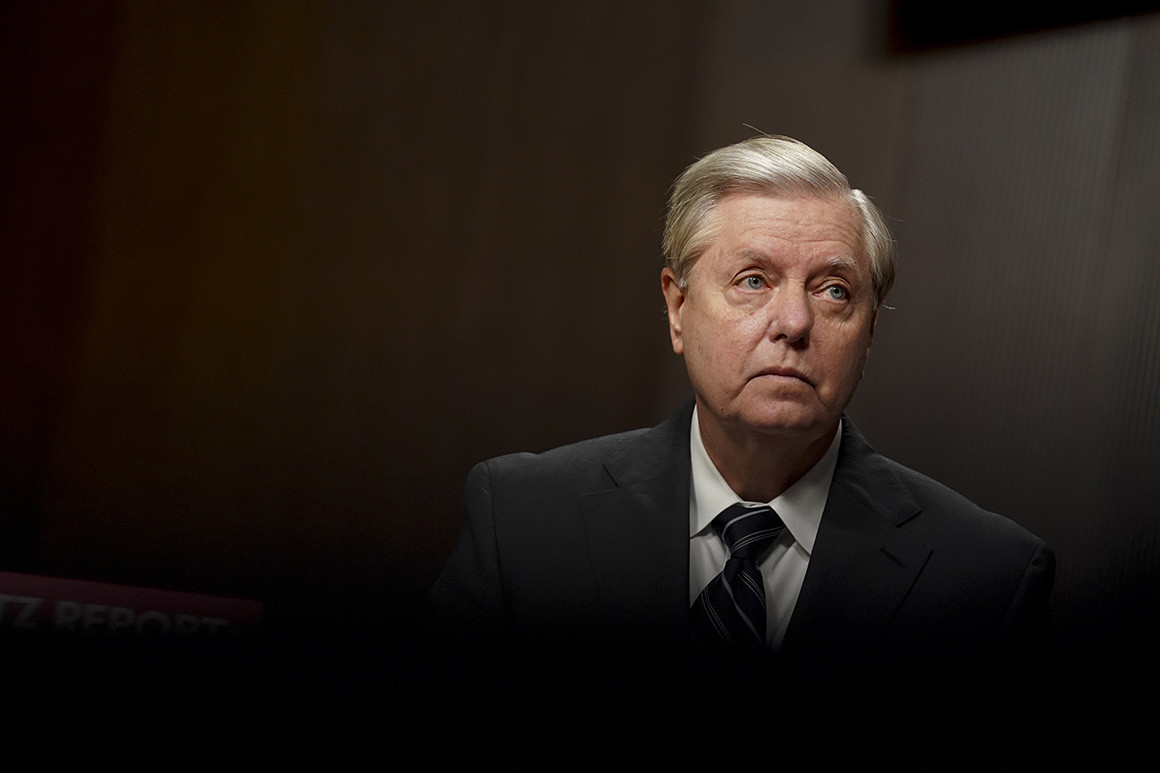
On Sunday evening Sen. Lindsey Graham , like many Republicans in Washington, was simultaneously monitoring three political crises, all of which were made worse by the spread of coronavirus infections through the upper echelons of the Republican Party.
First there was the president. His real condition was as much of a mystery to Graham as to everyone else. Graham said he hadn’t talked to Trump since Friday after the president’s positive Covid-19 test came back — “he was in good spirits” — but that he had just checked in with Jared Kushner earlier in the day to get an update.
Then there was the Supreme Court. The virus has forced six Republican senators — three who have tested positive for covid — into quarantine for at least two weeks. Two of them, Thom Tillis and Mike Lee, are on the Senate Judiciary Committee, which Graham chairs. His plans to push through the nomination of Amy Coney Barrett were now uncertain. Mitch McConnell said over the weekend that “our biggest enemy” in confirming Barrett before the election, and cementing a conservative 6-3 high court majority, is “the coronavirus, keeping everybody healthy and well and in place to do our job.”
Trump had immediately recognized how the “enemy” could derail the plan. On Friday Graham said that Trump asked him about Barrett and the senator assured him “we’re moving on.”
Finally, Graham was dealing with his own reelection. The South Carolina senator who famously declared in 2015 that Trump was a “complete idiot,” became a Trump loyalist over the last two years in part to fend off GOP primary challengers. It worked. He easily secured his party’s nomination only to be thrust into a competitive general election against a well-financed and gifted Democratic candidate, Jaime Harrison, who has made the race competitive . The two men had debated on Saturday night and Graham was still trying to make sense of how it went.
“Jaime is a smart guy,” Graham said. “He held his own and we’ll see what happens.”
Graham is still favored to win, but the fact that a Democrat is within striking distance of victory in South Carolina underscores how fragile the GOP’s Senate majority is.
As Graham spoke, Trump popped up on a TV screen in a slow-motion video that captured him in the rear seat of a black Suburban, on a ride to thank supporters gathered outside Walter Reed hospital.
“He’s had like five presidencies when you think about it,” Graham said. There was a “reset” after each one. He mentioned the Russia investigation, impeachment, the outbreak of the pandemic, and now Trump’s own infection. Technically, that’s four — one could easily add the recession — but the senator’s point is valid: Cataclysmic news events that might define a presidency come and go in the Trump era and it’s not always clear what will have lasting impact.
Trump’s Republican critics have long argued that he was a virus infecting their party that would eventually destroy it. Trump skeptics-turned-supporters, which could describe most Washington Republicans, made a different calculation: If the worst elements of Trump could be contained, then Republicans could keep a Democrat out of the White House, lock in a majority on the Supreme Court and protect their redoubt in the Senate. Even before Trump’s diagnosis, the cost of the deal with Trump was starting to look high. But the path to pushing through Barrett and retaining the Senate and even White House was hardly insurmountable.
That an actual virus has now infected Trump, his wife, his campaign manager, the head of the RNC, several advisers, and three senators — many of them at a celebration of Barrett’s nomination — thus throwing all three of the GOP’s 2020 goals into chaos, is a plot twist that would be rejected by any writer as just a little too on the nose.
“Trump has done more to derail the Barrett nomination than any Democrat,” said one dejected former senior White House official. “They are screwing themselves, that’s for sure.”
As grim as the exercise might be, Republicans across Washington are trying to game out the politics of the president’s illness. “I don’t know exactly how this plays,” Graham said. “I’m hoping the president recovers fully and quickly.” He noted that several world leaders have recovered from coronavirus without major interruptions and that Woodrow Wilson caught the Spanish Flu (though it was after his reelection).
The thinking among Republicans about the potential scenarios they might face over the next few weeks range from this could actually help Trump to we are on the cusp of party-wide catastrophe .
Graham, always an optimist, is in the former camp.
“This is a chance for him, quite frankly, to talk about the human side of this: ‘This is tough, this is hard, we’re gonna get through it,’” he said. “If he comes out of this thing a little bit humbled and focused on speeding up vaccines and trying to safely reopen the country, then I think he’ll probably be okay.”
In the videos and statements he released over the weekend, Trump already tried to recast his illness in terms akin to what Graham recommends.
“We’re going to beat this coronavirus, or whatever you want to call it, and we’re going to beat it soundly,” he said on Saturday. “If you look at the therapeutics, which I’m taking right now, some of them, and others are coming out soon that are frankly like miracles.”
Other Republicans are floating the idea that illness could unleash a wave of empathy for the president. “If he comes back to the White House and he’s seen as being fully recovered, 10 days from now or two weeks from now, he’s debating or he’s back on the road, I think it could be a positive,” said a Republican close to the president. “I think it could make him more human and he can relate to the 7 million people or so that have come down with it.”
A close cousin of the empathy argument is that defeating the virus could serve to underscore another alleged Trump trait: his virility. “I think the president’s strongest attribute has always been his strength,” said Christopher Ruddy, a friend of Trump and CEO of Newsmax. Even if people disagree with him here and there on issues, “they like that he’s strong and I think we see this during covid, he’s exhibiting strength.”
Other Republicans, used to seeing Trump slip out of hairy situations that would destroy most politicians — the Access Hollywood tape, impeachment — practically yawn at the turn of events. “We’ve seen that time after time,” said a White House official discussing whether this would blow over. “I don’t know if this would be any different but we’ll see.”
On the other side of the spectrum, many Republicans said the reckless way in which Trump travelled, held big rallies, and refused to consistently wear a mask or encourage his supporters to do so as catastrophic.
“Today feels like the election’s over,” said a veteran Republican strategist who, like others in the party, requested anonymity to speak candidly. “The polls have dropped all last week everywhere, it just feels like the end is near. And I don’t know what they can do to rehabilitate it until he gets better. There’s too many seniors who think he’s been irresponsible and this all started when he politicized the coronavirus. It started back in April and May, but it’s really peaking now.”
A senior Republican congressional official spoke for many by arguing that the handling of the issue over the weekend was “incredibly worrying,” but that it was too early to judge whether the issue further jeopardizes Trump’s reelection chances, the Barrett nomination or GOP control of the Senate.
“Do people show sympathy because he’s sick and is trying to battle through this?” he asked. “Or do they say, ‘You’re the president and if you had taken common sense precautions there’s no way you would have gotten sick.’ If it becomes, ‘You are reckless and this is the metaphor for how reckless he was,’ then we’re facing a tsunami. But it’s too early.”
The official added one caveat, a scenario that he believed would crush the GOP on Nov. 3.
“If the White House lied about the timeline and he went to events and was around people knowing he was covid-positive,” he said. “I think that is the single biggest thing that would resonate with regular people in terms of how irresponsible he was — if he put other people in danger.”
He added, “That could turn this into a death spiral.”
Tags
Who is online
131 visitors
It does?
Hillary Clinton -- target of Trump’s main 2016 campaign ‘lock her up!’ slogan—is wishing ‘the President and the First Lady a speedy recovery.’ Having compared Trump to Mussolini and Hitler barely two months ago, House Congressional Whip Jim Clyburn expressed wishes for Trump’s ‘speedy and complete recovery.’
Seemingly forgetting that Trump came to political prominence on a great wave of ‘birther’ nonsense, Obama tweeted a reminder that ‘we’re all Americans.’
Endlessly menaced and red-baited with threats by Trump, Vermont Senator Bernie Sanders joined the Democrat Party chorus for ‘a full and speedy recovery.’
Having stated a week earlier that Trump was indifferent to the lives of Americans and the worst president in history, announced that he is stopping all election advertisements criticizing Trump—an act that Trump and the Republicans, of course, do not reciprocate. This was followed with an appeal for national unity along the lines of Obama suggested.
You’d think that it was FDR or JFK who was lying in Walter Reed.
The ‘pitch’ for the chorus was toned by the New York Times’ lead Saturday editorial, ‘Get Well, Mr. President.’ It opined: ‘May President Trump and the first lady recover swiftly after testing positive for the coronavirus. For their sake—and the sake of the nation.’
Prior to his falling ill, the Times’ coverage focused on 1) Trump’s refusal to disavow fascists at the presidential debate and call for the neo-Nazi Proud Boys organization to ‘stand back and stand by;’ 2) his stated refusal to accept electoral defeat; 3) his efforts to ram through the nomination of Amy Coney Barrett to the Supreme Court to hear his cases challenging ballots; and 4) a massive tax return exposure showing years of Trump financial corruption and manipulation.
Were the journalistic likes of Mencken around they would say that the revelation of Woodward’s taped interviews leads to the conclusion that if ANYONE deserved this affliction, it would be Donald Trump. Instead, our cowardly ‘media’ can offer not a solitary word of truth. Yet not one says that any feeling of sympathy for Trump [or unmasked GOP pignitaries who crowded into the Rose Garden] is overwhelmed by the president’s personal and political responsibility for 210,000 COVID-19 deaths.
Today doesn’t feel like the election is over.
Today feels like the election is an utter fraud.
Why should the public agree to be retained as its political hostages?
Is your posit that the American people are political hostages to the election or to the media?
We have 3 weeks left of this shit.
Which article is "shit"? Why?
Sorry, Bob. I should have started with...
To which my original comment would apply... LOL!
OK, that makes sense.
Alternatively, decades of this is coming at us.
Once that 3 weeks of political election spin, baby spin is over - I'll have to hear all the whining by whichever side loses along with all the gloating from the winning side. I do hope the losing side has several Trumps on it, but no matter who it is their propagandists will be all the more shrill in their lamentations.