
Today's news in Donald Trump's ongoing trashing of America


A bouquet of the smelliest crap from the Trump Administration


Business leaders to Trump: Give it up!
Mnuchin to End Key Fed Emergency Programs, Limiting Biden
New Delays In Final Stage Of Census Could Foil Trump’s Plan To Rig It
‘This is not how the Constitution works’: Federal judge eviscerates Trump lawsuit
America is being subjected to a stress test – and Republicans are failing

Business leaders to Trump: Give it up!
Jamie Dimon and the Chamber of Commerce join the Biden transition team in ramping up the pressure on Trump and the White House to acknowledge the outcome of the election.
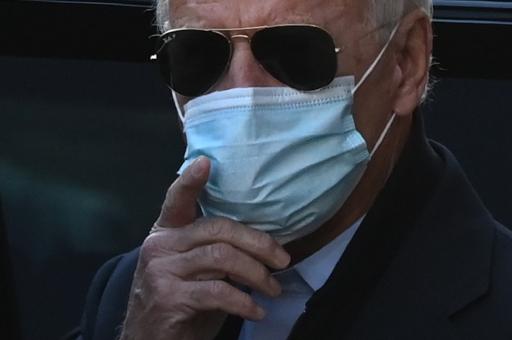
Joe Biden addresses the media after attending a roundtable in Delaware November 18.
JIM WATSON/AFP VIA GETTY IMAGES
But after nearly two weeks of this nonsense, these kinds of baby steps are no longer cutting it. The cost of dragging this out further is too high—the Biden transition is being delayed , and the GOP’s strategic silence is allowing Trump to erode his successor’s legitimacy and trust in the electoral process in the minds of his base. As Biden himself warned this week, describing the added complications Trump’s tantrum could have on the coronavirus vaccine rollout plans: “More people may die if we don’t coordinate.”
Using that message of national security and public health, Biden and the Democrats are pushing Republicans harder to acknowledge reality and for General Services Administrator Emily Murphy to sign the letter of ascertainment to allow his transition to begin in earnest. “At some point, we have to recognize defiance for what it is,” Gerry Connolly , a House Oversight subcommittee chairman who has urged Murphy to sign off on the results, told Politico. “We had an election. Joe Biden won.” Increasingly, business leaders, even some aligned with Trump, have been adding to the pressure, calling on the president and his allies to move on and allow the peaceful transition of power to go forward. “President-elect Biden and the team around him have a wealth of executive branch experience that should allow them to hit the ground running,” Tom Donohue , CEO of the United States Chamber of Commerce, told Axios Thursday. “While the Trump administration can continue litigating to confirm election outcomes, for the sake of Americans’ safety and well-being, it should not delay the transition a moment longer.”
“We need a peaceful transition,” JPMorgan Chase CEO Jamie Dimon said in an interview with Andrew Ross Sorkin Wednesday. “We had an election. We have a new president. You should support that whether you like it or not because it’s based on a system of faith and trust.”
There may be no groundswell large enough to sway Trump, but the Biden transition team is likely hoping the lobbying can at least get the machinery around him to start moving. There have been some tentative signs they’re budging: More Republican lawmakers, one way or another, have recognized Biden’s victory. Robert O’Brien , Trump’s national security adviser, has vowed a “very professional transition.” And CNN reported Wednesday that current and former Trump administration officials have “quietly” and informally reached out to the Biden team to offer their help, albeit not in a way that “would get us in trouble,” one of the current staffers said. “They know what we mean,” the official told the outlet, “and what we can-and-can’t do or say.”
But tip-toeing around Trump isn’t enough, and without a fuller and more public acknowledgement, the Biden transition team will continue to have its hands tied. “It requires more than former officials choosing to step forward and be helpful to ensure a smooth transition of power,” Biden transition adviser Kate Bedingfield told CNN. “GSA should follow the law and ascertain the results of the election so that Americans get a smooth and effective hand off between administrations.”
Mnuchin to End Key Fed Emergency Programs, Limiting Biden
The Treasury Department asked the Federal Reserve to return unused funds, downsizing the next secretary’s ability to restart the economic support.
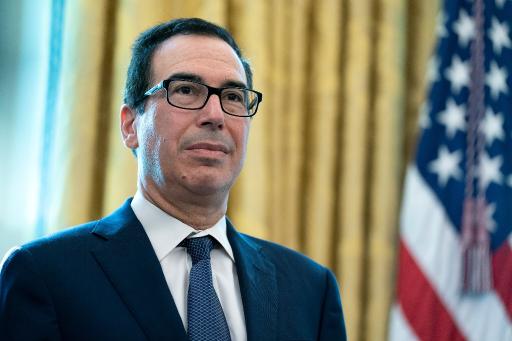
Steven Mnuchin, the Treasury secretary, at the White House in October.
Stefani Reynolds for The New York Times
Mr. Mnuchin on Thursday said he would not continue Fed programs, including ones that support the markets for corporate bonds and municipal debt and one that extends loans to midsize businesses. The emergency efforts expire at the end of 2020, but investors had expected some or all of them to be kept operational as the virus continues to pose economic risks.
The pandemic-era programs are run by the Fed but use Treasury money to insure against losses. They have provided an important backstop that has calmed critical markets since the coronavirus took hold in March. Removing them could leave significant corners of the financial world vulnerable to the type of volatility that cascaded through the system as virus fears mounted in the spring.
By asking the Fed to return unused funds, Mr. Mnuchin could prevent Mr. Biden’s incoming Treasury secretary from quickly restarting the efforts at scale in 2021.
“The Federal Reserve would prefer that the full suite of emergency facilities established during the coronavirus pandemic continue to serve their important role as a backstop for our still-strained and vulnerable economy,” the central bank said in a statement.
The emergency programs were backed by $454 billion that Congress appropriated in March as part of a broader pandemic response package. Because of the way the Fed’s emergency lending powers work, Jerome H. Powell, the Fed chair, needs the Treasury secretary’s signoff to make major changes to the programs’ terms. Extending the end date counts as one of those changes that need approval.
The decision to close the various programs and remove the funding appeared to come as a surprise to the Fed, which received a letter announcing the Treasury’s desire to claw the money back on Thursday afternoon.
“I am requesting that the Federal Reserve return the unused funds to the Treasury,” Mr. Mnuchin said in the letter. He noted that he had been “personally involved in drafting the relevant part of the legislation” and believed it was Congress’s intent that the programs stop at the end of the year.
Earlier this month, Mr. Powell had said the central bank and Treasury were just beginning to discuss whether to extend the programs.
Mr. Mnuchin did agree to extend other emergency loan programs that are not backed by the congressional appropriation, including ones that service the short-term market for corporate debt, one for money market funds, and one that backstops government small-business loans.
The Fed avoids taking credit losses when extending loans, and throughout the pandemic crisis it has asked for Treasury backup for its riskier programs. If it returns any unused money that the Treasury has already dedicated to support the programs, as Mr. Mnuchin requested, the Biden administration will have less financial backup to restart the programs.
That’s because the congressional appropriation — $195 billion of which has been earmarked to specific Fed programs — cannot be used to make new loans after the end of the year. But while the law prohibits the Treasury from putting money into the Fed’s facilities after 2020, it does not obviously prevent the Fed from using already-earmarked Treasury funding to insure its own loans and bond purchases.
“The loans, loan guarantees and investing that the Treasury does is the applicable language,” said Peter Conti-Brown, a lawyer and Fed historian at the University of Pennsylvania. He said that while it may be possible to read the law as preventing new Fed loans, that is not the “obvious reading.”
The Fed and the next Treasury secretary do have an alternative to continue the programs: They could use money in the Treasury’s Exchange Stabilization Fund, which still contains about $74 billion in uncommitted funds, to back the programs. It is unclear exactly how much of the fund can be used, but the programs have not to date needed substantial capacity.
Mr. Mnuchin’s move could leave the government with fewer options to help the economy just as the new administration takes office.
“Treasury is right that a limited set of objectives have been achieved in terms of stabilizing bond markets,” Jason Furman, a prominent Democratic economist, said on Twitter . “But what is the downside to continuing them as insurance against worse developments?”
Many of the Fed’s programs, including one that buys state and local debt and another that encourages banks to lend to small- and midsize businesses, have been lightly used. But that is because they were designed as backstops — meaning that borrowers would likely only use them when times are bad.
And it is Mr. Mnuchin himself who has been conservative in setting the program’s terms. With a more permissive head at the Treasury, the terms could have been made more generous.
In fact, Democrats had been eyeing both the municipal bond-buying program and the Main Street lending effort for small- and medium-size businesses as potential backup options if it proves difficult to pass additional government relief. Without them, businesses and state and local governments would have one less potential source of help.
With coronavirus cases on the rise, the economy may sour again, making the programs more necessary. As recently as Tuesday, Mr. Powell warned of the potential for economic scarring and said that the economic recovery had “a long way to go.” But Treasury officials have expressed optimism that the economy is poised for a steady rebound and that the likely rollout of a vaccine by the end of the year further improves the economic picture.
Senator Patrick J. Toomey, Republican of Pennsylvania, who had been pushing Mr. Mnuchin to end the programs, applauded the decision.
“These temporary facilities helped to both normalize markets and produce record levels of liquidity,” Mr. Toomey said in a statement. “Congress’s intent was clear: These facilities were to be temporary, to provide liquidity, and to cease operations by the end of 2020.”
Treasury’s move prompted concern from Democrats, some of whom said the Fed should simply refuse to return the money — a route it is unlikely to take.
Bharat Ramamurti, a Democrat who sits on the congressional oversight body in charge of reviewing the various Fed and Treasury programs, suggested on Twitter that, legally, the Fed was under no obligation to give back the funds.
“Under its contracts with Treasury, the Fed can and should reject the request,” he said . “While Secretary Mnuchin claims congressional intent was to halt all new loans at year-end, the text of the CARES Act doesn’t say that. At a minimum, the Fed can continue to make loans using the $195 billion in equity Treasury has already committed.”
New Delays In Final Stage Of Census Could Foil Trump’s Plan To Rig It
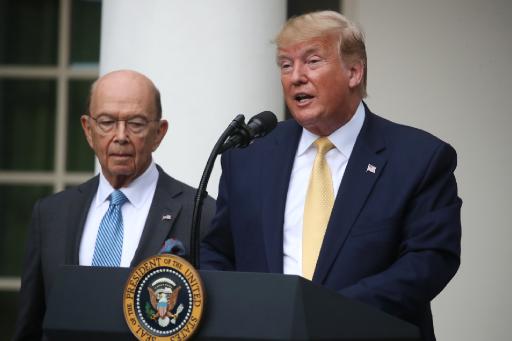
U.S. President Donald Trump makes a statement on the census with Secretary of Commerce Wilbur Ross (L) in the Rose Garden of the White House on July 11, 2019 in Washington, DC.
Mark Wilson/Getty Images
According to a person inside the Census Bureau, the additional time it will take to reprocess the data in question has pushed back the target date for release of the state population counts until Jan. 26 – Feb. 6.
That would mean President-elect Joe Biden will be in the White House when the Census Bureau delivers to him the numbers for him to transmit to Congress for the purposes of determining how many House seats each state will get for the next decade.
President Trump had been seeking to exclude undocumented immigrants from that count, with a policy that several lower courts have deemed illegal in rulings Trump is hoping the Supreme Court will overturn. Excluding undocumented immigrants from that count would decrease the House seats given to immigrant-rich states like California, and increase the representation for whiter, more Republican parts of the country.
The issues that the Census Bureau has identified in the data are standard for any census, the source told TPM, and it is routine for the Census Bureau to have to do this kind of reprocessing.
Shortly after this story was published, Census Director Steve Dillingham confirmed the “anomalies” in a statement to TPM that made no explicit mention of how fixing them will impact the timeline for releasing the data.
“During post-collection processing, certain processing anomalies have been discovered. These types of processing anomalies have occurred in past censuses. I am directing the Census Bureau to utilize all resources available to resolve this as expeditiously as possible. As it has been all along, our goal remains an accurate and statistically sound Census,” Dillingham said.
Word of the delay began circulating on Wednesday night among former Census officials and other experts who keep a close eye on the survey’s operations. TPM was unable to independently confirm exactly how far up the food chain within the Trump administration the news of the delay had traveled on Wednesday. It is also not clear whether the White House will try to get in the way of the Bureau being given the extra time that will ensure the quality of the count.
According to a New York Times report that was published soon after TPM first reported the delays, Commerce Department officials were briefed on the delays by Census Bureau experts on Wednesday afternoon, and Secretary Wilbur Ross himself was made aware of those developments on Wednesday evening.
Usually, the Census Bureau has about five months for this final phase of processing and quality checks on the data, and these hiccups are not a big deal. However, in an apparent gambit to assure that Trump was still in office to oversee apportionment, the Census Bureau has been put on an extremely condensed timeline. It had been trying to complete this phase in just two and half months.
The delay of the release of the data would be a devastating blow to Trump’s years-long quest to hijack the 2020 census to further his political agenda. His attempt to add a citizenship question to the survey was blocked by the Supreme Court in 2019. Afterwards, he announced that the Census Bureau would use existing government records to assemble the citizenship data instead, while making clear that the data would be used to fundamentally change how political power is doled out in the country.
In July 2020 he announced the directive to exclude undocumented immigrants for the apportionment count. At the time of the announcement, the Census Bureau had been planning to take four extra months — with the aim of releasing the apportionment data by late April 2021 — to finish the survey, due to delays caused by the pandemic.
The administration reversed on those plans, and instead put the Census Bureau on an expedited timeline in which it would have less than three months to do the quality checks and processing.
At a teleconference with reporters last month, Census Bureau officials insisted that under the expedited timeline, they would not be cutting corners. They said that improvements in computer power — coupled with a shift to a 24/7 including holidays schedule (as opposed to 9-5 work week) — was helping them make up the lost time. They acknowledged, however, that surprises or issues in the processing could throw them off their schedule for delivering the apportionment data by the Dec. 31 deadline. By the time of the press call, the Census Bureau was already hedging on its ability to meet that Dec. 31 deadline — even though that’s what the Justice Department pointed to as its rationale for rushing the census when the expedited plan was challenged in court.
“It is our plan right now that if we need more time to fix a problem that comes up that would impact the quality of the data, we’re taking it,” Al Fontenot, the associate director of decennial census programs, told reporters on the October call, as he referenced the hedging the Census Bureau had already done about working to meet the Dec. 31 deadline.
“That provides us with the flexibility if we encounter unexpected challenges to deal with them and handle them before we actually present the documents,” Fontenot said.
Fontenot said that those decisions would be made by the career experts, and the Census Bureau had not “established a hard stop.”
“We are trying to maintain the flexibility to get the job done in a quality way,” Fontenot said in October.
Former Census Director John Thompson told TPM he would be “concerned” about the quality of the data if the Bureau was not given the 20 extra days it says it needs to finish the population counts.
Thompson — who referenced his time as a career Bureau official during the processing phase of the 2000 census — noted that 21 days for expert review and computer remediation had been cut from the 2020 census schedule when the Bureau was forced to adopt the expedited timeline.
He said that Bureau would not be asking for more time now unless it had given a “serious” look at every other possibility.
“I would be very worried if the data were produced in advance of the [late January/early February] schedule,” Thompson said.
‘This is simply not how the Constitution works’: Federal judge eviscerates Trump lawsuit
The judge issued a withering opinion in his dismissal of the suit that Rudy Giuliani turned up to argue in a small Pennsylvania city this week
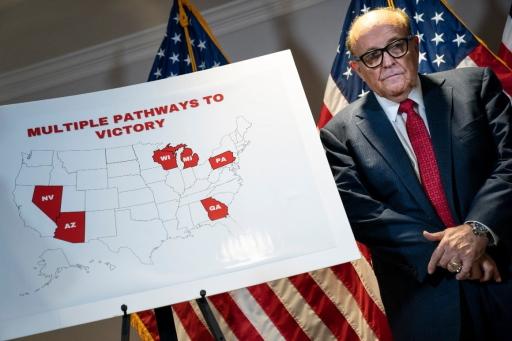
Rudy Giuliani stands next to a map during a press
conference about various lawsuits related to the 2020
election on Nov. 19, 2020 in Washington.
Drew Angerer/Getty Images
“This Court has been presented with strained legal arguments without merit and speculative accusations, unpled in the operative complaint and unsupported by evidence,” U.S. District Judge Matthew Brann wrote . “In the United States of America, this cannot justify the disenfranchisement of a single voter, let alone all the voters of its sixth most populated state. Our people, laws, and institutions demand more.”
The ruling is the latest rejection by federal and state court judges of Trump’s effort to overturn President-elect Joe Biden’s victory. And the judge’s stinging refutation of the campaign’s claims is yet another indication that Trump’s last-ditch effort to cling to power is slipping. Pennsylvania counties are due to certify their votes by Monday, leaving the final statewide certification in the hands of Secretary of State Kathy Boockvar, a Democrat and a defendant in the lawsuit.
Trump has faced a series of legal and political setbacks in the last two days. Some of his allies on Capitol Hill have begun to publicly recognize Biden’s victory. Michigan state lawmakers, whom Trump summoned to the Oval Office on Friday, emerged insisting they would not intervene in their state’s election process to aid Trump. Georgia’s Republican governor and secretary of state certified a victory for Biden Friday, despite Trump’s objections. And a Republican-controlled board in Arizona’s largest county certified its results Friday evening and rejected any claims of fraud.
The sharply worded, 37-page opinion is a blow to the lawyer Trump picked just last weekend to spearhead his legal efforts to challenge the election, former New York Mayor Rudy Giuliani. Giuliani made an unexpected appearance in Brann’s courtroom in the small central Pennsylvania city of Williamsport on Tuesday.
Trump was counting on Giuliani’s presence to reverse the public narrative that the campaign’s legal drive to salvage the election was failing. Instead, Giuliani was mocked by legal commentators for being unprepared, unfamiliar with basic legal standards applicable to the case and even for forgetting the name of the judge.
Brann also expressed alarm at the draconian relief that Giuliani sought: The disenfranchisement of 7 million Pennsylvania voters — the state’s entire electorate — in the hopes of stripping its 20 electoral votes from Biden’s column.
“This Court has been unable to find any case in which a plaintiff has sought such a drastic remedy in the contest of an election, in terms of the sheer volume of votes asked to be invalidated,” he said, “One might expect that when seeking such a startling outcome, a plaintiff would come formidably armed with compelling legal arguments and factual proof of rampant corruption … That has not happened.”
In his opinion, Brann picked apart each argument offered by Giuliani.
The judge dismissed the Trump campaign’s argument that its observers were unfairly denied access to vote-counting operations in certain counties, noting that both Trump and Biden’s observers were subject to the same restrictions. He also said the Trump team’s lawyers misunderstood the lessons of Bush v. Gore — the Supreme Court ruling that delivered the 2000 election to George W. Bush — in their attempt to apply it to the current case.
And Brann rejected the notion that counties who offered voters an opportunity to “cure” defective mail-in ballots should have those votes thrown out because other counties — those with a larger proportion of Trump voters — did not. The decision not to offer voters a chance to cure ballots was not made by the parties the Trump campaign sued, namely Boockvar and seven heavily Democratic counties.
In rejecting this claim, Brann shredded the Trump legal team’s mix-and-match approach to their argument.
“This claim, like Frankenstein’s Monster, has been haphazardly stitched together from two distinct theories in an attempt to avoid controlling precedent,” Brann wrote.
Brann was appointed by President Barack Obama, but is regarded as a conservative judge and an atypical Obama nominee. Brann, who was selected by Sen. Pat Toomey (R-Pa.), served as a regional Republican Party chairman in Pennsylvania for about a decade before being nominated to the federal bench.
“Even assuming that they can establish that their right to vote has been denied, which they cannot, Plaintiffs seek to remedy the denial of their votes by invalidating the votes of millions of others. Rather than requesting that their votes be counted, they seek to discredit scores of other votes, but only for one race. This is simply not how the Constitution works,” the judge wrote.
In a statement signed by Giuliani and campaign legal adviser Jenna Ellis, the Trump campaign pledged to appeal Brann's ruling, adding: "Today’s decision turns out to help us in our strategy to get expeditiously to the U.S. Supreme Court. Although we fully disagree with this opinion, we’re thankful to the Obama-appointed judge for making this anticipated decision quickly, rather than simply trying to run out the clock."
In a statement, Toomey said Biden had won Pennsylvania and with it the presidential election: “With today’s decision by Judge Matthew Brann, a longtime conservative Republican whom I know to be a fair and unbiased jurist, to dismiss the Trump campaign’s lawsuit, President Trump has exhausted all plausible legal options to challenge the result of the presidential race in Pennsylvania."
Trump later assailed Brann and Toomey in a tweet, adding: "WILL APPEAL!!!"
The court also rejected an attempt from the Trump team to further amend its complaint.
“Given that: (1) Plaintiffs have already amended once as of right; (2) Plaintiffs seek to amend simply in order to effectively reinstate their initial complaint and claims; and (3) the deadline for counties in Pennsylvania to certify their election results to Secretary Boockvar is November 23, 2020, amendment would unduly delay resolution of the issues,” Brann wrote.
Brann also frowned on the merry-go-round of representation that marked the Trump campaign’s efforts throughout the suit.
“Although this case was initiated less than two weeks ago, it has already developed its own tortured procedural history,” Brann wrote. “Plaintiffs have made multiple attempts at amending the pleadings, and have had attorneys both appear and withdraw in a matter of seventy-two hours.”
Brann mentioned in passing a “rude and ill-conceived voicemail” one of the lawyers representing Trump received from a junior attorney at Kirkland & Ellis, saying it “distracted the Court’s attention from the significant issues at hand.” The judge said the message was inappropriate but he rejected a Trump lawyer’s request to impose sanctions on the firm, whose attorneys represented Boockvar.
The Trump campaign wasn’t the only party to the case to face some upheaval on its legal team. On Friday, the Kirkland lawyers moved to withdraw from the case, to be replaced by a team from the law firm, Kramer Levin, which included a key lawyer for Democrats during the impeachment of President Donald Trump, Barry Berke.
America is being subjected to a stress test – and Republicans are failing
Most elected Republicans are refusing to stand up to Trump. Their cowardice is one of the worst betrayals of public trust in the history of our republic
by Robert Reich
Financial regulators subject banks to stress tests to see if they have enough capital to withstand sharp downturns.
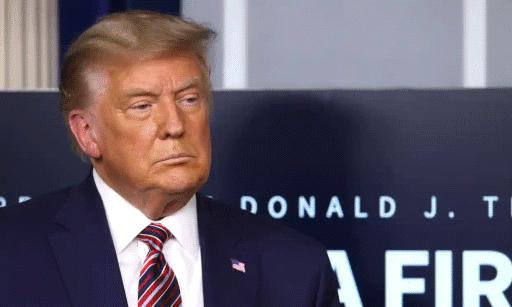
‘Trump will lose because there’s no evidence of fraud.
But the integrity of thousands of people responsible for
maintaining American democracy is being tested as
never before.’
Tasos Katopodis/Getty Images
Trump will lose because there’s no evidence of fraud. But the integrity of thousands of people responsible for maintaining American democracy is being tested as never before.
Tragically, most elected Republicans are failing the test by refusing to stand up to Trump. Their cowardice is one of the worst betrayals of public trust in the history of our republic.
Trump is also depending on a Star Wars cantina of lackeys, grifters, sycophants and fruitcakes – including former New York mayor Rudy Giuliani , former speaker of the House Newt Gingrich, Senator Lindsey Graham, GOP trickster Roger Stone and others – whose reputations weren’t great to begin with but will now and forever be tainted by Trump’s moral squalor.
That squalor extends down to Republican members of a board of canvassers in Wayne county, Michigan (which includes Detroit) who, after Trump phoned them last week, tried to rescind their approval of ballot counts that went overwhelmingly to Joe Biden. On Friday, Trump invited Michigan’s Republican lawmakers to the White House, hoping to persuade them to ignore the popular vote, too.
American democracy wasn’t designed for this degree of political depravity.
Here’s the good news. The vast majority of officials are passing the stress test, many with distinction.
Chris Krebs, who led the Department of Homeland Security’s cybersecurity agency, last Tuesday refuted Trump’s claims of election fraud – saying the claims “have been unsubstantiated or are technically incoherent”.
Trump fired Krebs that afternoon. Krebs’s response : “Honored to serve. We did it right.”
Brad Raffensperger – Georgia’s Republican secretary of state who oversaw the election there, and describes himself as “a Republican through and through and never voted for a Democrat” – is defending Georgia’s vote for Biden, rejecting Trump’s accusations of fraud. On Friday he certified that Biden won the state’s presidential vote.
Raffensperger spurned overtures from Trump quisling Graham, who asked if Raffensperger could toss out all mail-in votes from counties with high rates of questionable signatures. And Raffensperger dismissed demands from Georgia’s two incumbent Republican senators, Kelly Loeffler and David Perdue (both facing tougher-than-anticipated runoffs) that he resign.
“This office runs on integrity,” Raffensperger said, “and that’s what voters want to know, that this person’s going to do his job.”
Raffensperger has received death threats from Republican voters inflamed by Trump’s allegations. He’s not the only one. Election officials in Nevada, Michigan, Pennsylvania and Arizona are also reporting threats.
On Wednesday, Katie Hobbs, the Arizona secretary of state who has until 30 November to certify election results there, called on Republican officials to stop “perpetuating misinformation”, adding that threats and “continued intimidation tactics will not prevent me from performing the duties I swore an oath to do. Our democracy is tested constantly, it continues to prevail, and it will not falter under my watch.”
Honors to her, as well.
While we’re at it, let’s not forget all the other public officials who have been stress-tested during Trump’s repugnant presidency and passed honorably.
I’m referring to public health officials unwilling to lie about Covid-19, military leaders unwilling to back Trump’s attacks on Black Lives Matter protesters, inspectors general unwilling to cover up Trump corruption, US foreign service officers unwilling to lie about Trump’s overtures to Ukraine, intelligence officials unwilling to bend their reports to suit Trump, and justice department attorneys refusing to participate in Trump’s obstructions of justice.
If you think it easy to do what they did, think again. Some of them lost their jobs. Many were demoted. A few have been threatened with violence. They’ve risked all this to do what’s right in an America poisoned by Trump, who has no idea what it means to do what’s right.
Above all, this stress test reveals integrity. Democracy depends on it.
The fact that Trump’s attempted coup won’t succeed doesn’t make it any less damaging. A new poll from Monmouth University now finds 77% of Trump supporters believe Biden’s win was due to fraud – a claim, I should emphasize again, backed by zero evidence.
Which means America’s stress test won’t be over when Joe Biden is sworn in as president 20 January. In the years to come we’ll continue to depend on the integrity of thousands of unsung heroes to do their duty in the face of threats to their livelihoods and perhaps their lives.
Of his many odious acts, Trump’s desperate attempt to cling to power by stress-testing American democracy will be his most reprehensible legacy.
Tags
Who is online
156 visitors
Excellent article, but a tad too long for many to digest in one sitting, includung me. I will revisit and read in full though, a little later. From my skim, i see milkin it for all they don't got is a recipe for thye GOP to rot, .... in Hell would be my place of choice, so as i and many udders could rejoice, the milkin
of those lactaid of TOLERANCE !
There are actually five articles....
i'll take the Fifth, then,
and then,
DRINK IT all in
A fifth of bourbon?
WHISKEY!!!!!!!!!!!!!!!!!!!!!!!!!!!!!!!!!!!!!!!!!!!!!!!!!!!!!!!!!!!!!!!!!!!!!!!!!!!!!!!!!!!!!!!!!!!!!!!!!!!
Wow, another Trump hit/hate piece. What are the odds?
For a guy only going to be in charge for another two months he sure has the left boiling over. You would almost think they are in desperation mode as the reality of a clueless Joe Biden taking over. Better get that; "But Trrruuuuummmmmpppppp!" BS narrative started now.
Why isn't anyone asking clueless Joe about how he expects to get rid of Covid 19; and then bring back the economy; when he was a part of the most clueless administration ever that botched their response to H1N1- and oversaw the slowest recovery from a recession ever.
Given that this is far, far worse than what Joe failed at before- the results should be catastrophic for the Democratic Party.
Conservatives will treat Joe the same way the left and media treated us for the last 5 years; so he had better find a nice spot to hide in the White House basement