
These are the most-read Science News stories of 2020 | Science News

By: Cassie Martin (Science News)

Science News drew over 22 million visitors to our website this year.
Our COVID-19 coverage was most popular.
Here’s a recap of the other most-read news stories and long reads of 2020.

Interesting, concise, well-written...
 S E E D E D C O N T E N T
Adam Fenster
Top news stories
1. In a first, a person's immune system fought HIV — and won
Scientists analyzed billions of cells from two people with HIV who don't require medication to keep the virus under control. What the team found was astonishing: One person had no working copies of HIV in any of the cells, while the other person had just one working copy. What's more, that one copy was imprisoned in tightly wound DNA .
2. The first room-temperature superconductor has finally been found
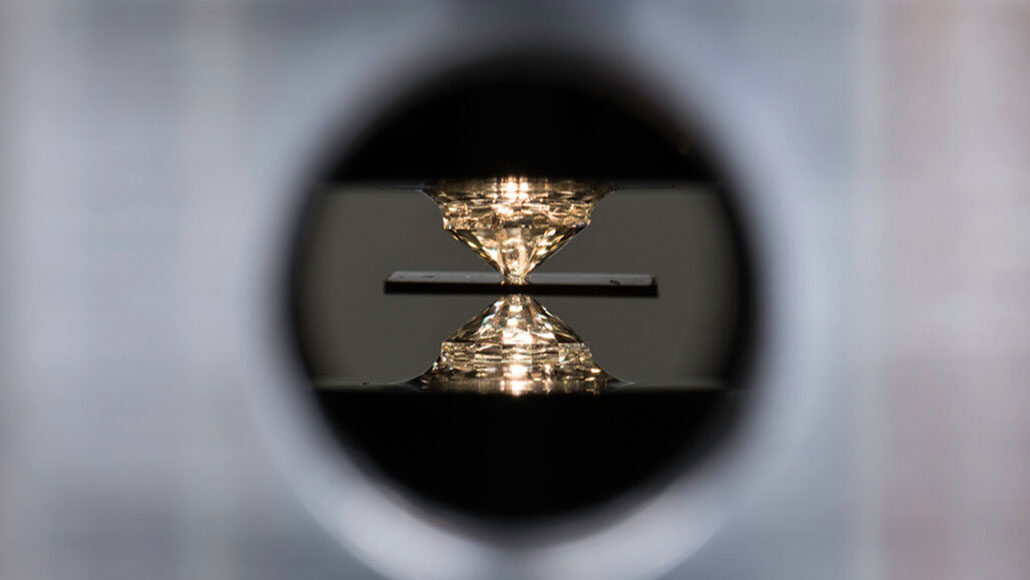
Up to 15° Celsius, a material made of carbon, sulfur and hydrogen can conduct electricity without resistance. While the room-temperature superconductor works only at high pressures, the discovery brings scientists a step closer to realizing a more energy-efficient future .
3. Astronomers have found the edge of the Milky Way at last
Computer simulations and observations of nearby galaxies have revealed that the Milky Way stretches 1.9 million light-years across. The measurement could help tease out how massive the galaxy is and exactly how many galaxies orbit it .
4. More 'murder hornets' are turning up. Here's what you need to know
An invasion of Asian giant hornets into North America could spell trouble for honeybees. But the threat that the world's largest hornet species poses to people is minimal .
5. A star orbiting the Milky Way's black hole validates Einstein
The odd orbit of a star around the supermassive black hole at the Milky Way's center confirms Albert Einstein's general theory of relativity. Rather than tracing out a single ellipse, the star's orbit rotates over time — the result of the black hole warping spacetime .
Favorite visualization
"A new 3-D map illuminates the 'little brain' within the heart" ( SN: 6/2/20 ) enthralled online readers. An unprecedented view of the heart's nerve cell cluster could help scientists better understand what those cells do and perhaps lead to targeted therapies for heart diseases.
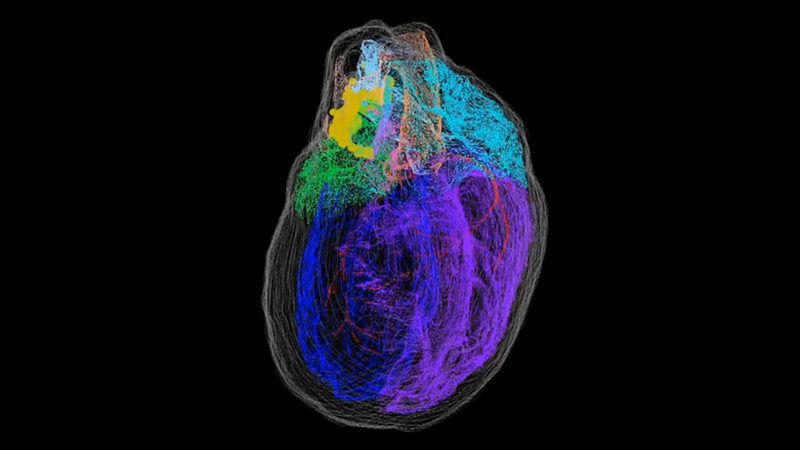
near where blood vessels enter and exit the organ.
Other colors show the contours of distinct heart areas, such as
the left atrium (green), right atrium (teal), left ventricle (blue) and right ventricle (purple).
S. Achanta et al/iScience 2020
Top feature stories
1. After the Notre Dame fire, scientists get a glimpse at the cathedral's origins
A fire that ripped through Paris' Notre Dame cathedral in April 2019 gave scientists the opportunity to dig into the cathedral's history and study the building's materials , including to learn more about climate change.
2. New fleets of private satellites are clogging the night sky
SpaceX and other private companies are planning to launch thousands of internet satellites into orbit around Earth. Hundreds of the satellites already in outer space are obstructing the view of ground-based telescopes and interfering with astronomers' research .
3. It's time to stop debating how to teach kids to read and follow the evidence
Research has identified the most effective approaches for teaching children how to read. Those findings could help resolve a long-standing debate that pits phonics against methods that emphasize understanding the meaning of words .
4. To fight discrimination, the U.S. census needs a different race question
The U.S. census has failed to accurately count certain minority groups. As a result, some sociologists are calling for more nuanced census questions that better reflect how respondents view themselves, as well as how society views them — a clearer metric for measuring discrimination .
5. What lifestyle changes will shrink your carbon footprint the most?
Individual actions around shelter, transportation and food can create ripple effects in society to help mitigate the effects of climate change. But to have the most impact, people need to tailor their efforts to their own circumstances .

Tags
Who is online
86 visitors
From "It's time to stop debating how to teach kids to read and follow the evidence":