
A redesign for zinc-air batteries could make them rechargeable

By: Jake Buehler (Science News)

Swapping out the electrolyte in zinc-air batteries helps these next-gen power sources last longer


There's so much cool stuff happening in battery technology.
This is probably what will tilt transport away from fossil fuels.
Yesterday, it was liquid metal electrolytes...
 S E E D E D C O N T E N T
Zinc-air batteries are typically not rechargeable. But using new materials, researchers have now built one of these devices that can be recharged hundreds of times.
Viktor Chebanenko/iStock/Getty Images Plus
A new battery design could change that. By tweaking the building materials, researchers created a prototype of a zinc-air battery that could be recharged hundreds of times. Such long-lasting devices, described in the Jan. 1 Science , could one day power electric cars or other electronics.
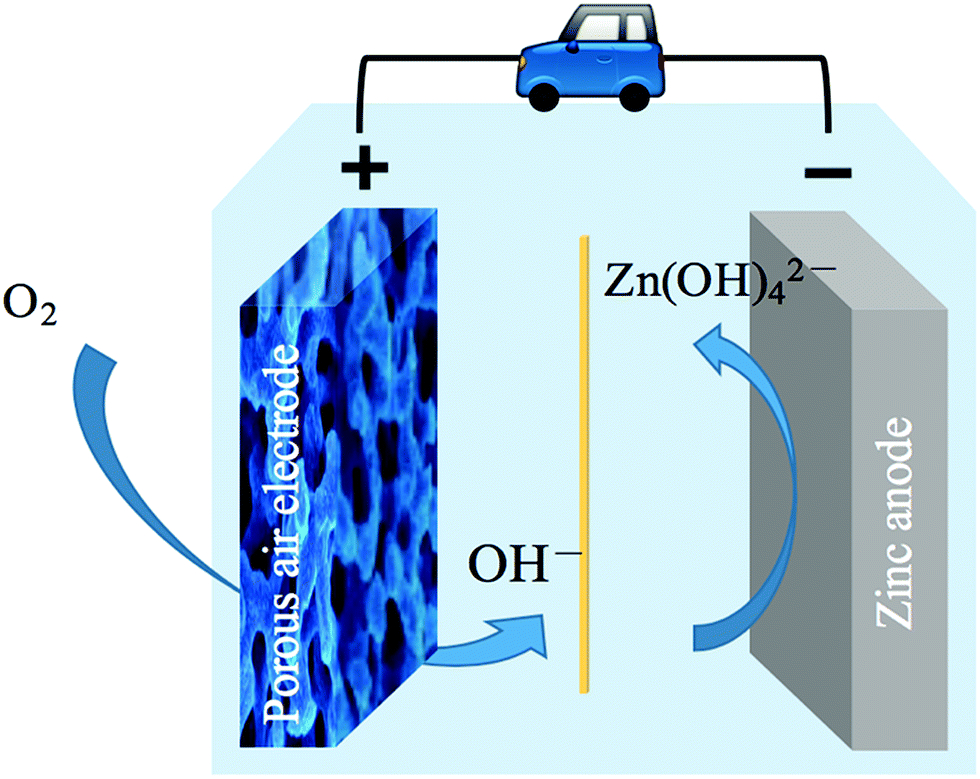
Zinc-air batteries are one of many potential next-generation batteries that could hold more energy while being cheaper and safer than existing devices ( SN: 1/9/17 ). Every zinc-air battery cell contains two electrodes — a zinc anode and a porous cathode — separated by a liquid called an electrolyte. In standard zinc-air cells, the electrolyte is a high-pH substance, containing ingredients like potassium hydroxide. Oxygen from the air enters the cathode, where the gas reacts with water from the electrolyte to form hydroxide. Hydroxide formed at the cathode surface travels to the anode and reacts with zinc to release energy that powers other devices.
"The problem is, this reaction is not very reversible," says Wei Sun, a materials scientist at the University of Munster in Germany. And that makes it hard to recharge the battery. The caustic electrolyte in conventional zinc-air batteries can also degrade the cathode and anode.
To solve those problems, Sun and colleagues built a zinc-air battery using a new electrolyte that contains water-repellant ions. Those ions stick to the cathode, preventing H 2 O from the electrolyte from reacting with incoming oxygen at the cathode surface. As a result, zinc ions from the anode can travel to the cathode and react directly with oxygen from the air. This relatively simple reaction is easy to run backward to recharge the battery.
What's more, the new electrolyte doesn't degrade the battery's electrodes, which helps the battery last longer. In lab experiments, Sun and colleagues were able to drain and recharge a new zinc-air battery cell 320 times over 160 hours.

Tags
Who is online
90 visitors
Battery tech will make electric vehicles viable. The auto manufacturers (except Tesla) are just nervous spectators.
One way or the other electric vehicles are here to stay. Discoveries such as this one just make it quicker.
The article yesterday was about batteries for the grid. Load-balancing. They have to be long-lasting and cheap. Weight and size are almost indifferent. A very different bill of requirements! The result is liquid-metal electrolytes... that you probably don't want in a car...
I did not see yesterday's article, but it sounds interesting.
I'm not sure I seeded it. Too many! Too many!!