
Between Fact and Fiction: The Mysterious Life of Ernest Hemingway

By: No Author Indicated

 S E E D E D C O N T E N T

Between Fact and Fiction: The Mysterious Life of Ernest Hemingway

Ernest Hemingway was more than just a writer—he was a war hero, an adventurer, a secret agent, and a man surrounded by mystery. His life was as thrilling as his novels, filled with lost manuscripts, near-death experiences, and hidden struggles. Here are 30 intriguing facts about the legendary author.
30. He Had Over 30 Concussions in His Lifetime

29. He Survived Two Plane Crashes in Two Days

In 1954, while in Africa, Hemingway survived two plane crashes in consecutive days. The second crash left him with severe burns, a ruptured liver, and a fractured skull. Despite his injuries, he famously used a bottle of whiskey to ease the pain while waiting to be rescued, displaying his unyielding toughness.
28. Hemingway Was a World War II Spy

During World War II, Hemingway worked for the Office of Strategic Services (OSS), the precursor to the CIA. He ran his own spy network, known as the “Crook Factory,” based in Cuba. There, he tracked Nazi activity in the Caribbean, blending his literary skills with covert operations.
27. He Was in Paris During the Liberation

In 1944, Hemingway was present during the liberation of Paris and, though not formally enlisted, unofficially led a small group of resistance fighters. His involvement in direct combat as a civilian-led to reprimands, but the incident only fueled the growing legend of his adventurous and rebellious spirit.
26. His First Wife Lost His Early Manuscripts

25. He Won the Nobel Prize But Was Too Sick to Accept It

Hemingway won the Nobel Prize in Literature in 1954 for his novel The Old Man and the Sea, which solidified his place as a literary giant. Due to his deteriorating health, he could not travel to Sweden to accept the honor in person. His acceptance speech was instead read on his behalf.
24. He Had a Lifelong Fear of the Number 13
 In 1941, Ernest Hemingway and his third wife, journalist Martha Gellhorn, met with General Yu Hanmou in Chongqing, China. Gellhorn, a fearless war correspondent, played a crucial role in their travels, often outshining Hemingway with her relentless pursuit of frontline stories. Source: Wikipedia
Hemingway had triskaidekaphobia, an irrational fear of the number 13. His superstition was so strong that he avoided rooms, hotel floors, and even book chapter numbers that contained 13. This quirky habit became well known among his friends, who often found his aversion to the number both puzzling and intriguing.
23. Hemingway Allegedly Worked on a Lost Novel About Africa

Some believe Hemingway wrote a now-lost novel about his African safaris, filled with thrilling tales of hunting, adventure, and his encounters with wildlife. Shrouded in mystery, the manuscript remains unfinished, with only a few fragments ever surfacing. The contents continue to captivate scholars, leaving fans eager for its discovery.
22. His Death Was Ruled a Suicide—But Was It?
 Hemingway’s final hours were marked by a tragic irony: despite his legacy of adventure and bravado, he died by his own hand, leaving behind a trail of unanswered questions about the toll depression and family history had on him. Source: NamuWikid
In 1961, Hemingway was found dead from a gunshot wound. Officially ruled a suicide, some speculate it was an accident, influenced by his deteriorating mental state and increasing paranoia. His father, brother, and sister also died by suicide, raising questions about a possible genetic link to depression in the Hemingway family.
21. He Had a Secret FBI File

J. Edgar Hoover and the FBI kept a close watch on Hemingway, suspecting his potential involvement in espionage due to his travels and political connections. His FBI file spanned over 120 pages, revealing that he was monitored for decades, adding an air of mystery to the author’s already enigmatic life.
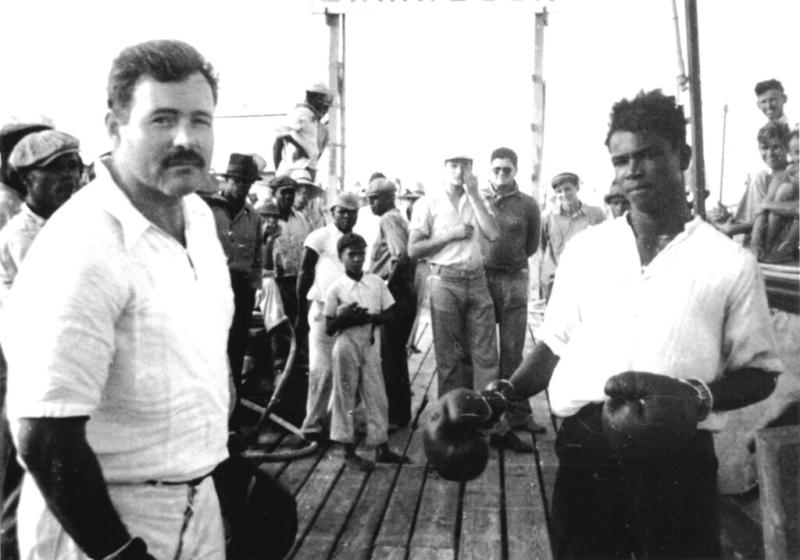
20. He Was a Boxer and Loved to Fight
 Exhausted after fighting two or three fish and fueled by sun, rum, and testosterone, Hemingway often turned his focus from fishing to boxing. He would put down $250, challenging anyone to three three-minute rounds in a makeshift ring chalked on Weech’s Bimini Dock timbers. Source: Wikipedia
Hemingway frequently participated in amateur boxing matches and even sparred with professional fighters, enjoying the physical challenge. His love for testing his strength extended beyond the ring, as he often provoked strangers in bars to get into real fights. This impulsive desire for confrontation mirrored his bold, fearless personality.
19. He Owned Dozens of Cats with Extra Toes
 Ernest Hemingway also had cats at his home in Cuba, although these ones didn’t have the extra toes like the felines in Key West. Source: A.E. Hotchner, courtesy of PBS
At his home in Key West, Hemingway kept a special breed of cats with six toes—a genetic trait passed down through generations. These polydactyl cats became a beloved part of his household. Today, their descendants still roam the grounds of his former estate, maintaining a unique connection to his legacy.
18. He Fished with Presidents
 This photograph shows Ernest Hemingway in Havana Harbor after catching a marlin. With him are Carlos Gutiericz, Sidney Franklin, and several unidentified individuals, capturing a moment of triumph from one of Hemingway’s famed fishing expeditions. Source: Wikimedia Commons
Hemingway loved deep-sea fishing and often embarked on expeditions with notable figures, including President Franklin D. Roosevelt. These thrilling adventures on the open water fueled his passion for the sea. His profound experiences and connection to the ocean directly inspired The Old Man and the Sea, capturing his themes of struggle and endurance.
17. He Once Shot a Shark to Save a Catch

On one of his fishing trips, Hemingway reportedly shot a shark with a machine gun to stop it from stealing his prized marlin. This dramatic encounter inspired scenes in “The Old Man and the Sea,” where the protagonist battles not just the fish but the challenges and dangers of nature itself.
16. He Was Almost Killed in the Spanish Civil War

While covering the Spanish Civil War as a journalist, Hemingway found himself under fire multiple times, experiencing the dangers of war firsthand. These intense moments deeply influenced his writing, particularly in For Whom the Bell Tolls, where he captured the emotional and physical toll of conflict through vivid, personal accounts.
15. Hemingway’s House in Cuba Remains Untouched

Hemingway’s Cuban home, Finca Vigía, remains preserved exactly as he left it, offering a glimpse into his life. After fleeing Cuba in 1960, Hemingway never returned, leaving behind his personal belongings, books, and unfinished writings. The home stands frozen in time, offering an intimate connection to his final years.
14. He Wrote Standing Up

Hemingway believed that writing while standing helped him stay focused and maintain energy throughout his creative process. His Key West writing desk was chest-high and designed to allow him to type or write longhand while standing. This unconventional habit reflected his need for both physical and mental engagement during writing.
13. His Favorite Drink Was a Special Daiquiri

Hemingway had a deep love for daiquiris but ordered them without sugar due to his battle with diabetes. His modified version, known as the “Hemingway Special,” became legendary and is still served at bars in Havana today. This iconic drink remains a testament to both his personality and lifestyle.
12. He Had a Strange Obsession with Death

Hemingway frequently discussed death and had a deep, often unsettling fascination with it. He attempted suicide multiple times throughout his life, reflecting his ongoing struggles with mental health. His interests in bullfighting, war, and dangerous adventures echoed his desire to face life’s extremes, seeking meaning in both violence and risk.
11. He Inspired a Medical Condition Name: “Hemingway Syndrome”

Some psychologists use “Hemingway Syndrome” to describe men who engage in self-destructive, hyper-masculine behavior, often as a reflection of Hemingway’s own tumultuous lifestyle. This behavior includes recklessness, excessive drinking, and a need for dominance, mirroring the author’s pursuit of adventure and constant struggle with his inner demons.
10. He Was a War Hero But Never a Soldier

Although Hemingway never officially served as a soldier, he was awarded military medals for his bravery as an ambulance driver during World War I. Despite being wounded himself, he continued his mission to help others. His experiences on the frontlines profoundly influenced his writing, adding realism and depth to his work.
9. He Owned a Machine Gun on His Boat

Hemingway’s beloved fishing boat, Pilar, was outfitted with a machine gun, a testament to his adventurous spirit. During World War II, he planned to use the weapon to fight Nazi submarines lurking in the Caribbean. Though he never engaged in battle, the boat became an iconic symbol of his daring personality.
8. Hemingway’s Final Work Was Published Posthumously

Hemingway’s novel The Garden of Eden was published posthumously in 1986, 25 years after his death. The novel’s controversial themes, including gender identity and sexual exploration, led to parts being edited or removed before its release. Despite these changes, the book offers a unique glimpse into Hemingway’s evolving literary voice.
7. He Once Smuggled Guns into Cuba
 Hemingway lived in Cuba for nearly two decades, where he wrote many iconic works. He was suspected of smuggling arms to Cuban revolutionaries, though his exact involvement remains unclear. His home, Finca Vigía, is now a museum dedicated to him. Source: Wikipedia
6. He Wrote His First Novel in Just Six Weeks

Hemingway wrote The Sun Also Rises in just six weeks in 1926 while traveling through Spain, inspired by his experiences with fellow expatriates. The novel, featuring characters grappling with post-World War I disillusionment, became the defining work of the “Lost Generation.” Its stark, minimalist style marked a pivotal shift in literary history.
5. His Writing Style Changed Literature

Hemingway’s signature style of short, direct sentences revolutionized literature, departing from the elaborate, flowery prose popular in his time. His minimalist approach emphasized clarity and precision, allowing his words to hit with emotional power. This innovative style influenced countless writers, making him a pivotal figure in 20th-century literature.
4. His Friends Were Legendary

Hemingway formed lasting friendships with literary and artistic icons like F. Scott Fitzgerald, Pablo Picasso, and James Joyce. The group frequently gathered in the bohemian quarters of Paris and Spain, sharing wild nights of conversation, creativity, and inspiration. Their camaraderie profoundly shaped Hemingway’s writing and artistic perspective.
3. He Had 4 Wives, and Each Marriage Ended Dramatically

Hemingway married four times, each ending with him leaving one wife for another woman. His love life was as turbulent and dramatic as the stories he wrote, filled with passion, betrayal, and heartbreak. Each wife influenced his work, shaping the complex and often tragic relationships portrayed in his novels.
2. His Funeral Reflected His Tragic End

1. A Hidden Safe May Hold Lost Manuscripts
 Hemingway’s Manuscript Notebook for The Sun Also Rises was one of his first lost manuscripts. It disappeared in 1922 when his wife, Hadley Richardson, accidentally left it on a train in Paris, resulting in an irreplaceable loss of early drafts. Source: Wikimedia Commons
Rumors persist that Hemingway hid unpublished manuscripts in a secret safe, which was never recovered after his death. Some believe these lost works remain locked away in Cuba, hidden in his former home, Finca Vigía. They could reveal unknown stories and insights into his brilliant yet turbulent mind if discovered.
The Code of Conduct and Terms of Service must be complied with.
Any comment posted about politics or religion not relevant to the English Literature articles that are posted will be deleted.
The administrator reserves the right to delete any comment he considers to be offensive, off topic or of no value.
Videos or images or links to sources that the Administration cannot open must be described or explained when requested or they will be deleted.

Tags
Who is online
77 visitors
What an absolutely amazing unmatchable life he led.
His granddaughter Margaux Hemingway also committed suicide.
Yes, I knew about his following his father's example from the course I took in American literature for my B.A.