
Book unveils untold chapters of war

By: By Yang Feiyue

 S E E D E D C O N T E N T

Book unveils untold chapters of war
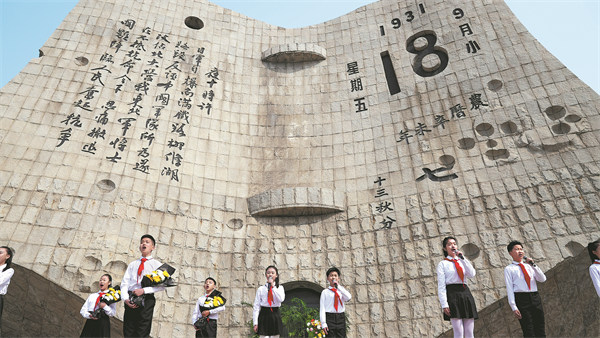
Students attend a memorial event at the September 18 Historical Museum in Shenyang, Liaoning. The date marked the beginning of the Chinese People's War Against Japanese Aggression (1931-45). [Photo by Zou Xinjiang/For China Daily]
British historian highlights China's pivotal resistance and challenges Eurocentric timelines of history, Yang Feiyue reports.
When British historian Richard Overy set out to write about World War II from a new perspective, he was acutely aware that he was stepping into a field saturated with sweeping accounts, well-trodden battle narratives, and Euro-American interpretations that have long dominated the historiography.
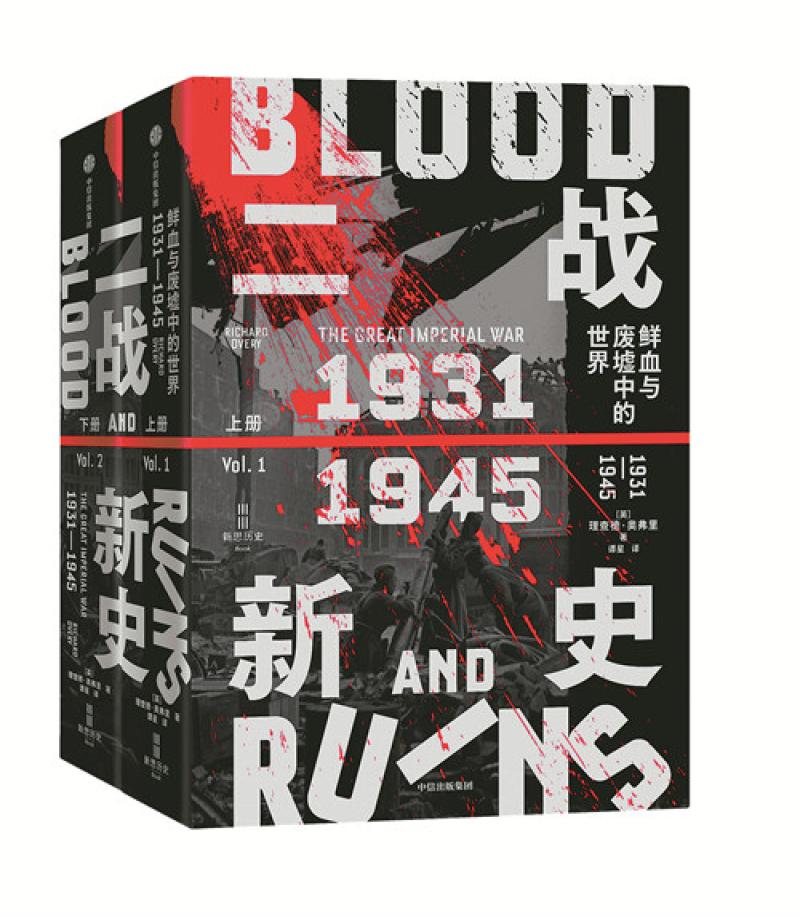
Yet, his latest work, Blood and Ruins: The Great Imperial War, 1931-1945, distinguishes itself by challenging the Eurocentric timeline of the war and offering a broader, global vision.
Overy, an internationally renowned expert in war history, especially that of World War II, argues that the war did not truly begin in 1939 with Germany's invasion of Poland but in 1931, with Japan's occupation of Northeast China. Chinese historians have long described this as the start of the "Fourteen-Year War of Resistance", a conflict that marked not only the opening of the Chinese People's War of Resistance Against Japanese Aggression (1931-45) but also the first act of what would become a global war.
As victors of World War I, Britain and France continued to dominate the international order, ruling vast colonial empires. Their supremacy, however, festered discontent among rising powers such as Italy, Japan and Germany. These late-19th-century newcomers to the world stage were also eager to carve out empires of their own, only to discover that little space remained for their ambitions.
The global economic crisis of 1929 further deepened their frustrations, turning long-simmering resentment into aggressive expansionist action, which first manifested itself in the Japanese invasion of China. Italy's invasion of Ethiopia followed in 1935, and Germany remilitarized the Rhineland in 1936. By 1939, when German forces stormed into Poland, Britain and France declared war in response. Soon after, both the Soviet Union and the United States were drawn into the maelstrom, recounts the preface of Overy's book.
The war's reach was unprecedented. It extended from the Aleutian Islands in the North Pacific to Madagascar in the Southern Indian Ocean, touching even the remotest corners of the globe.
"It is genuinely global, because it involves every part of the globe. I want you to get away from the idea that this is a European-centered war," Overy says.
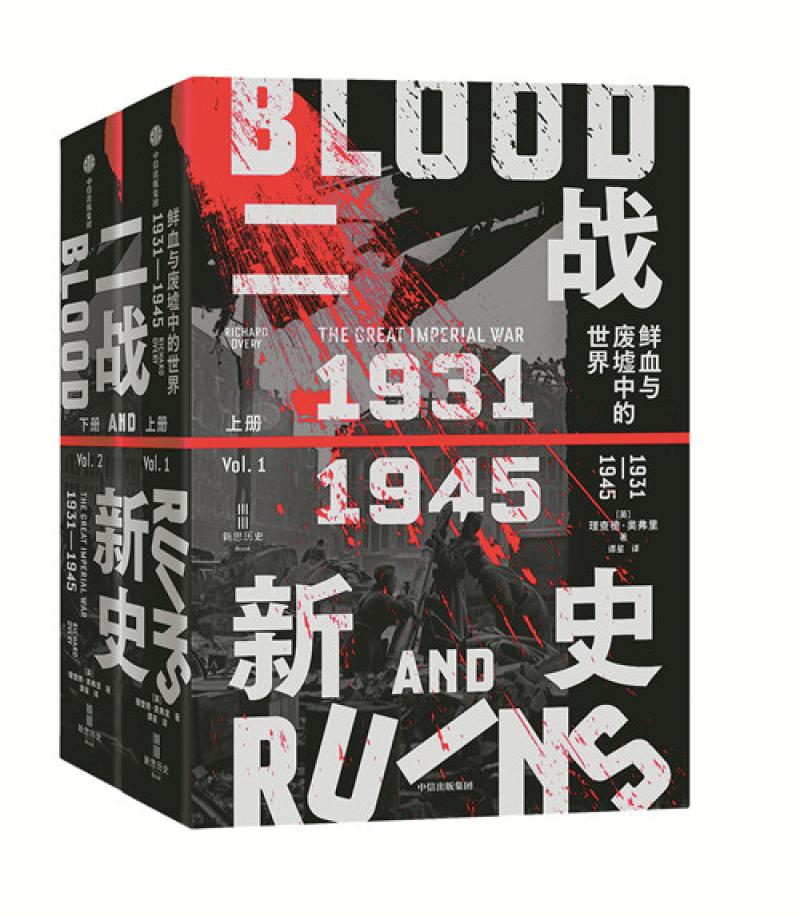
Cover of the book, Blood and Ruins: The Great Imperial War, 1931-1945. [Photo provided to China Daily]
By shifting the chronological anchor back to Asia, Overy gives overdue recognition to what Chinese historians have long insisted: that the war against Japan between 1931 and 1945 was an integral part of the wider world war.
Situating the conflict within the context of late-19th-century imperial rivalries, Overy shows it was from the outset a struggle against aggression that engulfed Asia and Europe alike.
"For so long, the West ignored what happened in Asia. They focused on the Pacific War — America versus Japan — because it's dramatic, with territory changing hands. The war in Asia is more complicated," he explains.
Overy stresses that China's role was decisive. For much of the war, it fielded more soldiers than Britain or the US, tying down over half of the Japanese army. Without this prolonged resistance, Japan might have expanded far more aggressively into Southeast Asia or the Soviet Far East, he says.
Integrating the Chinese experience into the mainstream narrative, he argues, is not only just but essential. "If we look at the way in which (the war) influenced what happened in Africa, in the Middle East, in Asia, we can make much better sense of the system that emerged after 1945," he says.
The old-fashioned idea of territorial empire was already disintegrating by 1945. Over the next 20 years, the British and French tried to defend their colonies, often violently, but the momentum had shifted. The war marked the beginning of a world increasingly dominated by nation-states.
"To understand, for example, why China has now become a major country, we need to go back and look at the roots of that process. It began in the 1930s and 1940s, prompted by the Second World War," he says.
Overy also challenges the inertia of Cold War historiography, which often diminished China's role due to geopolitical alignments. In his book, the massive human cost borne by China — over 18 million deaths, millions more displaced, and widespread devastation — is not treated as background tragedy but as central evidence of China's pivotal place in the war's history.
His work also reexamines the idea of victory. While Anglo-American accounts frequently highlight the Normandy landings, the Battle of Britain, or Pacific island campaigns, Overy emphasizes that Allied success was cumulative and interdependent. Britain and the US provided military materials and equipment and global logistics; the Soviet Union broke the Wehrmacht on the Eastern Front, he says.
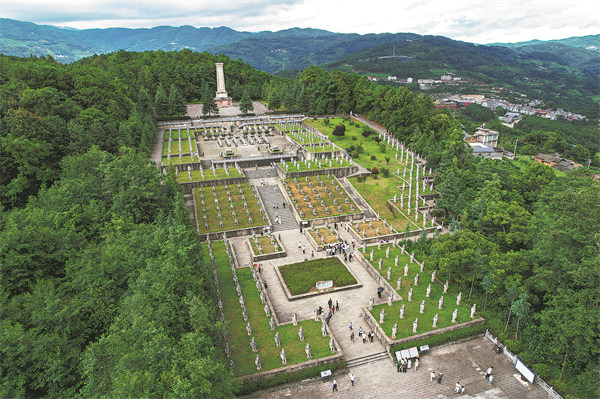
A memorial park in Baoshan, Yunnan province, for fallen Chinese soldiers at the former site of 1944's Battle of Songshan Mountain, which oversees the Burma Road, a historic supply line between China and Myanmar. LI JIAXIAN/CHINA NEWS SERVICE
For Overy, recognizing China's role is not merely a matter of scholarly accuracy but of contemporary relevance. In a world still marked by competing historical narratives, his book attempts to bridge perspectives and show that World War II cannot be understood solely through the lens of the West. It must also pass through the battlefields of Nanjing, Jiangsu province, and Chongqing.
Hu Dekun, professor of humanities and social sciences at Wuhan University, says that Overy's book corrects long-standing biases in Western interpretations of the war. While fully acknowledging the contributions of the US, Britain, and the Soviet Union on the European and Pacific fronts, the book also recognizes the diverse forms of participation in China, North Africa, Southeast Asia, and the Middle East. Hu notes that it lays bare the atrocities committed by German, Italian and Japanese fascists, and presents the immense suffering endured by the peoples under invasion.
"At the same time, it highlights the war's far-reaching impact on the postwar world, showing how it awakened the peoples of colonies and semicolonies, setting China and others on the path to socialism or national independence and transforming the global political landscape," Hu comments.
He deems the book a work of high scholarly caliber that is global in vision, innovative in perspective, and fair in its evaluation of the conflict.
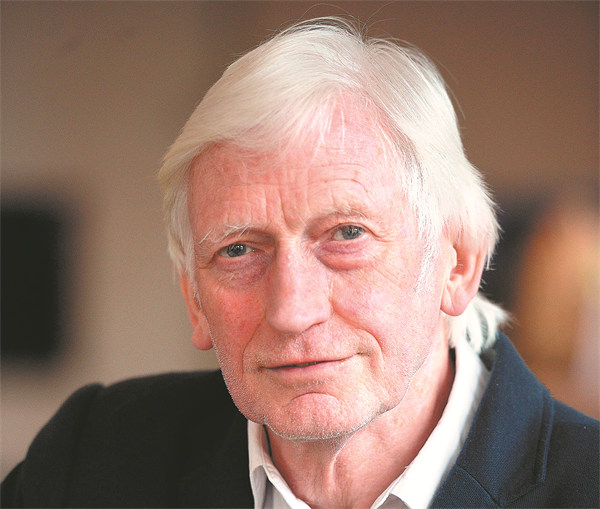
British historian Richard Overy. [Photo provided to China Daily]
Rana Mitter, professor at the University of Oxford and author of Forgotten Ally: China's World War II, 1937-45, calls Overy's book the most comprehensive single-volume account of the war to date.
For Overy, the aim is clear. "I hope readers will come away thinking: there's much less happening in Europe than I expected, and a great deal more happening in China, in India, in the Middle East," he says. His ultimate goal is to help enlarge people's perspectives and make them think more globally about the conflict.
The Code of Conduct and Terms of Service must be complied with.
Any comment posted about politics or religion not relevant to the seeds/articles that are posted will be deleted.
The administrator reserves the right to delete any comment he considers to be offensive, off topic or of no value.
Videos or images or links to sources that the Administrator cannot open must be described or explained when requested or they will be deleted.
Tags
Who is online
102 visitors
It's quite true that for many decades people considered the Second World War to be something that involved Europe and America's battle in the Pacific, but knew very little, if anything, of where else the war extended to, the invasions, battles, and how it affected the civilians in Asia and elsewhere, especially China. In fact, China was invaded by Japan a decade before they invaded Pearl Harbor so the war against Japan actually extended from 1931 to 1945.
Much of what the Japanese did in those days was unusually cruel.
The Japanese should beg China for forgiveness for what they did, but they never have even acknowledged their primitive viciousness. .
Wow!! I just watched the military parade in Beijing marking the 80th anniversary of the victory over Japan and other fascists. Pretty impressive.