
14 Rare One-Hit-Wonder Cars That Are Now Collector's Gems

By: Jeannette Freed (Vehicle HQ)
 S E E D E D C O N T E N T

14 Rare One-Hit-Wonder Cars That Are Now Collector's Gems
Most cars fade into history without a second thought. These didn't. Each one showed up, made a bold statement, then disappeared just as fast. Now they're rare, hard to find, and topping collector wish lists for all the right reasons.

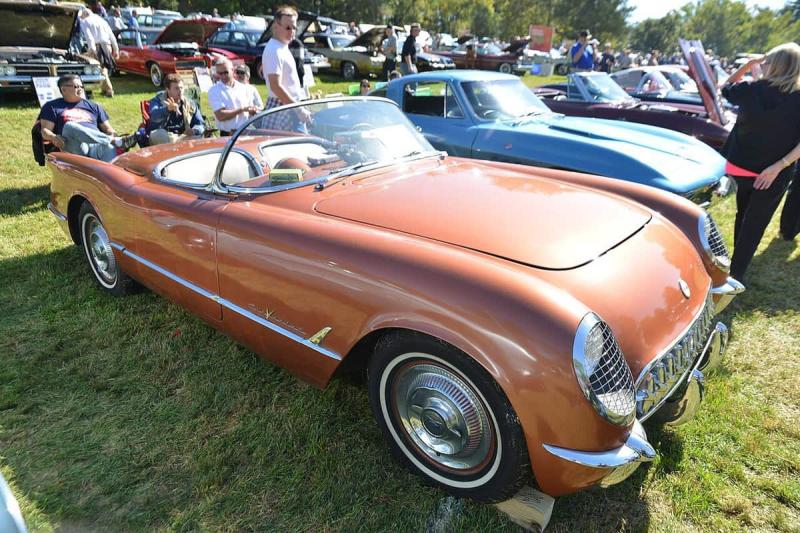
Rockville Antique and Classic Car Show 2016 – Photo by S Pakhrin

This list focuses on cars that had one chance to make their mark. Automakers produced them in small numbers, often because the designs were too bold, too expensive, or too different for their time. Some were ahead of the curve.
Others were late to the game. Today, that short run is precisely what makes them so valuable. Collectors know these one-hit wonders don't come around often.
1. America's First Fiberglass Sports Car: 1954 Kaiser Darrin

Dmitry Eagle Orlov / Shutterstock.com
The 1954 Kaiser Darrin was America's answer to European roadsters. It featured a fiberglass body and sliding pocket doors that disappeared into the front fenders, a design rarely seen before or since.
Its "pursed lips" grille gave it a distinct look that set it apart from other cars of the era. Only 435 were ever built, making it one of the rarest postwar American sports cars.
Dutch Darrin Took It Further Than Kaiser Would

Greg Gjerdingen,
Although the 1953 Corvette came first as the initial American fiberglass sports car, the Darrin still stands out as one of the most inventive early designs.
The car was named after its designer, Howard "Dutch" Darrin, who pushed the project through despite resistance from Kaiser. After the company ended production, Darrin bought the remaining bodies and sold them himself. Some of those cars were fitted with Cadillac engines, making them even more unique.
2. A Futuristic Coupe Ahead of Its Time: 1963 Studebaker Avanti

Gestalt Imagery / Shutterstock.com
The 1963 Studebaker Avanti was built to shake up the American performance scene. It had a fiberglass body, wind-tunnel-tested curves, and an optional supercharged V8.
Studebaker packed it with advanced features for the time, including front disc brakes, electric windows, and a padded roll bar. The company called it the fastest production car in the world. At Bonneville, it backed that up by setting 29 speed records.
Production ended after just over 4,600 cars were built across two years. Financial trouble forced Studebaker to shut down its South Bend plant in 1963.
The Avanti Refused to Fade Away

Christopher Ziemnowicz,
That could have been the end, but the Avanti lived on. Two Indiana Studebaker dealers bought the rights and tooling. In 1965, they launched the Avanti II.
These updated models were hand-built and powered by Chevrolet V8s. Buyers could customize features and finishes, turning each car into a one-off.
Over the years, Avanti II production added convertibles, fresh styling, and more modern engines. Production continued in small numbers into the early 2000s, keeping the Avanti name alive for decades after its original debut.
3. The AMC Rebel Machine: A Muscle Car in Red, White, and Blue

Gestalt Imagery / Shutterstock.com
AMC made a bold move with the Rebel Machine, a high-performance muscle car built for just one year in 1970. It came with a 340-horsepower 390 V8 and a loud red, white, and blue paint job that ensured no one missed it on the road.
Standard features included power disc brakes, heavy-duty suspension, and 15-inch "Machine" wheels that resembled high-end alloys. The first 1,000 units wore the complete patriotic color scheme. Later versions were available in more subtle factory colors with matching trim.
A Short Run That Left a Big Mark

Christopher Ziemnowicz,
Only 2,300 were produced, making it one of AMC's rarest performance cars. It was developed with help from Hurst and could run the quarter mile in the mid-14-second range straight off the showroom floor.
Sales never reached the levels of other muscle car giants, but the Rebel Machine delivered strong performance and a standout look. Today, it is a prized collector car with real historical value in American muscle.
For more standout classics, look at 12 American Muscle Cars That Still Turn Heads.
4. The DeLorean DMC-12: A Stainless Steel Time Capsule

Karolis Kavolelis / Shutterstock.com
The 1982 DeLorean DMC-12 is one of car history's most recognizable one-hit wonders. Its role in Back to the Future made it a pop culture icon, but the car was already turning heads before Hollywood noticed.
Designed by Giorgetto Giugiaro, it featured unpainted stainless steel panels and gullwing doors. The look was futuristic and instantly memorable.
Power came from a rear-mounted 2.8-liter V6 built by Peugeot, Renault, and Volvo. It produced about 130 horsepower. The performance was modest, but the styling left a lasting impression.
Short Life, Lasting Fame

Tim Green,
Only 9,000 were built before the company collapsed under financial and legal pressure. That short run added to its mystique.
The movie trilogy pushed demand even higher. Some collectors now restore them to match the film's time machine. A few screen-used cars still exist.
The DeLorean Motor Company name was revived in Texas and still provides parts and support. Today, the DMC-12 remains one of the most collectible and talked-about cars of the 1980s.
5. The Kingswood Estate: A High-Performance Sleeper Wagon

1969 Chevrolet Kingswood – Photo by Fiver , der Hellseher

The 1969 Chevrolet Kingswood Estate looked like a full-size family wagon, but it could be ordered with serious power under the hood.
Built on the Caprice platform, it delivered the space and comfort buyers expected. But the big surprise was the optional 427 cubic inch V8, rated at up to 390 horsepower.
A Muscle Car Hiding in Plain Sight

Josephew,
This was the same big block found in Chevrolet's high-performance models. Yet the Kingswood was never marketed as a muscle car. It stayed under the radar, giving it strong sleeper appeal.
Exact production numbers are unclear, but only a few wagons left the factory with the top-tier 427. That low build count adds to its value today.
To most people, it looked like a family grocery hauler. But under the surface, it packed the heart of a muscle car. Collectors now prize it for both rarity and subtlety.
6. The Final Chapter of Packard: 1958 Packard Hawk

Stoqliq / Shutterstock.com
The 1958 Packard Hawk was the last effort to save the Packard brand. It was based on the Studebaker Golden Hawk but took on its own style.
Power came from a supercharged 289 cubic inch V8 that made 275 horsepower. Performance was strong for the era, especially in a car this bold.
The front featured a wide, open grille and a fiberglass nose. The rear had a sloped deck with sharp fins trimmed in brushed metal.
The Last Stand for a Legendary Name

Daderot,
Inside, it came with a full leather interior, adding a luxury feel that stood out in 1958. A few rare versions were built with manual transmissions and overdrive, making them even more collectible.
Only 588 were produced before the Packard name disappeared forever. As the final car to wear the Packard badge, the Hawk carries a unique place in American automotive history.
7. The Stutz Blackhawk: A Celebrity Favorite

Just dance / Shutterstock.com
The 1971 Stutz Blackhawk was built for the ultra-wealthy. It was one of the most extravagant grand tourers of its era.
Each car was hand-built in Italy on a Pontiac Grand Prix chassis. Assembly took more than 1,500 hours per vehicle.
The interior was packed with upscale details. Connolly leather, real wood trim, thick carpeting, and multiple coats of hand-polished lacquer came standard.
Built for Power, Bought by Icons

Chris Phutully
Under the hood, it used high-powered V8 engines that could produce up to 425 horsepower. Performance met luxury in a way few cars managed at the time.
Elvis Presley bought the first one sold and added more to his collection. Frank Sinatra, Lucille Ball, and Sammy Davis Jr. also owned one.
Production ran through 1987 with an estimated 500 to 600 units built. While not as rare as some think, the Blackhawk still stands out for its bold styling and celebrity appeal.
8. The GMC Syclone: A Supertruck That Shocked the Industry

1991 GMC Syclone – Photo by Mr.choppers

The 1991 GMC Syclone looked like an ordinary compact pickup. But under the hood, it was anything but.
It came with a turbocharged 4.3 liter V6 that made 280 horsepower and 350 pound feet of torque. All wheel drive and a sport tuned suspension gave it serious grip.
It could go from 0 to 60 in under 5 seconds. That made it quicker than many sports cars of the time.
In one famous test, the Syclone beat a Ferrari 348 TS in a drag race. That moment sealed its reputation among performance fans.
A Trailblazer in a Pickup Body
Only 2,995 were built in 1991. A few more followed in 1992, but production ended quickly.
It was not made for hauling or towing. Instead, it delivered speed in a pickup body, which was almost unheard of back then.
Today, the Syclone is one of the most collectible performance trucks ever made. Its mix of utility and raw power still stands out decades later.
9. Canada's Gullwing Sports Car: 1974 Bricklin SV-1

Ken Morris / Shutterstock.com
The 1974 Bricklin SV-1 was Canada's bold attempt at building a futuristic sports car with a focus on safety.
It came with gullwing doors, a fiberglass body, and a built-in steel frame. The car also included impact-absorbing bumpers and a factory roll cage.
The name SV stood for Safety Vehicle. Styling was sharp and unusual, which made it stand out immediately.
Early versions used a 360 cubic inch AMC V8. Later models switched to a Ford V8 with less power.
Heavy, Flawed, and Hard to Ignore

Andrew Bone
The SV-1 weighed more than 3,400 pounds. That extra weight hurt acceleration and performance.
Build quality was another issue. Owners reported warped panels, electrical problems, and general reliability concerns.
Only 2,854 were built before the company shut down in 1975. Today, the SV-1 is remembered as a quirky and collectible chapter in Canadian car history.
10. The Shelby Dakota: A Pickup with Racing DNA

Dodge Dakota Shelby – Photo by DestinationFearFan

The 1989 Shelby Dakota was a limited-run performance truck created through a partnership between Dodge and Carroll Shelby.
It featured a 5.2 liter V8 that made 175 horsepower and 270 pound feet of torque. That was a big deal for a compact pickup at the time.
To fit the V8 under the hood, Shelby replaced the engine-driven fan with electric ones. This gave the truck better airflow and improved cooling.
Only 1,500 were built. Most came in red or white and wore Shelby graphics, flared fenders, and a sport bar behind the cab.
The Sport Truck That Started It All

Latvian98,
Inside, each truck had a numbered dash plaque and Shelby-branded trim. These touches made it feel more like a custom build than a factory vehicle.
The Shelby Dakota was not made for heavy towing or hauling. Instead, it offered quick acceleration and helped launch the idea of sport trucks built by the factory.
Today, it stands as one of the rarest Mopar performance vehicles and remains a standout in Shelby's long list of collaborations.
11. The British Muscle GT: 1966 Jensen C-V8

Jensen C-V8 – Photo by MrWalkr

The 1966 Jensen C-V8 combined British luxury with American muscle. It was designed as a bold grand touring car that could hold its own on long stretches of road.
The body was made of fiberglass, and power came from a Chrysler big block V8. Performance was strong, with 0 to 60 times under 7 seconds and top speeds over 130 miles per hour.
Buyers could choose either an automatic or manual transmission. A few models were also produced in left-hand drive for export markets.
Rare, Fast, and Often Overlooked

Calreyn88,
Fewer than 500 were built between 1962 and 1966. That limited production makes the C-V8 a rare find today.
Styling was controversial, with some praising its curves and others calling it awkward. Still, the combination of speed, comfort, and exclusivity gave it lasting appeal.
Later Jensen models like the Interceptor earned more attention, but the C-V8 stands as an underappreciated classic with real collector interest.
12. The Autozam AZ-1: A Tiny Sports Car with Big Personality

Autozam AZ-1 – Photo by DestinationFearFan

The 1992 Mazda Autozam AZ-1 was a tiny Japanese sports coupe with a mid-engine layout and gullwing doors. It stood out immediately for its bold design and compact size.
Built to meet kei car regulations, it featured a turbocharged 657 cc three-cylinder engine that made 64 horsepower. A five-speed manual transmission added to the fun.
Its lightweight body and sharp handling made it surprisingly quick on tight roads. Despite its small size, the driving experience felt serious.
Too Pricey to Last, Too Cool to Forget

Tobias ToMar Maier,
Mazda built just over 4,300 units under the Autozam name. Suzuki also sold a few under the name Cara, but numbers stayed low overall.
Sales struggled due to high pricing and Japan's early 1990s economic slump. Still, its design and rarity helped it gain a loyal following.
Today, the AZ-1 is a cult favorite. Clean examples often sell for premium prices as more collectors look for something unusual and fun in a compact package.
13. The NASCAR-Inspired Dodge Magnum XE

1978 Dodge Magnum XE – Photo by Mr.choppers

The 1978 Dodge Magnum XE was a short-lived luxury muscle car designed to mix bold styling with NASCAR appeal.
It featured hidden headlights, a wide grille, and optional T-tops. The look was sleek, aggressive, and unlike most other cars in its class.
Buyers could choose from several V8 engines. The largest was a 400 cubic inch option that produced up to 190 horsepower, which was competitive for the time.
More Cruiser Than Competitor

Elise240SX ,
The Magnum did appear in NASCAR, driven by racers like Richard Petty. But it was not built as a homologation car. Production numbers were too high, and the focus leaned more toward comfort than racing.
Inside, it offered plush materials and personal-luxury touches, making it more of a cruiser than a track-ready machine.
The model only lasted two years before being discontinued. Today, the Magnum XE is a rare and often overlooked classic known for its bold looks and limited production run.
14. The Italian-American Luxury Coupe: 1957 Dual-Ghia

1957 Dual-Ghia D-500 – Photo by Jagvar (Public Domain).

The 1957 Dual-Ghia was a rare mix of Italian design and American muscle. It was built in very limited numbers between 1956 and 1958.
Dodge supplied the frames and Hemi V8 engines. The chassis were shipped to Ghia in Italy, where they received custom bodywork. Final assembly was completed back in the United States.
Fewer than 120 were built, and most were convertibles. Each one was hand finished with a focus on style and performance.
The car quickly gained attention in Hollywood. Owners included Frank Sinatra, Dean Martin, Lucille Ball, and even Richard Nixon.
Hollywood Style with Serious Power

Mr.choppers,
With strong performance and handcrafted details, the Dual-Ghia offered luxury without giving up muscle. Its short production run and celebrity connections helped secure its place in automotive history.
Today, it ranks among the most sought-after vintage luxury cars on the market.
The Enduring Appeal of One-Hit Wonders

1973 Volkswagen Thing – Photo by Michael Barera

These one-hit wonders may have had short production runs, but left a lasting impression. Their rarity, bold design choices, and unusual backstories place them in automotive history. Some helped shape future trends, while others became cult favorites.
For collectors, owning one is not just about the specs. It is about having a rare piece of car culture that got one shot and made it count. To see how they compare to the icons that defined the industry, check out 10 Classic Cars That Shaped Automotive History.
No politics, no religion, no instagrams, and commentary must be civil. The ToS and the CoC will be enforced, and anything that the administrator deems to be offensive will be deleted. YouTubes, videos and images that the administrator is unable to open must be described and explained or they will be deleted.

Tags
Who is online

105 visitors
If you could choose one of them, which one would it be? Personally, I kind of like the Stutz Blackhawk.
If you could choose one of them, which one would it be? Personally, I kind of like the Stutz Blackhawk.
Beautiful car!
It makes me think of one word-- luxury!
Another "one word" - classy.
Another "one word" - classy.
Yes-- that too!
And another - unusual.
What's up with these yellow cars? The Kaiser Darrin here and there was also a yellow car in another article.
It makes me think that the owner is just trying to be noticed...and trying a bit too hard!
And the Kaiser here has an ugly grille (just my opinion) they certainly could've done better!
Maybe the owners were taxi drivers. As for the Kaiser grill, it looks a little like an animal's nose.
Maybe some of the design team were animal lovers?
IMO, it actually would be a fairly attractive car if:
1. It was a different color
2.. it had a more attractive grill
-
Beauty is in the eye of the beholder.
Lot of interesting cars
I definitely agree. It really shows the wide range of creativity in the people who designed them!
Yep, which is why I posted this article.