
Poem Analysis - The Road Not Taken

By: No Author Indicated


 S E E D E D C O N T E N T
Poem Analysis - The Road Not Taken
The Road not Taken
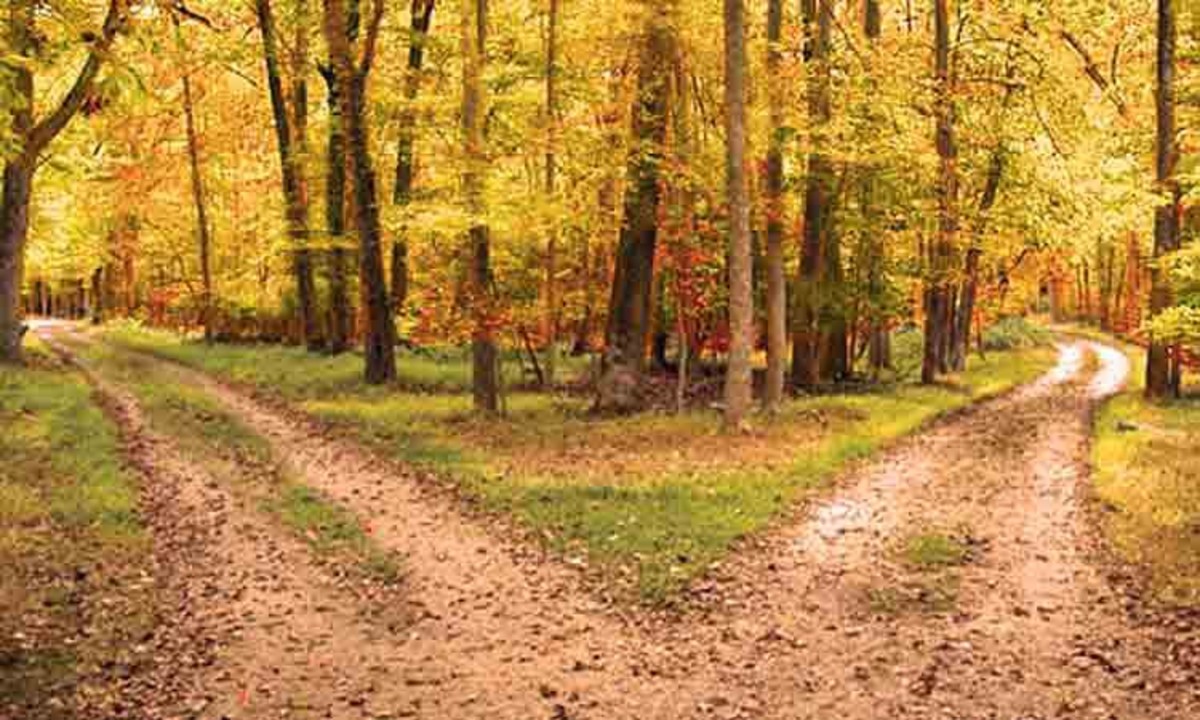
TWO roads diverged in a yellow wood,
And sorry I could not travel both
And be one traveller, long I stood
And looked down one as far as I could
To where it bent in the undergrowth;
Then took the other, as just as fair,
And having perhaps the better claim,
Because it was grassy and wanted wear;
Though as for that the passing there
Had worn them really about the same,
And both that morning equally lay
In leaves no step had trodden black.
Oh, I kept the first for another day!
Yet knowing how way leads to way,
I doubted if I should ever come back.
I shall be telling this with a sigh
Somewhere ages and ages hence:
Two roads diverged in a wood, and I –
I took the one less travelled by,
And that has made all the difference.
A Moment of Choice and its Echoes
Robert Frost's "The Road Not Taken" is a deceptively simple poem about choices and their long-term impact. It presents a moment of decision in a tranquil woodland setting and explores the speaker's contemplation of diverging paths. The tone is initially reflective, tinged with regret, but shifts towards a sense of acceptance, though not without a lingering wistfulness. The poem's enduring power lies in its ability to resonate with the universal human experience of making decisions and wondering "what if."
The Illusion of the Unique Path
One central theme of the poem is the illusion of individuality . The speaker claims to have taken "the one less traveled by," suggesting a deliberate embrace of the unconventional. However, the second stanza contradicts this idea, stating that both paths were "really about the same" in terms of wear. Further, the lines "And both that morning equally lay / In leaves no step had trodden black" suggest they were equally untrodden. This discrepancy reveals that the speaker's perception of having chosen a unique path may be a self-deception, a narrative constructed in retrospect to give meaning to their life's journey.
Regret and the Human Condition
Another significant theme is the inevitability of regret . The opening lines, "And sorry I could not travel both / And be one traveler," establish a sense of longing for possibilities not pursued. This feeling of regret is amplified by the speaker's prediction that "I shall be telling this with a sigh / Somewhere ages and ages hence." The "sigh" is a key indicator of lingering doubt and the acknowledgment that every choice involves a sacrifice, a closing of doors to other potential experiences. This underscores the poem's exploration of the human condition and the inherent limitations of life.
The Yellow Wood: A Symbol of Life's Crossroads
The "yellow wood" serves as a powerful symbol of the choices we face in life. The color yellow, often associated with autumn, may suggest a time of transition and approaching change. The diverging roads represent the different directions our lives can take, and the act of choosing one over the other symbolizes the decisions we make that shape our destinies. The "undergrowth" into which the chosen path bends and disappears could represent the unknown future that awaits us after we make our choices. What might the significance be of the woods changing from green to yellow?
A Timeless Reflection on Choice and Consequence
In conclusion, "The Road Not Taken" is not simply about celebrating unconventional choices, but about the complex interplay of choice, regret, and the stories we tell ourselves about our lives. The poem's strength lies in its ambiguity, allowing readers to project their own experiences and interpretations onto the speaker's journey. It reminds us that while we may strive to believe our choices have made "all the difference," the reality is often more nuanced, shaped by both the paths we take and the narratives we construct around them.
The Code of Conduct and Terms of Service must be complied with.
Any comment posted about politics or religion not relevant to the English Literature articles that are posted will be deleted.
The administrator reserves the right to delete any comment he considers to be offensive, off topic or of no value.
Videos or images or links to sources that the Administration cannot open must be described or explained when requested or they will be deleted.

Tags
Who is online
77 visitors
Yogi Berra had a much simpler analysis.
"When you come to a fork in the road, take it."
Of course, how else are you gonna eat the cole slaw?
I've always liked that poem. To me it speaks of the individual who is later in life and is looking at how the remainder of his life will be.
It is one of my five favourite poems as well.
I found a fork in the road, but it was bent