
10 Rare American Cars That Almost Nobody Remembers

By: Nathaniel Ehinger (TopSpeed)
 S E E D E D C O N T E N T

10 Rare American Cars That Almost Nobody Remembers
These often-overlooked models serve as unique collector's items and tokens of a storied auto lineage.

Are there cars from your childhood that you simply can't remember? Do you talk about your first or second car, and others don't know anything about the vehicle you've brought up? Unfortunately, many cars weren't quite at the level of those that made it to the posters many had hanging up in their bedrooms while growing up or in garage spaces as adults. In fact, most of the rare American cars that most people don't remember came about as an answer to fuel shortages, foreign competition, and the need for smaller cars during a time when it felt painful to see American brands put anything but a V8 under the hood of a car.
Despite the popularity of most of the most famous cars, many cars in history flew under the proverbial radar. They might not have been as memorable as a Pontiac GTO, Ford Mustang, or Chevrolet Camaro, but these rare American cars were part of the automotive landscape during their time, and some played important roles.
Despite their reputation as the best in their field, European supercars have often been matched in speed by American models.
To provide the most up-to-date and accurate information, this list was compiled using data sourced from various manufacturers and authoritative sources.
10. 1978 Dodge Omni

1978 Dodge Omni side shot
The Dodge Omni emerged during a significant change in the American car industry. The era of the fuel embargo and shortages, coupled with stricter emissions and safety standards, caused American automakers to create smaller vehicles than before. The growing popularity of imported cars has also caused American companies to build cars such as the Omni.
Powertrain Specifications
|
Engine |
1.7-liter 4-cylinder |
|
Transmission |
4-speed manual |
|
Horsepower |
70 hp |
|
Torque |
82 lb-ft |
|
Driveline |
FWD |
|
Fuel Efficiency |
23/28 MPG |
This little Dodge fits the trend of replacing large cruisers with smaller, FWD cars with four-cylinder engines that provide better fuel efficiency than their V8 counterparts. The Omi fit the economic realities of the late 1970s perfectly, but it was considered unsafe to drive due to poor brakes, inadequate handling, and troublesome steering.
9. 1960 Ford Falcon
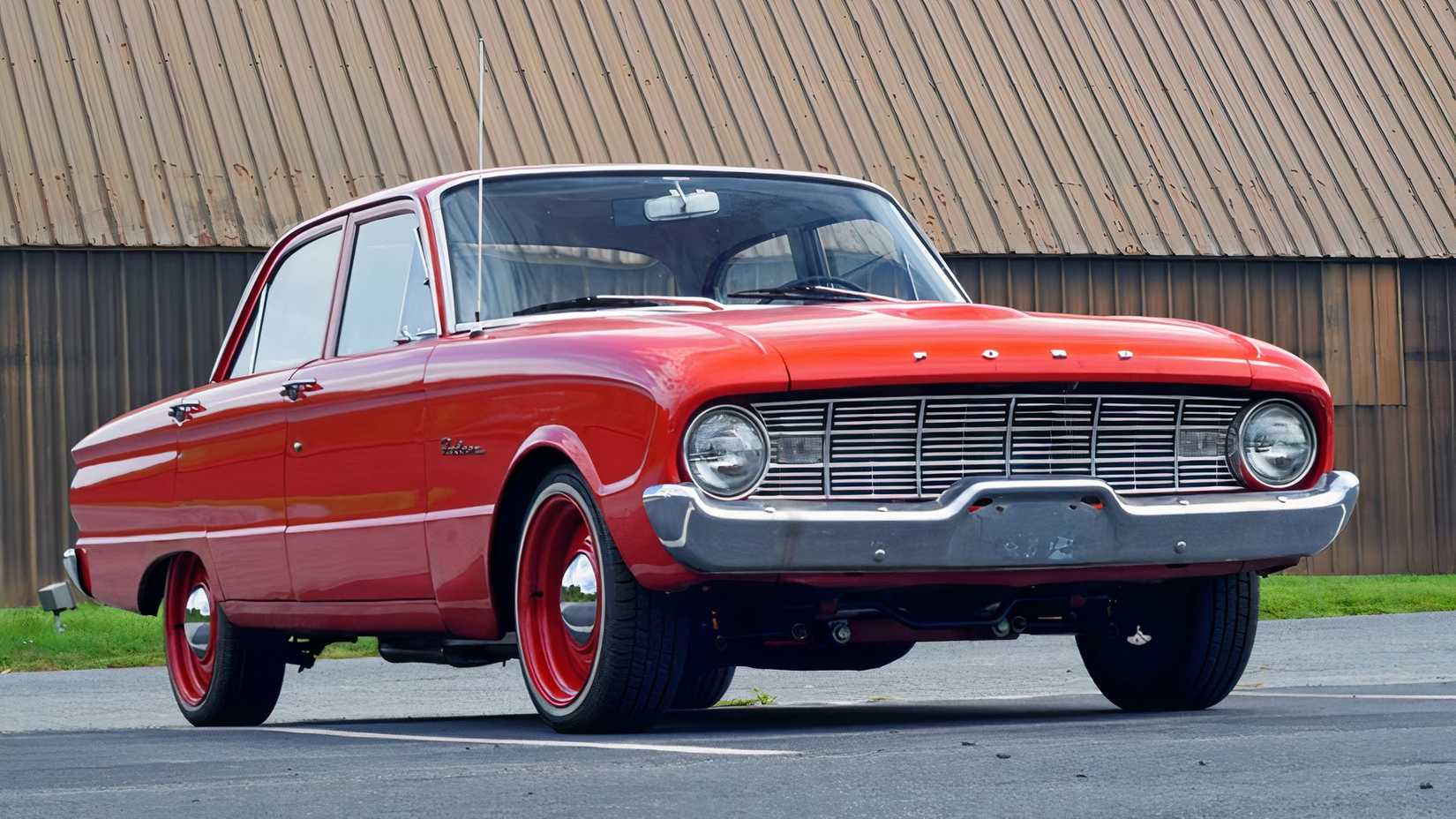
1960 Ford Falcon front 3/4 shot
Compact cars were showing strong signs of success, which pushed Ford to create the 1960 Ford Falcon. This was a complete change of position for the company, but the Falcon was a hit as a compact car with a practical design and strong market appeal, despite the brand's hesitance to release a small car after the Edsel's failure.
Powertrain Specifications
|
Engine |
2.4-liter 6-cylinder |
|
Transmission |
3-speed manual |
|
Horsepower |
90 hp |
|
Torque |
138 lb-ft |
|
Driveline |
RWD |
|
Fuel Efficiency |
18 MPG combined |
This little Ford quickly became popular thanks to its affordability and versatility. The Falcon didn't have any significant design or tech features, but it rode on a unibody platform and had a leaf-spring rear suspension and was offered with two engine options.
8. 1971 Chevrolet Vega

3/4 front view of Orange 1971 Chevrolet Vega
The introduction of the 1971 Chevrolet Vega brought a compact car with modern styling and three main body types to the mix. The Vega was offered as a two-door coupe, two-door sedan, and practical three-door wagon. The front-end design closely resembled the Camaro, which certainly appealed to many buyers.
Powertrain Specifications
|
Engine |
2.3-liter 4-cylinder |
|
Transmission |
3-speed manual |
|
Horsepower |
90 hp |
|
Torque |
121 lb-ft |
|
Driveline |
RWD |
|
Fuel Efficiency |
22 MPG combined |
Chevrolet introduced the Vega Cosworth in 1975, giving the car a more powerful engine, a distinctive black and gold paint job, and unique wheels. Like many small American cars of the time, the Vega had quality issues with its engine and was known for its rust problems.
7. 1960 Plymouth Valiant

1960 Plymouth Valiant front 3/4 shot
The 1960 Plymouth Valiant was the result of several years of development at Chrysler. The brand saw the need for a small car to compete with the Volkswagen Beetle in 1957 and eventually created the Valiant, which turned out to be innovative and forward-thinking for the time.
Powertrain Specifications
|
Engine |
2.8-liter 6-cylinder |
|
Transmission |
3-speed manual |
|
Horsepower |
101 hp |
|
Torque |
155 lb-ft |
|
Driveline |
RWD |
|
Fuel Efficiency |
16 MPG combined |
This Plymouth first appeared at the 1959 London Motor Show with a stylish design, smaller size, and affordable price. It was a car from the Chrysler brand that was aimed to be sold in Europe, but it came to America. It appeared to be more luxurious than other compact cars at the time.
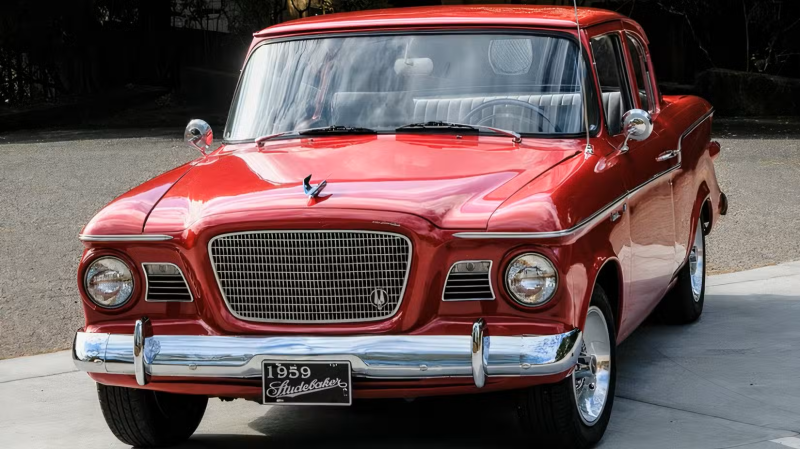
6. 1959 Studebaker Lark

1959 Studebaker Lark front shot
Studebaker is one of the automotive companies that is sorely missed by those who remember it. The 1959 Studebaker Lark was one of the last cars offered by the brand before it shut down for good in 1966. The Lark is a compact car with attractive styling and several body types and different engine options.
Powertrain Specifications
|
Engine |
2.8-liter 6-cylinder |
|
Transmission |
3-speed manual |
|
Horsepower |
90 hp |
|
Torque |
145 lb-ft |
|
Driveline |
RWD |
|
Fuel Efficiency |
16 MPG combined |
Most models of this Studebaker car were equipped with six-cylinder engines, but V8 engines were available. This was one of the first successful compact cars produced by an American manufacturer, marking the changing of the times towards smaller and more efficient vehicles.
5. 1978 Pontiac Sunbird

1978 Pontiac Sunbird side shot
GM has utilized various brand names for similar cars for many years, and the 1978 Pontiac Sunbird was no exception. This compact hatchback was similar to the Buick Skylark and Chevrolet Monza.
Powertrain Specifications
|
Engine |
2.5-liter 4-cylinder |
|
Transmission |
4-speed manual |
|
Horsepower |
85 hp |
|
Torque |
123 lb-ft |
|
Driveline |
RWD |
|
Fuel Efficiency |
21 MPG combined |
The Pontiac version featured an interesting performance model called the Sunbird Formula, which had an optional eight-cylinder engine. The name came from the Firebird Series, and the V8 version had a 305-cubic-inch V8 that produced 165 horsepower, giving the Sunbird added power and performance.
4. 1991 Mercury Capri

1991 Mercury Capri front 3/4 shot
The 1991 Mercury Capri was the first time this car was a stand-alone vehicle. Previously, Mercury had sold several models under the Capri name, using it as a trim level for a regular sedan and a version of the Fox-bodied Mustang. This new model was a compact car that fit into the lineup easily.
Powertrain Specifications
|
Engine |
1.6-liter 4-cylinder |
|
Transmission |
5-speed manual |
|
Horsepower |
100 hp |
|
Torque |
95 lb-ft |
|
Driveline |
FWD |
|
Fuel Efficiency |
22/28 MPG |
This little Mercury was built in Australia on the Mazda 323 platform and sold in the United States as a stylish roadster or convertible, making it a fun little car to drive and enjoy. It drove well in some areas but never quite caught on, leading to its discontinuation in 1994.
3. 1975 AMC Pacer

A car that came with mixed feelings was the 1975 AMC Pacer. Some people loved it, but others hated it, and it became well-known and iconic as an attempt to create a compact car. The Pacer ended up being larger than its competitors and had many flaws in its unique design, which was pretty much expected in the early 1970s.
Powertrain Specifications
|
Engine |
3.8-liter 6-cylinder |
|
Transmission |
3-speed manual |
|
Horsepower |
100 hp |
|
Torque |
185 lb-ft |
|
Driveline |
RWD |
|
Fuel Efficiency |
18 mpg combined |
The story surrounding this AMC production gave it a quirky charm, making it a memorable part of the 1970s. The Pacer stood out for its unusual style with the curved rear window that became symbolic of the brand and the movement toward smaller, more efficient cars in America.
2. 1982 Cadillac Cimarron

1982 Cadillac Cimmaron front 3/4 shot
Cadillac was having an identity crisis in the early 1980s, but the addition of the 1982 Cadillac Cimarron didn't help at all. The brand looked for ways to compete with foreign car brands and tried to do so by creating a smaller, more affordable car to attract a larger customer base. Unfortunately, Cadillac didn't have a small car platform to use.
Powertrain Specifications
|
Engine |
1.8-liter 4-cylinder |
|
Transmission |
4-speed manual |
|
Horsepower |
88 hp |
|
Torque |
100 lb-ft |
|
Driveline |
FWD |
|
Fuel Efficiency |
23/31 MPG |
Since Cadillac didn't have a small car platform, they turned to Chevrolet and used the Cavalier's basic frame and the plodding four-cylinder engine. The Cimmaron had some added features and trims that made it slightly higher in the lineup than the Cavalier, but Cadillac couldn't hide the Chevrolet underpinnings.
1. 1971 Mercury Comet

Side shot of a 1972 Mercury Comet
The Comet began as the Mercury version of the compact Ford Falcon but also appeared as an intermediate model based on the Ford Maverick. Eventually, the 1971 Mercury Comet arrived, providing the market with a two-door car built on a smaller chassis that was shared with the Maverick Pinto and later the Mustang.
Powertrain Specifications
|
Engine |
2.8-liter 6-cylinder |
|
Transmission |
3-speed manual |
|
Horsepower |
100 hp |
|
Torque |
184 lb-ft |
|
Driveline |
RWD |
|
Fuel Efficiency |
19 MPG combined |
This Mercury was stylish and sporty, but the six-cylinder engine didn't cut it for some customers. Thankfully, the Comet could be had with a 302-cubic-inch V8 that gave the car more of a 1970s muscle car feel, which was much more exciting than the forgettable 100-horsepower engine.
No politics, no religion, no instagrams, and commentary must be civil. The ToS and the CoC will be enforced, and anything that the administrator deems to be offensive will be deleted. YouTubes, videos and images that the administrator is unable to open must be described and explained or they will be deleted.
Tags
Who is online
157 visitors
I can remember most of them, but never owned any of them. That Mercury Comet looks pretty classy though.
My family has owned two of them a 61 Falcon and the Mercury Comet. The Comet was kinda fast for a 6 cl with 3 on the tree.
I recall the AMC Rambler only because my best friend's father used to sell them.

Some cars are harder to forget beeause of their unique design, for example Sudebakers and the AMC Pacer.
I would think the DeLorean would get first prize for that.

I thought it was the ugliest car ever made.
Really? Uglier than this....
1952 Studebaker Manta Ray
Buzz, I think you're right. That's as bad as it gets.
My younger brother had an Omni and was glad to get rid of it and sold it before there was no longer a market left for that car other than the scrap yard.
The Plymouth Valiant, that's kind of a sore subject. My grandfather worked for Chrysler back in the 50's and 60's and owned a Valiant when he retired and moved north and that car was parked in his yard until he passed away in the early 90's. Since he lived next door to our business we cleaned up his yard and sent the cars he had to scrap. The Valiant was unique, unlike the picture and description you have, this one had the slant 6 with electric shift push button automatic transmission, more pronounced tail wings, and the spare tire in the trunk hood, my brother looked it up with those features and found only one to be in existence the motor show car. He never told us why he had it, if he had it would be in a museum right now.
I had a 64 valiant in my 20s. It had a slant 6 and 3 on the tree manual trans. I liked it. It never let me down.
Obviously it was a valiant Valiant.
Hah! I see what you did there.
Thanks for the interesting story.
A Ford Falcon was the first car I "had" as my dad gave it to me to drive when I was 16. It had been his mothers car before he bought her a new car. It was a lot of fun. Simple & basic but couldn't handle the road salt up in Wisconsin and had rust issues. I had it for about a year before Dad traded it to a friend who had another Falcon who's body was in good shape but the undercarriage was shot. He lifted his old body and put it on my undercarriage and had a "new car".
The first car I bought was a Chevy Vega. It was another simple car, no real power in that 4 cylinder engine but it purred down the highway. But that aluminum block engine warped. I got in trouble a bit in the Myrtle Beach AFB parking lots because by the end of the car's life it would lose about a quart of oil a week.
What luck! You had TWO of the cars on the list. LOL
I'm a little surprised the Ford Pinto didn't make the list. That's a car with a lot of history...
Having some trouble with my vision thsse days so I had to enlarge the photo, but what I see is that the car seems to be damaged by fire or something, so that even though I'm an older guy, I don't get it.
Those are painted flames. It is after all a Ford Pinto which had a reputation of blowing up if rear-ended.
Lol, and the painted flames are, of course, coming from the rear of the car.
Oh, okay, I got it.
The Chevy Sprint, I’m not sure this would hit 60 mph if you pushed it off a cliff.
That one should have been on the list.