
Automotive History Lessons 101-K: The Story Of Kaiser

By: David Chick (Street Muscle)
 S E E D E D C O N T E N T

Automotive History Lessons 101-K: The Story Of Kaiser
Kaiser Motors: a flash in the pan, or a hallmark of American craftsmanship? Take a step back in time as we chart the course of one of the last companies that took a chance against the Big Three.

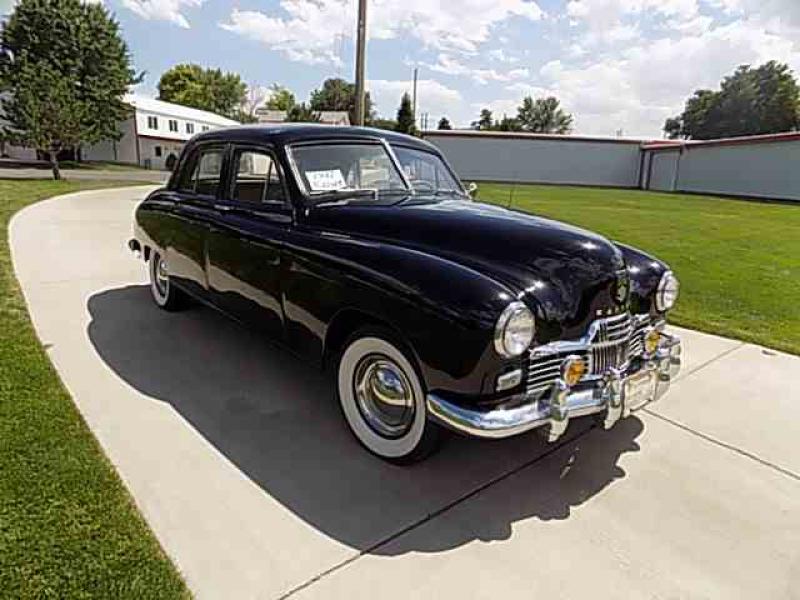
Kaiser was one of those brands of car that had a shot at success, but didn't have the right stuff; defunct after only eight years (1945-53), Kaiser started strong in the postwar market selling cars to a nation that hadn't seen anything new since the start of the war. Unfortunately, it couldn't keep up with the industrial might that the Big Three had at their disposal, and suffered fates not unlike Packard, Tucker and Hudson.

Kaiser got its start in the automotive industry as Kaiser-Frazer. It was founded by Henry J. Kaiser, a big-time magnate and industrialist who manufactured large ships during WWII and wanted to break into carmaking. Joseph Frazer was a like-minded man, having spent the years prior as a president of Willys-Overland (responsible for the Jeep, whose story is an epic yarn all its own) and owner of Graham-Paige, a carmaker business.
1945 was an opportune time to have made the merger, as Detroit was still emerging from wartime production. The corporation moved quickly to lease the Ford-owned factory in Willow Run, Michigan, and began production of their flagship model, the Special.
Featuring such things as welded all-steel construction, large trunk, aluminum alloy pistons, and a bevy of other features, the Special was a hit with the postwar public in 1947. Kaiser wasn't blind to the concept of upgrading, and sold the Custom-complete with leather-trimmed dashboard and upholstery, interior trim and bright metal windshield frames, and more-to his more well-off patrons.

The car sold like hotcakes, and made for a very auspicious introduction to the American market. Success followed the company for the next three years, even though Frazer stopped production in 1950. Things were going well for the little automaker. Some neat developments and trim options opened up for different models, like the Traveler, a four-door sedan version of the Special, and the Vagabond, a four-door utility sedan version, in 1949.
In 1950, Kaiser introduced the body style of its cars that would last until its dying day. More rounded and glass-adorned, the 1951 Special was touted as a car with "anatomic design" in mind, promising a comfortable drive for its passengers. It became a hit with the American buyers, selling almost 150,000 total units.
That same year, the well-received Henry J, named after the man himself, debuted as the company's compact model. Expecting a good amount of sales, the company made 82,000 of them; less than half were ever sold, however. Nonetheless, more than a few of them found success as hot rods. On a side note, and if you're interested, you can read about a recent article we did about an unadulterated '53 Henry J here.
1951 marked the beginning of what can only be called the death spiral of the company. A massive overproduction of cars meant there was little capital left to make do with. Simply put, there was not enough demand, and far too much supply; each year, starting in 1949, the company began operating at a loss.
In a last-ditch effort, Kaiser attempted to breach the sports car market with its classy Darrin in 1954. Designed by the great Howard "Dutch" Darrin, they were a limited production fiberglass wonder that boasted a low center of gravity, doors that slid into the fender (a patented Darrin invention), and a three-point Landau top for that extra touch of class.
Most of the 435 Darrins were powered by the measly inline-six, though about 100 of them featured Cadillac V-8s under their hoods after production ended-an even smaller number had superchargers installed. Alas, shut down after only a few months of production, the Darrin was not to be the saving grace of the Kaiser name.
From there on out, it was only a matter of time. Kaiser Motors had little money left over, and as such there was little choice but to offer boring, bland consecutive models with mere trim changes like adding chrome here and there, as well as minor mechanical enhancements.

Last-gasp concepts, such as the Henry J and Darrin models, took money away from developing the flagship Special. Interesting and visionary enhancements like the McCulloch supercharger (available on the 1954 Manhattan) were mere flashes in the pan, and detracted from Kaiser's ability to compete with the Big Three.
The ultimate fate of Kaiser Motors was its shutdown of production in the continental U.S. in 1955. The company went in different directions: in America, Kaiser Jeep produced Jeeps; in Argentina, Industrias Kaiser Argentina produced Manhattans; both were under the aegis of Kaiser Industries. All ties to the automotive business were cut in 1970, when American Motors bought Kaiser Industries.
Despite its short life, Kaiser Motors had some of the more interesting and ahead-of-its-times design choices. Things like the aforementioned supercharger, the Darrin's completely fiberglass body, and independent suspension, just to name a few. Still, it made an indelible mark upon American automotive history for being the hallmark of American craftsmanship that it was.
About the author
David Chick
David Chick comes to us ready for adventure. With passions that span clean and fast Corvettes all the way to down and dirty off-road vehicles (just ask him about his dream Jurassic Park Explorer), David's eclectic tastes lend well to his multiple automotive writing passions.
No politics, no religion, no instagrams, and commentary must be civil. The ToS and the CoC will be enforced, and anything that the administrator deems to be offensive will be deleted. YouTubes, videos and images that the administrator is unable to open must be described and explained or they will be deleted.

Tags
Who is online
104 visitors
Never knew anyone who had a Kaiser. I guess it was close enough that my father had a Hudson.