
Jane Austen at 250: Celebrating a writer who still inspires new chapters

By: Seth Doane (cbssunday)
 S E E D E D C O N T E N T

Jane Austen at 250: Celebrating a writer who still inspires new chapters
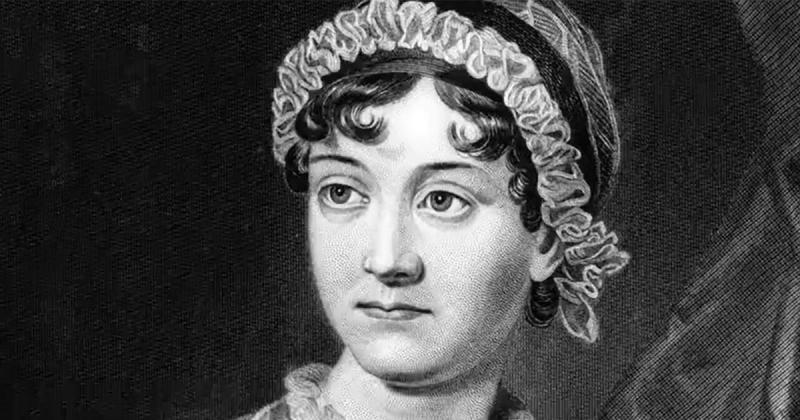
Enduring romances such as Pride and Prejudice, Sense and Sensibility, and Emma made the British writer one of the brightest names in literature - and the beloved subject of a yearlong celebration marking the 250th anniversary of her birth.
It might look like a scene from yet another Jane Austen production, but this is no set. The British town of Bath recently held a celebration of the author 250 years after her birth.
This historic English town was channeling the early 1800s, the period when Austen's novels were published. "Pride and Prejudice," "Sense and Sensibility," and "Emma" were among those Anne Perng grew up reading: "The issues that she speaks of - the economy, class, family, sisters - still so resonate with us today."
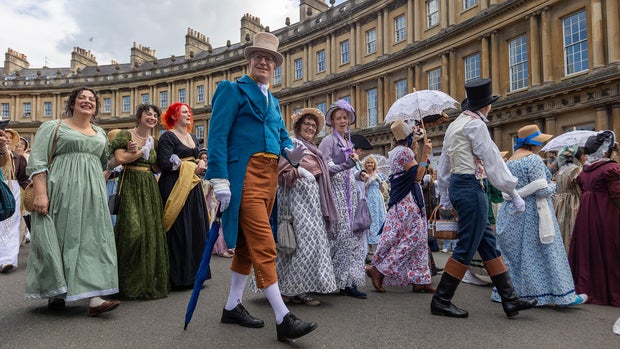
Participants in the Grand Regency Costumed Promenade, the official opening of the Jane Austen Festival, mark the 250th anniversary of the author's birth, in Bath, England, September 13, 2025. Matt Cardy/Getty Images
Fifteen thousand tickets were sold for this year's 10-day Jane Austen Festival, a level of enthusiasm that surprised even its organizer, Georgia Delve: "Two of her novels are based here," she said. "So, you can walk in her footsteps down the streets. You've got character names on streets, you've got places she visited. It's just the feeling of being in that world that she inhabited that makes it so special."
Writer Devoney Looser said, "She has written books that are endlessly re-readable."
"It's not enough to read it once?" I asked.
"Well, I don't think so. There's something new to find every time."
Looser's ties to the author are not just professional: "My husband is also a Jane Austen scholar," she said. "We met and had a fight over Jane Austen the day we met."
"What a love story!" I said.
"Yeah, that's what he'd say, too!"
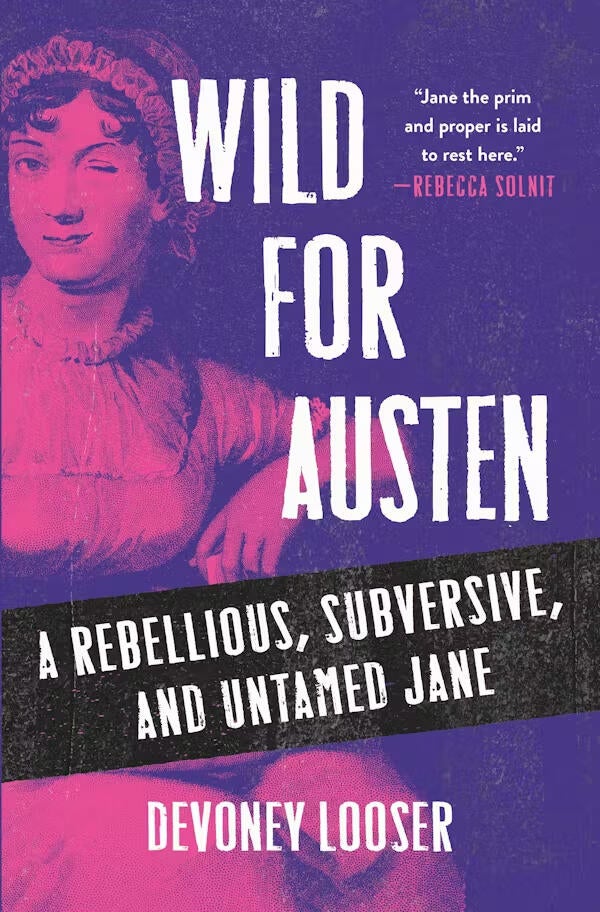
St. Martin's Press
In her book, "Wild for Austen," Looser argues the author is hardly plain, prim, and proper: "It's there in her writings - this idea of women being positively wild. Unconventional, more free, more artless, and willing to combine feeling and thoughtfulness with intellectual ability. That this is the kind of thing she set out to celebrate in her heroines, at a time where women were supposed to be ideally passive and not very thinking ."
Austen died at age 41 after suffering a range of ailments. She wrote just six novels (two published after her death).
Looser said, "You can read her on the level of the word, the sentence, chapter, plot, character, and appreciate what she's done in terms of craft. And on top of that, they're funny and they're incredible works of social criticism."
At the University of Southampton in England, scholars and enthusiasts met this past summer to discuss all things Austen.
In the university's collections, among its seven million manuscripts and printed books, head of archives and special collections Karen Robson gave us a sampling from a first edition of Austen's "Emma," printed in 1816:
"Emma Woodhouse, handsome, clever, and rich, with a comfortable home and happy disposition, seemed to unite some of the best blessings of existence; and lived nearly twenty-one years in the world with very little to distress or vex her."
"Lucky Emma," I said. "You get so much in just this first sentence."
"Absolutely," Robson said. "She's a wonderful wordsmith."
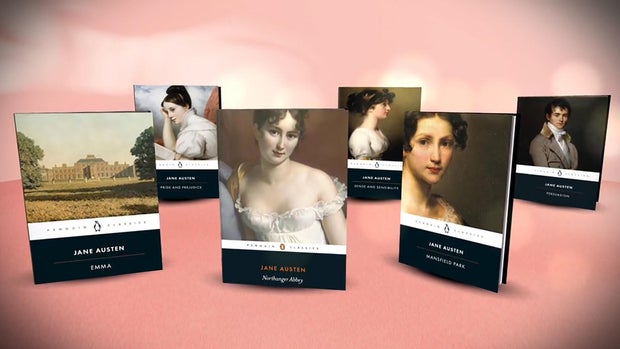
Jane Austen wrote six novels, two of which ("Northanger Abbey" and "Persuasion") were published posthumously. CBS News
Looser said, "She publishes the first one, 'Sense and Sensibility,' 1811, as 'by a lady.' And then after that, as 'by the author of "Sense and Sensibility."'"
"She didn't put her name on the books? Why?" I asked.
"Because novels in this period were not seen as high art. They were still seen as a kind of trashier genre," said Looser.
"So, she didn't want to be associated with it?"
"She died before we know if she ever would have decided to put her name on something," she said.
Looser likens Austen to Shakespeare, with the kind of staying power that takes form in the many films and miniseries based on her novels. Then, there are the Austen-inspired works, such as "The Jane Austen Book Club," and "Clueless" (based on "Emma").
We visited the set of another spin-off, "The Other Bennet Sister," based on Janice Hadlow's 2020 novel, which puts the often-overlooked middle sister, Mary, from "Pride and Prejudice," at the center. "I think she feels like a very modern heroine," said Jane Tranter, the executive producer of this BBC/Britbox series. "It's not a classic boy-meets-girl kind of story."
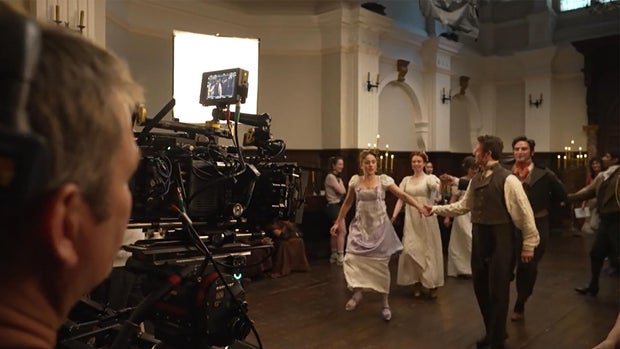
Filming the upcoming BBC series, "The Other Bennet Sister." CBS News
So, why do we see so many adaptations of Austen's work? "Jane Austen is the absolute master of a love story, of a kind of slow-simmering, everything very proper, but kind of like boiling away beneath the lines of society," said Tranter. "And we love that. And I think we love the period detail."
That was clear in Bath, where the past was very much alive and celebrated on her 250th birthday.
Asked why Austen's work endures, Looser replied, "Because it's brilliant. Right? I mean, I think that's the glib, easy answer: because it's brilliant."
Story produced by Mikaela Bufano. Editor: George Pozderec.

Seth Doane
Correspondent Seth Doane is an award-winning CBS News correspondent based in Rome, Italy since 2016. Doane has covered terrorist attacks and breaking news across Europe, traveled with Pope Francis as part of his coverage of the Vatican, and has reported on issues ranging from migration to climate change.
The Code of Conduct and Terms of Service must be complied with.
Any comment posted about politics or religion not relevant to the English Literature articles that are posted will be deleted.
The administrator reserves the right to delete any comment he considers to be offensive, off topic or of no value.
Videos or images or links to sources that the Administration cannot open must be described or explained when requested or they will be deleted.

Tags
Who is online
86 visitors
The never-ending glorification of Jane Austen and her novels is a sure sign of her importance in the world of English Literature. As the last sentence of the article relates: "Asked why Austen's work endures, Looser replied, "Because it's brilliant. Right? I mean, I think that's the glib, easy answer: because it's brilliant.""
LOL. Sorry to take up so much Front (Home) Page space with academia.
It's pretty obvious that I'm one of the very few NT members who have an interest in Literature, having majored in English Literature for my B.A. degree, so the next artilcle I will post on this group will be about technology, in particular the possibility the Pulitzer Prize for journalism being awarded to AI instead of to a human.