
Threats to Canada's North have 'shifted significantly,' foreign minister says

By: Alex Boutilier - Canada's Global News
 S E E D E D C O N T E N T

Threats to Canada's North have 'shifted significantly,' foreign minister says
The long-serving cabinet minister tells The West Block that Canada and the U.S. remain at the table to discuss Arctic security, sovereignty.
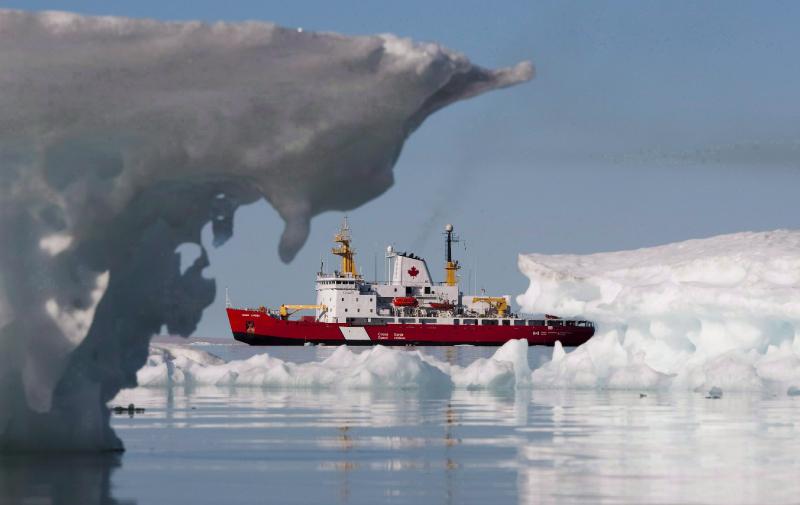
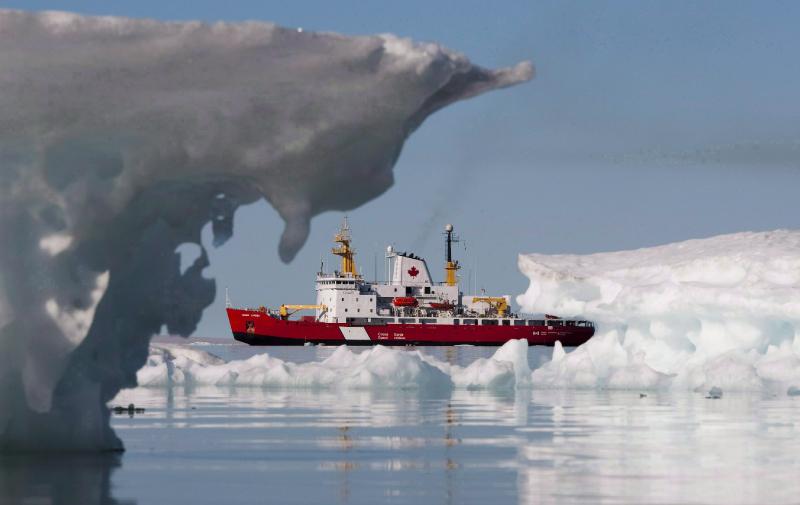
As Anita Anand prepared to address the United Nations, the foreign minister told The West Block the "Russian threat is moving further and further north towards the Arctic Circle." This, as a senior Russian official warns that any moves toward greater security in the region "increases the risks of incidents that could trigger ... potentially disastrous consequences."
Threats to the Canadian Arctic have "shifted significantly" in recent years amidst Russia's full-scale invasion of Ukraine and an upended geopolitical order, Canada's foreign minister says.
But despite political tensions, Foreign Affairs Minister Anita Anand told The West Block 's Jeff Semple that Canada and the United States remain in close coordination on Arctic security and sovereignty issues.
Anand said she attended a meeting of Arctic nations convened by U.S. Secretary of State Marco Rubio last week and they "had a frank discussion about the collective need to work together on Arctic security."
"So the United States is very much at the table in this conversation. And one of the ongoing dialogues that Secretary Rubio and I have had specifically … is in fact how can Canada and the United States ensure that our shared interests in the Arctic are advocated, are worked on within the confines of multilateral organizations including NATO."
Anand, who formerly served as minister of national defence under former prime minister Justin Trudeau, pointed to Prime Minister Mark Carney's decision to ramp up defence spending and the impact that money will have on northern security. That includes a massive contract to German company TKMS to build a new fleet of as many as 12 submarines, as well as the federal governments still as-yet finalized decision to buy new fighter jets.
On the diplomatic front, Anand pointed to the newly-opened Canadian consulate in Nuuk, Greenland, and plans to open one in Anchorage, Alaska.
Anand said that Russia's invasion of Ukraine in 2022 has changed thinking not only of the security environment in Europe, but in the Arctic as well.
"So while Canada has Operation Reassurance on the Eastern flank, we cannot forget that NATO, the North Atlantic Treaty Organization, should have a view that is based on a strategic assessment of the North and the Arctic, in order to ensure that we are well defended and protected in terms of the Arctic, not only on the Eastern flank" Anand said.
The threat to Canada's Arctic maybe be shifting, but so are northerners' perceptions of Canada's once-closest ally.
Global News reported last week that new polling suggested residents of Canada's North — including Nunavut, the Northwest Territories, Yukon and Nunavik — view the United States as the greatest threat facing the region.
Nearly half of respondents (48 per cent) to a poll for the Observatoire de la politique et la securite de l'Arctique (OPSA) saw the U.S. has the greatest threat, followed distantly by Russia (30 per cent) and China (12 per cent).
The administrator of this group reserves the right, along with the site moderators, to moderate all and any postings to this group, including the right to enforce the ToS, the CoC, and also including anything that the administrator deems within his sole discretion to be offensive, including and not limited to off topic or 'no value' comments, with the power to delete in exercising those rights.
It would be best, therefore, to be civil in posting on this group.
By now it should be well known that the administrator is unable to open certain sources, videos and pictures. If he cannot, he will ask that they be described and explained. If the poster refuses to comply, their comment will be deleted. Instagrams are banned.

Tags
Who is online



126 visitors
Global warming causing thawing farther and farther north is making the arctic more and more accessible, opening northerly shipping lanes and therefore becoming a greater concern about military access. Fortunately Canada and the USA are still partnering and dealng with the problem in a mature and professional manner, notwithstanding conflict on other issues, such as trade.